Category: Hardware

nuclear data centers connected to a revived power plant and high-voltage substation

Nuclear Data Centers: Restart Risks for AI

Nuclear data centers are moving from theoretical planning into serious infrastructure analysis because AI loads need large, stable electricity supply and some retired reactors still have grid connections, cooling infrastructure, and licensed nuclear sites. The risk profile, however, is not … Read more
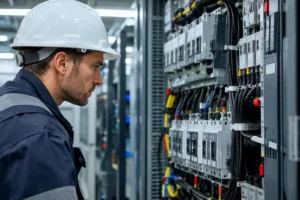
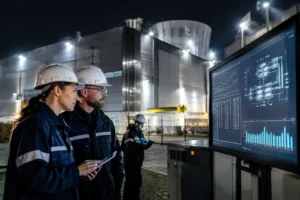
Engineers reviewing data center power equipment in a high-voltage utility room

Data Center Power After Federal Grid Actions

Federal action has moved data center power supplies from a utility planning issue into a national infrastructure concern. The energy driver is measurable: U.S. data centers consumed about 192 terawatt-hours of electricity in 2024, equal to 4.7% of total U.S. … Read more

High-Tech Server GPU_Interior

PCIe AER Errors in GPU Servers: What to Check First

A PCIe error in a GPU server does not automatically mean the accelerator is defective. Some link errors are corrected by hardware without losing data; others can make a device unreachable. The important distinction is between a recovered event, a … Read more

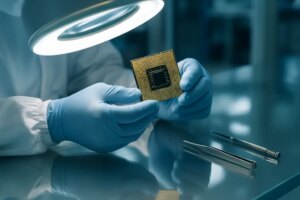
NIST secure hardware analysis shown with semiconductor wafers and verification equipment

NIST secure hardware Faces Semiconductor Barriers

NIST secure hardware guidance is easier to endorse than to implement across a semiconductor supply chain that spans IP blocks, EDA flows, foundries, OSAT providers, materials suppliers, firmware teams, and long-lived device markets. The central problem is not a lack … Read more

Electrical cabinets and solar arrays supporting renewable data centers

How renewable data centers cut carbon risk

Renewable data centers are often described as a direct answer to the sector’s carbon problem. The technical reality is narrower: renewable electricity can reduce emissions exposure, but only if the procurement, grid location, operating profile, and measurement method align with … Read more

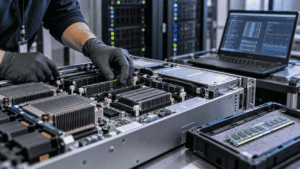
Server Maintenance and RAM_Diagnostics

Correctable ECC Errors: When to Replace Server RAM

A server reporting a correctable ECC memory error does not automatically need new RAM. The memory system has detected and recovered from a fault, often allowing applications to continue without interruption.

However, repeated errors affecting the same memory module can … Read more

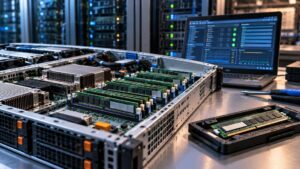
Server RAM Diagnostics Workspaces

Correctable ECC Errors: When to Replace Server RAM

A correctable ECC memory error does not automatically mean a server needs new RAM. Modern servers can detect and correct certain memory faults without interrupting applications. However, repeated errors on the same memory module may indicate a developing hardware problem.… Read more

Engineer reviewing logic-bearing components on a communications device board

FCC logic-bearing components Rules For Hardware

The FCC’s new treatment of logic-bearing components is a targeted hardware rule rather than a broad ban on every electronic part in a communications product. As of October 6, 2026, the relevant changes are scheduled to take effect on October … Read more

nvidia ceo

Nvidia GPU-Backed AI Financing Faces Wall Street Test

Nvidia is trying to change more than how artificial intelligence is built. It also wants to change how the enormous infrastructure behind AI gets financed.

The idea is straightforward but financially unusual: expensive Nvidia GPUs and the systems built around … Read more

ai dots

OpenAI Dots Make Persistent AI Agents a Cloud Problem

A chatbot normally stops being useful when the conversation stops. OpenAI’s new Dots push in a different direction: persistent AI agents that can keep working toward a goal, use connected apps, operate through their own cloud computers and return with … Read more

human vs robot

Human vs Humanoid Robot Fight Exposes an AI Safety Gap

The human vs humanoid robot fight that went viral from San Francisco looked like science fiction arriving early: a man trading punches with a full-size machine before the robot answered with powerful kicks. The more consequential detail is what viewers … Read more

agentic cloud

Agentic Cloud Attacks Are Reaching Machine Speed

Agentic cloud attacks are starting to change the speed limit of cybersecurity. Microsoft has disclosed Azure activity tied to Storm-3168 in which compromised workload identities were used for reconnaissance, credential collection and a destructive sequence that included more than 100 … Read more

NIST hardware security standards for fabs

NIST’s hardware security standards moved from a general security concern toward a clearer semiconductor execution agenda on September 1, 2026, when NIST published Internal Report IR 8615, Workshop on Rolling Next-Generation Secure Hardware into Standards. The report summarized outcomes … Read more

ai chip

Europe AI Chip Design Gets a €40 Million Challenge

Europe AI chip design is getting an unusual new strategy: use artificial intelligence to accelerate the creation of the hardware that artificial intelligence itself requires. Germany and the Netherlands are putting €40 million behind teams attempting to compress chip development … Read more

Data Center Retrofit Limits In Aging Facilities

Aging facilities make data center retrofit work less like component replacement and more like risk-controlled engineering. As of September 2026, research cited by Azura Consultancy says more than 27% of data center facilities are more than 15 years old, while … Read more

Data Center Energy Forecasts and Power Risk

Data center energy forecasts have moved from sustainability reporting into hard infrastructure planning. As of September 15, 2026, the strongest public evidence points to higher U.S. electricity demand from data centers through 2030 and, under some scenarios, through 2050. The … Read more

AMD Helios rack-scale AI system in a liquid-cooled data center row

AMD Helios: Rack-Scale AI Efficiency Test

AMD Helios arrived on July 23, 2026, as AMD’s rack-scale AI infrastructure system for frontier AI, large-scale inference, and foundation-model training. AMD positioned the system as a full-stack rack design rather than a set of discrete accelerators, CPUs, networking components, … Read more