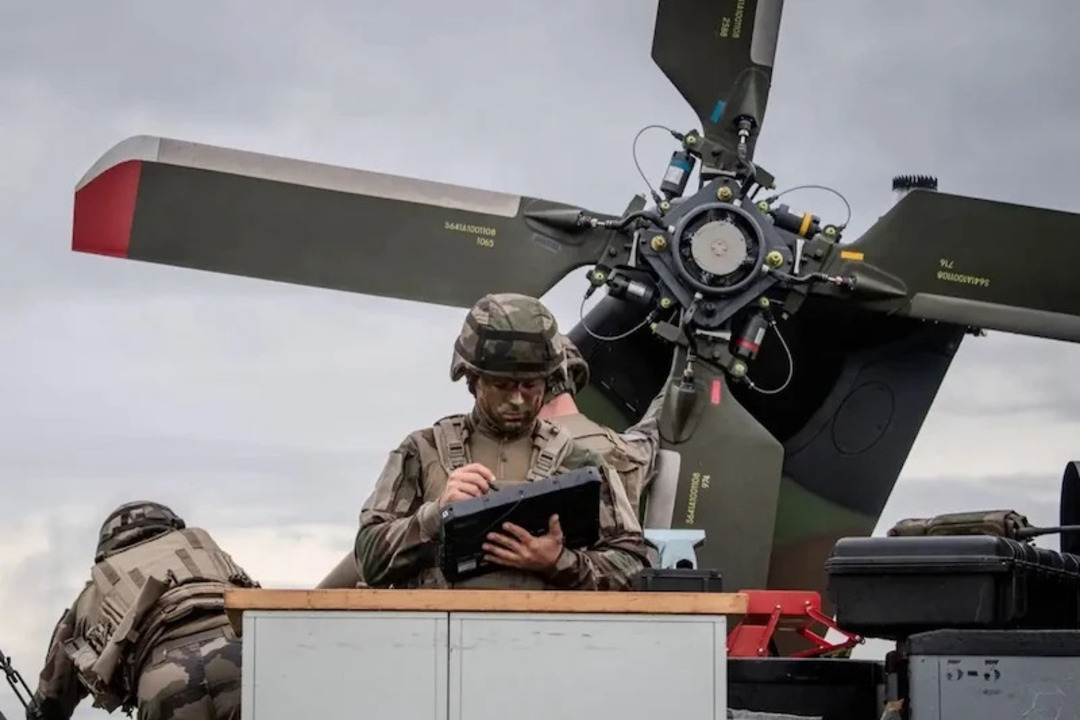
Military AI in Europe is no longer a distant policy debate reserved for defense ministers and ethics panels. Mistral’s move deeper into defense technology has turned Europe’s AI sovereignty dream into something sharper, harder, and more uncomfortable: if the continent wants independence from American and Chinese systems, it may also need its own battlefield-ready AI.
That tension is what makes this moment bigger than one company’s data center expansion. The same conversation now shaping AI military defense contracts is forcing Europe to confront a blunt trade-off: strategic autonomy sounds clean in speeches, but it becomes far more controversial when autonomy includes defense systems, military workflows, and national-security infrastructure.
Europe’s AI Champion Just Crossed a More Serious Line
Mistral has spent much of its rise as the symbol of Europe’s answer to U.S. AI dominance. It represents a cleaner strategic story for European governments: build homegrown models, host sensitive workloads closer to home, reduce dependence on foreign platforms, and make sure the next era of AI is not controlled entirely from Silicon Valley or Beijing.
That story becomes more complicated when defense enters the frame. Mistral’s public defense of AI’s military use, paired with its growing compute footprint in France, marks a shift from consumer and enterprise AI toward national-security relevance. The company is no longer only competing in chatbots, productivity tools, or business automation. It is becoming part of the infrastructure conversation around sovereignty, security, and state power.
The move fits a broader European anxiety. If rivals are using AI for intelligence, cyber operations, logistics, battlefield analysis, and defense planning, Europe cannot simply opt out and call that restraint. That may satisfy part of the ethical debate, but it does not answer the security problem.
The difficult point is that sovereignty has a cost. If Europe wants AI systems it can control, audit, and deploy under European rules, it must also decide whether those systems can serve defense institutions.
Why Military AI in Europe Is Becoming a Sovereignty Test
The phrase “AI sovereignty” often sounds abstract until sensitive data is involved. Defense is where the concept becomes concrete. Governments do not want military data, operational planning, or strategic analysis dependent on infrastructure they do not control. That concern becomes sharper when the most powerful AI platforms are built by companies outside Europe.
France’s decision to bring Mistral’s technology into military and affiliated public entities showed that the sovereignty argument had already moved from theory to implementation. The defense framework created a path for Mistral’s models, software, and services to be used in sensitive government environments while reinforcing the logic behind France’s Mistral AI defense framework.
That matters because military AI is not just about weapons. It can also involve document processing, logistics, intelligence support, cyber defense, planning tools, simulation, translation, and decision-support systems. Those uses may sound less dramatic than autonomous weapons, but they still change how defense institutions operate.
The real question is not whether Europe will use AI in defense. It already is moving in that direction. The question is whether Europe can build systems that meet its security needs without abandoning the ethical standards it has spent years promoting.
That is the tension Mistral now embodies. It is both a European AI success story and a test case for whether Europe’s values-driven technology agenda can survive contact with military necessity.
The Data Center Expansion Is Part of the Defense Story
Mistral’s infrastructure buildout should not be treated as a separate business update. Data centers are becoming strategic assets. The companies and countries that control compute capacity control more than server space; they control the pace at which AI can be trained, deployed, customized, and secured.
Mistral’s new French data center plans and broader compute targets strengthen its argument that Europe needs its own AI backbone. The latest expansion sits inside a larger push to build local capacity, serve European clients, and compete with U.S. tech giants at a time when governments are becoming more sensitive about where AI workloads run. The company’s French data center expansion makes that infrastructure point impossible to separate from the defense debate.
For military and regulated sectors, infrastructure is not just a performance question. It is a trust question. Where is the data processed? Which legal regime governs it? Who can access the model? Can the system be fine-tuned for sensitive missions without exposing operational information?
That is why defense-grade infrastructure is becoming central to Europe’s AI ambitions. A model may be powerful, but without secure compute, controlled hosting, and reliable deployment, it cannot easily become a sovereign national-security tool.
Europe’s Ethical AI Brand Is Under Pressure
Europe has built much of its AI identity around regulation, rights, privacy, and restraint. That brand has real political value. It differentiates Europe from the U.S. market-first model and China’s state-centered technology approach.
But military AI tests that identity. The moment AI is discussed in warfare, ethical language becomes harder to maintain. Critics worry about escalation, dehumanized decision-making, surveillance, civilian harm, and the temptation to automate choices that should remain under human control.
That concern is not irrational. Military AI sits closer to the highest-risk end of the technology spectrum. Even tools designed for analysis or logistics can influence operational decisions. The line between support system and strategic dependency can blur quickly once institutions begin relying on AI output under pressure.
Still, refusing to build European defense AI does not make military AI disappear. It may simply leave Europe dependent on foreign systems or less prepared than rivals. That is the uncomfortable policy reality.
Here is the core trade-off facing Europe now:
| Strategic Goal | Civilian AI Approach | Defense AI Approach |
|---|---|---|
| Sovereignty | Local models for businesses and public services | Controlled systems for military and sensitive state use |
| Trust | Transparency, privacy, and user protection | Security, reliability, and restricted access |
| Infrastructure | Cloud capacity for enterprise adoption | Secure compute for classified or sensitive workloads |
| Regulation | Public accountability and rights protection | Human oversight and operational control |
| Global competition | Competing with U.S. and Chinese platforms | Avoiding strategic dependence in defense systems |
The table shows why this debate is not simple hypocrisy. Europe can support ethical AI and still decide that defense capability matters. The challenge is proving those commitments can coexist without turning ethical language into branding.
The Real Fight Is Over Control, Not Just Capability
Mistral’s defense position matters because it reframes the AI race around control. Who owns the models? Who operates the infrastructure? Who defines acceptable use? Who can inspect failures? Who decides when a system is reliable enough for sensitive deployment?
Those questions are more important than whether Europe has a single company that can match the largest U.S. AI labs model-for-model. Sovereignty does not always require absolute superiority. It requires enough capability, enough control, and enough resilience to avoid dependence in critical areas.
That is why the AI defense debate cannot be reduced to moral panic or industry boosterism. Europe faces a genuine strategic dilemma. It can maintain a cleaner public posture by keeping AI away from defense, but that may leave military institutions reliant on external systems. Or it can build sovereign defense AI and accept the scrutiny that comes with applying advanced models to national security.
The best path will require more than patriotic technology slogans. It will need procurement discipline, technical evaluation, human oversight, cybersecurity, model auditing, clear mission boundaries, and political accountability.
The danger is capability without restraint. The equal danger is restraint without capability, especially if adversaries are moving faster.
The Next Signals Will Come From Customers, Compute, and Rules
The next phase of the story will not be decided by one public statement. It will be decided by who adopts Mistral’s systems, how quickly its infrastructure scales, and whether European governments create clear rules for military AI deployment.
The first signal is customer expansion. Mistral’s work with defense, aerospace, banking, and regulated industries will show whether European buyers treat sovereign AI as a nice political phrase or a real procurement priority.
The second signal is compute. Europe cannot have AI sovereignty without enough data center capacity, chips, energy, and technical talent. If infrastructure expansion lags behind ambition, sovereignty will remain more rhetorical than operational.
The third signal is governance. Europe’s credibility depends on drawing sharper lines around military AI use. Human control, auditability, data security, and limits on deployment cannot be afterthoughts. They must be built into the operating model.
The fourth signal is public resistance. Data centers already face local opposition because of land, power, and water concerns. Defense AI adds another layer of controversy. European governments and companies will need to explain why this infrastructure matters without dismissing legitimate public unease.
The next policy test is whether Europe can regulate military AI without regulating itself into dependence.
Europe’s AI Dream Just Became Harder to Sell
Military AI in Europe is becoming the point where ambition meets reality. Mistral’s rise gives Europe a stronger chance to build AI systems under its own rules, on its own infrastructure, for its own strategic needs. But the closer those systems move to defense, the harder it becomes to sell AI sovereignty as a purely ethical or civilian project.
That does not make the project wrong. It makes it serious.
Europe wanted an AI champion because it did not want to live permanently under someone else’s technology stack. Now that champion is moving into the realm where sovereignty matters most and controversy is unavoidable. The opportunity is clear: Europe can build a more independent AI future. The risk is just as clear: if it cannot define credible limits for defense AI, the same technology meant to protect autonomy could undermine the trust that made Europe’s AI model distinctive in the first place.