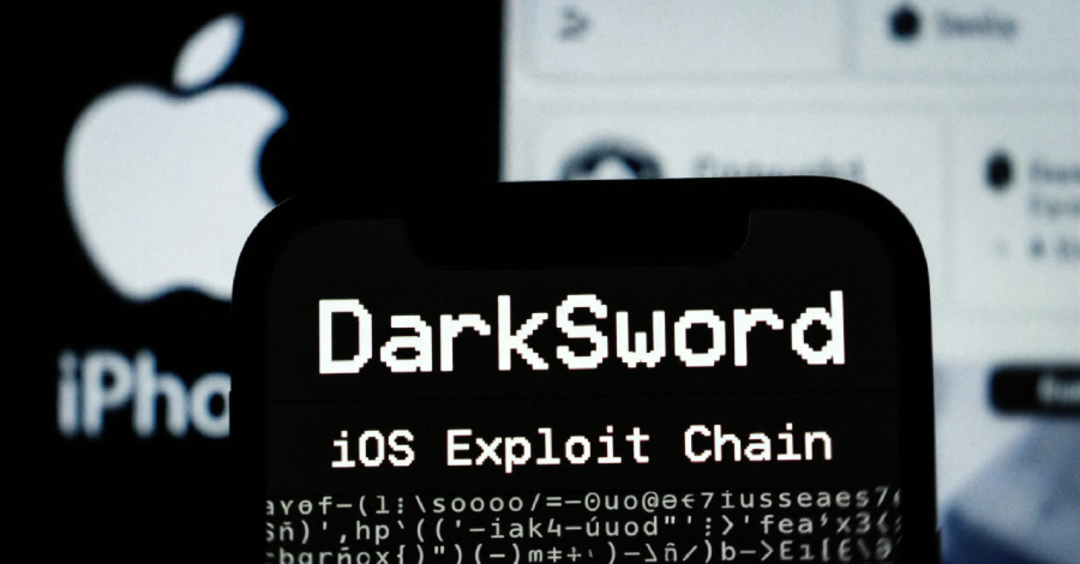
I’ve covered cybersecurity long enough to recognize when a shift is more than just another headline and the emergence of a sophisticated AI iPhone hacking tool like DarkSword is exactly that kind of moment. This isn’t simply about another vulnerability or exploit. It’s about how artificial intelligence is fundamentally changing the nature of cyberattacks.
What makes this development particularly concerning is not just its capability, but its accessibility. Tools that once required elite expertise are now becoming automated, scalable, and disturbingly efficient. As I dug deeper into reports surrounding DarkSword, one thing became clear: we are entering a phase where AI-driven cyber warfare is no longer theoretical it’s operational.
What Is DarkSword and Why It Matters
DarkSword is being described as a highly advanced AI iPhone hacking tool designed to infiltrate devices with minimal detection. Unlike traditional malware, which often relies on users downloading suspicious files or clicking malicious links, this tool leverages fileless attack techniques meaning it can operate without leaving obvious traces on the device.
From what cybersecurity analysts have observed, DarkSword is capable of extracting:
- Private messages and communications
- Cryptocurrency wallet access
- Sensitive personal and financial data
What stands out is the precision. This is not a blunt-force cyberattack. It’s targeted, adaptive, and powered by machine learning models that can evolve based on the environment they encounter.
The Rise of Fileless Attacks in AI Cybersecurity
One of the most alarming aspects of this AI iPhone hacking tool is its reliance on fileless attack methods. Traditionally, malware detection systems look for suspicious files or programs installed on a device. Fileless attacks bypass this entirely by operating directly in memory.
In practical terms, this means:
- No obvious app or file to detect
- Minimal footprint on the device
- Greater difficulty for antivirus systems to identify threats
As I analyze this trend, it becomes evident that cybersecurity defenses are being forced to evolve rapidly. Detection is no longer about scanning files it’s about identifying behavior. And when AI is involved, that behavior becomes harder to predict.
How AI Is Transforming Cyberattacks
The integration of artificial intelligence into hacking tools is not just an upgrade it’s a transformation. The AI iPhone hacking tool model allows attackers to automate processes that once required manual intervention.
AI can now:
- Adapt attack strategies in real time
- Identify vulnerabilities faster than human hackers
- Mimic legitimate user behavior to avoid detection
This creates a dangerous feedback loop. As defenses improve, AI-driven tools learn and adapt, making each new version more sophisticated than the last.
According to insights from National Institute of Standards and Technology, AI is rapidly becoming both a defensive and offensive force in cybersecurity. Their research highlights how machine learning can enhance threat detection but also how it can be weaponized at scale. For a deeper look into this evolving landscape, their official guidance on AI iPhone hacking tool risks provides authoritative context.
State-Backed Threats and Global Implications
Another layer of concern surrounding DarkSword is its alleged connection to state-backed hacking groups. If accurate, this signals a shift from isolated cybercrime to geopolitical cyber operations powered by AI.
From my perspective, this is where the story becomes bigger than just iPhones or individual users. It reflects a broader reality:
- Governments are investing in AI-driven cyber capabilities
- Mobile devices are becoming primary intelligence targets
- Everyday users are increasingly caught in global cyber conflicts
The use of an AI iPhone hacking tool in such contexts raises serious questions about privacy, surveillance, and digital sovereignty. It’s no longer just about protecting your phone it’s about navigating a world where your data may be part of a much larger game.
Why iPhones Are Still Being Targeted
There’s a common assumption that iPhones are inherently more secure than other devices. While Apple has built a strong reputation for security, no system is completely immune especially in the age of AI.
What I find particularly interesting is that tools like DarkSword are not necessarily breaking iOS in traditional ways. Instead, they exploit:
- Human behavior patterns
- System processes that are difficult to monitor
- Zero-day vulnerabilities enhanced by AI analysis
This means that even the most secure platforms can be vulnerable when attack methods evolve faster than defense mechanisms.
What This Means for Everyday Users
The emergence of an AI iPhone hacking tool like DarkSword may sound like a distant, high-level issue, but its implications are very real.
For users, this translates into:
- Increased risk of silent data breaches
- Greater need for proactive security habits
- Awareness that threats may not be visible or obvious
As I reflect on this, it becomes clear that cybersecurity is no longer just a technical issue it’s a behavioral one. Staying secure now requires not only strong systems but also informed users.
The Beginning of AI-Driven Cyber Warfare
The rise of DarkSword is not an isolated event. It’s a signal of where cybersecurity is heading. The AI iPhone hacking tool represents a new generation of threats stealthy, adaptive, and scalable.
What makes this moment significant is not just the technology itself, but the speed at which it’s evolving. We are witnessing the early stages of AI vs. AI cybersecurity battles, where both attackers and defenders rely on intelligent systems.
As someone closely following these developments, I see this as a turning point. The question is no longer whether AI will reshape cybersecurity it already has. The real question is how quickly individuals, companies, and governments can adapt.
Because in this new landscape, the biggest risk isn’t just being hacked it’s not realizing it happened at all.