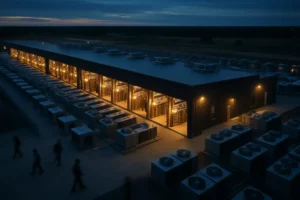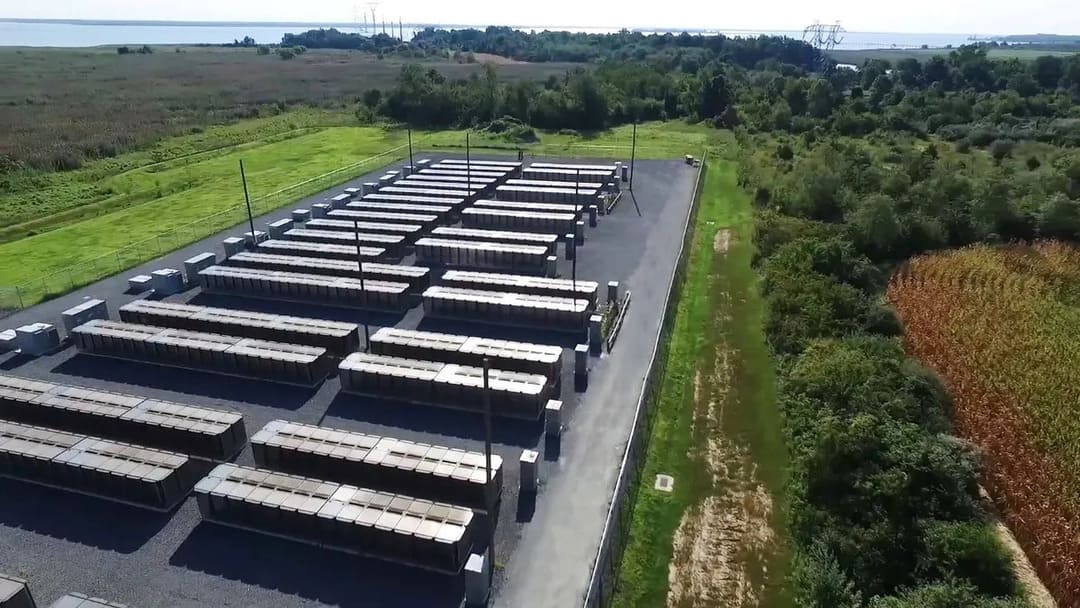
AI fuel cell power is moving from a niche energy idea into the center of the data center power debate. Bloom Energy and Brookfield expanding their AI infrastructure partnership to $25 billion shows how urgently operators are searching for power sources that can move faster than traditional grid upgrades.
The issue is simple: AI campuses are being planned at a speed utilities were not built to match. That pressure is already visible across AI data center power, where grid capacity, permitting, and local trust increasingly determine whether infrastructure can actually be built.
AI Fuel Cell Power Enters the Hyperscale Conversation
Bloom Energy and Brookfield expanded their strategic partnership from a previously announced $5 billion framework to $25 billion, aiming to finance fuel-cell power projects for AI infrastructure. The company framed the move as a way to deliver rapid, reliable, onsite power for AI factories and hyperscale data centers through a larger fuel cell financing framework.
That number matters because it moves fuel cells into the same conversation as gas turbines, grid interconnections, batteries, nuclear, and renewables. Data centers are no longer asking only whether clean power is desirable. They are asking which power option can arrive quickly, operate reliably, and satisfy customers, regulators, and communities.
That makes fuel cells a serious contender, not because they solve every problem, but because they answer one urgent question: how can a data center get dependable power without waiting years for grid reinforcement?
The Grid Delay Problem Is Creating New Winners
Traditional data center planning often assumed the grid would eventually supply the load. AI has weakened that assumption. New campuses can demand enormous amounts of power, and interconnection queues can become a practical barrier to deployment.
Fuel cells offer a different model. They can be installed onsite, scaled modularly, and paired with data center demand more directly than some grid-only strategies. That does not remove the need for gas supply, site planning, maintenance, or emissions accounting. But it can change the timeline.
This is why Brookfield’s capital matters. The challenge is not only technology. It is financing. Large AI infrastructure projects need energy systems that can be funded, built, operated, and expanded at scale.
Fuel cells are being pitched as power without the queue, a phrase that captures both their appeal and the reason regulators will examine them closely.
Fuel Cells Compete With Gas Plants, Batteries, and Grid Power
The data center power market is becoming crowded. Operators can pursue utility connections, private gas plants, renewable power purchase agreements, batteries, nuclear partnerships, fuel cells, or hybrid designs.
Each option solves one problem while creating another. Grid power can be reliable but slow to secure. Gas plants can provide large firm power but create emissions and permitting risks. Batteries improve flexibility but do not generate energy by themselves. Renewables can lower carbon exposure but need firming.
Fuel cells sit in the middle. They can provide onsite electricity with high reliability and lower local air pollutants than many combustion systems, depending on fuel type and configuration. But most commercial deployments still depend on fuel supply, often natural gas.
| Power Option | Main Advantage | Main Concern |
|---|---|---|
| Grid connection | Established utility service | Slow interconnection and upgrade risk |
| Gas-fired plant | Large dispatchable power | Emissions and local opposition |
| Fuel cells | Modular onsite reliability | Fuel source and scale validation |
| Batteries | Fast response and peak support | Limited duration without generation |
| Renewables | Lower carbon profile | Intermittency and land requirements |
The better question is not which option wins everywhere. It is which mix fits a specific site, climate target, reliability need, and construction timeline.
The Sustainability Claim Will Be Tested
Fuel cells are often marketed as cleaner and more community-friendly than traditional fossil generation. That claim may hold in some contexts, but it needs careful handling.
A fuel cell does not automatically make an AI data center low-carbon. The climate impact depends on the fuel source, operating profile, methane leakage upstream, efficiency, and whether the project displaces dirtier generation or simply adds new demand.
If fuel cells eventually run on lower-carbon fuels, their long-term sustainability story improves. If they mostly extend natural-gas dependence, critics will challenge whether the technology is being used as a cleaner label for another fossil-backed data center buildout.
This is where transparency matters. Developers should disclose expected emissions, fuel assumptions, backup systems, and whether onsite generation is paired with renewable procurement or battery storage.
The technology may be promising, but cleaner is not the same as clean.
The Hard Part Is Proving Scale
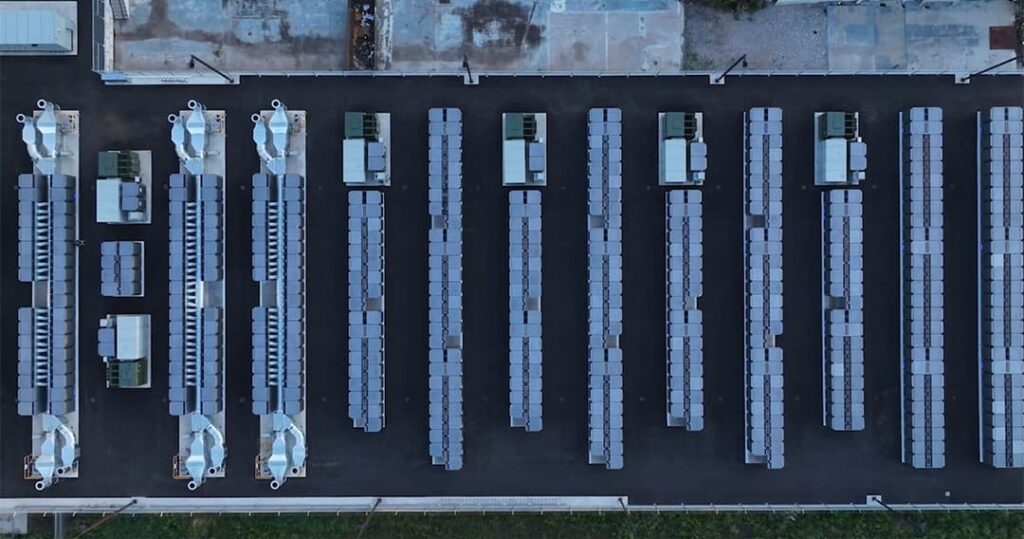
The $25 billion framework signals confidence, but the practical test is deployment. AI data centers need power in large quantities, often with strict uptime expectations. Fuel cells must prove they can serve that demand reliably across sites, climates, maintenance cycles, and fuel-market conditions.
Data center operators will also want predictable cost. Power is no longer a small operating expense. For dense AI campuses, energy strategy can shape whether a project is financially viable.
Fuel cells could gain ground if they shorten development timelines, reduce local air-quality concerns, and offer stable power costs. They could struggle if capital costs, fuel costs, permitting questions, or maintenance complexity undermine the case.
The next signal will be whether hyperscalers commit to large fuel-cell deployments as primary power rather than pilot projects or supplemental systems.
Reuters coverage of the expanded AI power partnership also described the deal as a response to rising energy needs from AI and cloud data centers.
AI Power May Become a Portfolio Strategy
The Bloom-Brookfield expansion shows that AI infrastructure will likely rely on a portfolio of power strategies. No single source can solve every regional constraint.
Fuel cells may be attractive where grid upgrades are slow, land is constrained, or communities resist large gas plants. They may be less compelling where grid power is abundant, renewable resources are cheap, or fuel logistics are difficult.
AI fuel cell power now belongs in the same strategic conversation as chips and cooling. The companies that build the next generation of AI facilities will need to decide not only what servers to buy, but what power model lets those servers operate on time.
The next AI data center power race may not run entirely through the grid. It may run through onsite systems, private finance, and hybrid energy designs that turn the power plant into part of the data center itself.