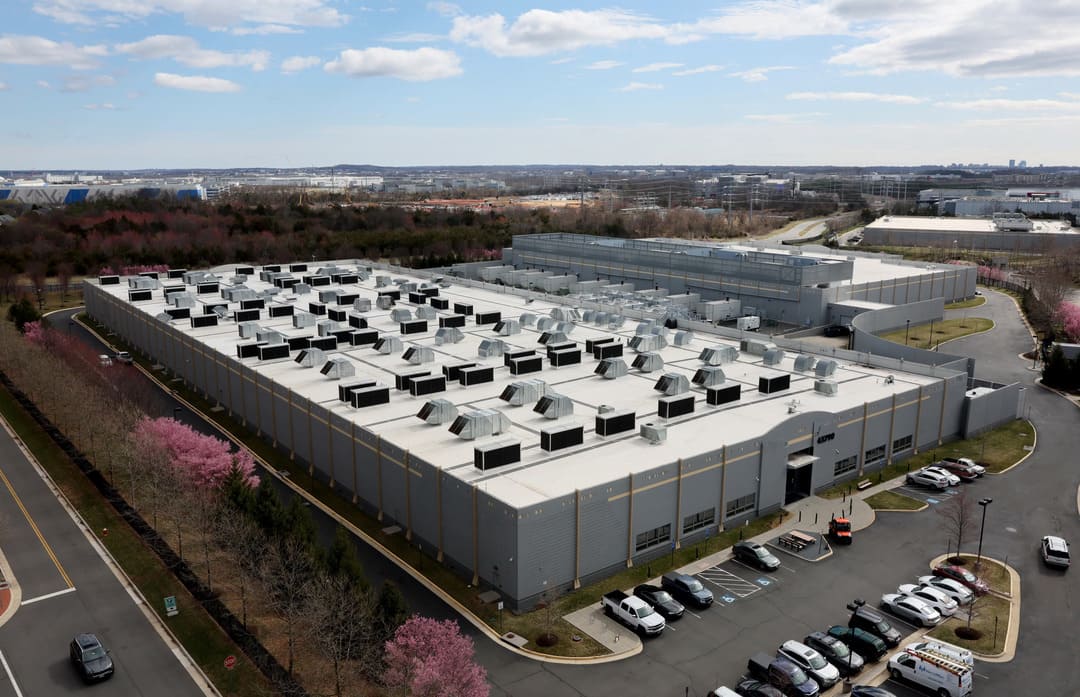
The AI data center resource bottleneck is becoming harder to dismiss as a future problem. New 2030 projections show that the physical systems behind artificial intelligence electricity, water, land, cooling, chips, and waste handling are becoming as important as the models themselves.
That changes the AI story from software acceleration to infrastructure strain. The same pressure behind AI data center land limits is now expanding into a broader question: can the world build enough compute without overloading the communities, grids, and water systems asked to host it?
The AI Data Center Resource Bottleneck Is Not Just About Power
Electricity gets most of the attention because data centers are easy to frame as power-hungry buildings filled with servers. That framing is too narrow.
The latest work from the United Nations University Institute for Water, Environment and Health argues that AI’s footprint has to be measured across carbon, water, and land at the same time. A data center can move to cleaner power and still create local water stress. A cooling strategy can reduce one problem while increasing another. A new campus can serve global users while placing local pressure on one grid or watershed.
That is the hidden tension. Compute has a location, even when the AI product feels borderless.
The 2030 Numbers Make the Pressure Harder to Ignore
The scale of the projected demand is what makes this more than another sustainability warning. A United Nations University analysis projects global data-center electricity demand could reach 945 terawatt-hours by 2030, with an associated water footprint of 9.3 trillion liters and a land footprint above 14,500 square kilometers. Readers can review the broader environmental framing through the university’s work on AI’s environmental footprint.
Those numbers matter because they shift the debate from “how efficient is this model?” to “what physical system is paying for this workload?”
The International Energy Agency also expects global data-center electricity consumption to roughly double to around 945 terawatt-hours by 2030, with data centers approaching just under 3% of global electricity use. Its energy demand from AI analysis also highlights the mismatch between fast data-center buildouts and slower energy infrastructure planning.
A data center can be operational in a few years. Transmission lines, generation projects, water planning, and local permitting often move much more slowly.
Why Water Is Becoming the Harder Conversation
Power can sometimes be bought, contracted, or backed up with new generation. Water is more local, more emotional, and harder to explain away.
Many data centers use water directly or indirectly through cooling systems and electricity generation. In regions already dealing with drought, agricultural demand, population growth, or fragile municipal systems, even a technically efficient project can become politically difficult.
This is where the AI boom collides with trust. A community may welcome jobs and investment but still ask why local water should support workloads used elsewhere. That question becomes sharper when the facility serves global AI products rather than local needs.
For data center operators, water is no longer a secondary sustainability line item. Water is a siting risk, a permitting risk, and a public-confidence risk.
The Trade-Offs Are Getting More Complicated
The challenge is that no single infrastructure choice solves everything. Lower-carbon power may require more land. Water-saving cooling can raise electricity use. Denser AI hardware can improve compute output but increase rack-level heat. New chips can improve efficiency, but the hardware lifecycle still creates material and e-waste pressure.
| Infrastructure Pressure | What AI Growth Increases | Why It Matters |
|---|---|---|
| Electricity demand | More accelerated servers and cooling load | Grid upgrades may lag project timelines |
| Water demand | Cooling and power-generation footprints | Local scarcity can trigger public opposition |
| Land demand | Campuses, substations, energy infrastructure | Siting becomes a community and permitting issue |
| Cooling complexity | Higher rack density and heat output | Efficiency gains can create new design trade-offs |
| Hardware turnover | More AI chips, servers, and components | E-waste and mineral supply become lifecycle risks |
The table shows why AI infrastructure planning cannot be reduced to one metric. Carbon matters, but so do water, land, heat, and hardware replacement cycles.
That is the uncomfortable lesson for the industry: efficiency is not enough if total demand keeps rising faster than savings.
Local Communities Are Becoming the Real Stress Test
AI products are sold globally, but data centers land locally. That creates an imbalance between who benefits and who absorbs the burden.
A major AI campus can put pressure on a specific substation, water district, road network, or local planning board. Residents may not care how advanced the model is if the project raises questions about utility capacity, drought planning, noise, emissions, or tax incentives.
That local resistance should not be treated as ignorance about technology. In many cases, communities are asking the most practical infrastructure questions: How much power will be needed? Where will the water come from? What happens during shortages? Who pays for upgrades? How many long-term jobs remain after construction?
If AI companies cannot answer those questions clearly, data centers will face more political friction. Transparency becomes capacity because projects that lose public trust can slow down even when the technical plan is sound.
The Next Signal Is Whether AI Builders Plan Like Utilities
The next phase of AI infrastructure will be defined by how seriously companies treat resource planning before construction starts.
The strongest operators will not simply chase cheap land and fast interconnection. They will need credible plans for grid capacity, cooling strategy, water resilience, land use, community engagement, and hardware lifecycle management. Investors may also start treating carbon, water, and land exposure as material risk rather than public-relations detail.
The weakest projects will look fast on paper but fragile in practice. They may depend on strained grids, uncertain water access, unclear public benefits, or efficiency claims that fail under real demand growth.
The AI data center resource bottleneck matters because it reveals the real constraint behind the AI boom. The next wave of artificial intelligence will not be limited only by chips or model design. It will be limited by whether physical infrastructure can scale without pushing power grids, water systems, land-use politics, and local trust past their breaking point.