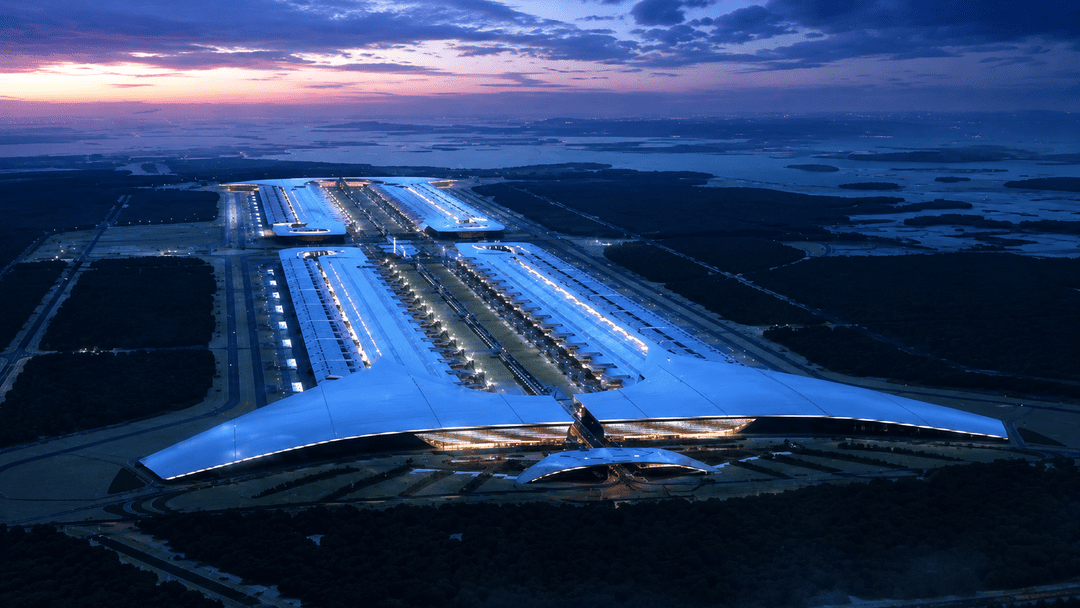
Terafab is being designed around a premise that may matter as much as its chipmaking ambitions: electricity cannot be treated as somebody else’s problem. The Terafab power strategy pairs an enormous semiconductor plan with on-site generation and battery storage, making energy supply part of the factory design.
That approach arrives while AI infrastructure is colliding with grid limits. As the AI data center power bottleneck becomes harder to ignore, the same constraint is moving upstream into factories that manufacture processors, memory, and advanced packages.
Terafab Makes Power Part of the Factory Design
SpaceX and Tesla confirmed in August that Terafab will be built in Grimes County, Texas. The initial phase carries a $16.8 billion investment figure, while the Terafab manufacturing plan calls for more than 100 million square feet of vertically integrated manufacturing space for advanced logic and memory devices, including packaging and testing.
Electricity is being designed into that footprint. The fully executed county agreement says the project is expected to use on-site generation rather than grid electricity and identifies natural-gas-fired power plants and battery storage among the planned facilities.
No generation capacity is specified in the agreement. Even so, the architecture is clear: Terafab is being planned as an industrial complex that controls more of its own energy supply instead of assuming the grid can absorb the entire load.
Why the Terafab Power Strategy Matters for AI Chip Supply
AI hardware shortages are often framed around fabrication capacity, advanced packaging, high-bandwidth memory, and specialized manufacturing equipment. Those constraints remain critical. A semiconductor factory, however, also needs dependable electricity, water, land, construction capacity, and supporting infrastructure before expensive production tools can do useful work.
For a project targeting extreme scale, power availability can become a schedule problem before production equipment arrives. Building generation alongside the fab may reduce dependence on utility interconnection timelines and give the operator greater control over when additional industrial load can come online.
That is the larger shift. Compute supply begins with energy supply. If AI companies want dramatically more chips, the physical infrastructure that manufactures those chips has to scale with similar urgency.
Vertical Integration Is Expanding Beyond Silicon
Terafab’s manufacturing concept already reaches across several semiconductor stages. Bringing logic, memory, packaging, and testing onto one campus can reduce some handoffs between sites and suppliers.
Dedicated power extends that strategy beyond the silicon process itself. Electricity becomes another production dependency that can be engineered alongside manufacturing capacity rather than treated purely as an external utility service.
This does not make Terafab independent of the semiconductor ecosystem. Lithography systems, specialty materials, chemicals, gases, manufacturing tools, and technical expertise still come from a broader supplier network. Vertical integration has limits, but controlling power can remove one particularly difficult external dependency.
On-Site Generation Solves One Problem and Creates Others
The proposed energy model offers a clear speed-to-power advantage, but it also transfers more responsibility to the site operator.
| Infrastructure question | Grid-dependent fab | Terafab-style model |
|---|---|---|
| Primary electricity source | Utility grid | On-site generation |
| Expansion dependency | Grid and interconnection capacity | Fuel, generation and construction |
| Short-duration balancing | Grid plus backup systems | Batteries and on-site systems |
| Operational responsibility | Shared with utility | More shifts to site operator |
| Strategic benefit | Established utility framework | Greater control over power timing |
Owning more of the power stack means managing fuel supply, generation reliability, maintenance, emissions requirements, battery systems, and electrical redundancy. Semiconductor manufacturing is sensitive to interruptions and power quality, so putting turbines behind the fence does not simplify the reliability problem.
Batteries can support balancing and continuity, but they do not eliminate the need for carefully engineered generation and distribution. Energy independence is not operational simplicity. It turns the power system into another mission-critical production asset with its own maintenance cycles and failure modes.
Natural Gas Makes Speed Possible but Raises the Stakes
Natural gas can provide continuous generation close to a large industrial load, which helps explain its role in projects seeking faster deployment. Terafab’s county agreement explicitly includes gas-fired power plants and battery storage, while saying the site is not expected to use grid electricity.
The tradeoff is that dedicated gas generation introduces permitting, fuel infrastructure, emissions controls, and long-term operating obligations. Those systems may remain in service through multiple generations of AI accelerators and semiconductor process technology.
There is also a planning risk. Energy markets, storage economics, environmental rules, and generation technologies can change faster than a major fab’s physical footprint. Power flexibility could become as valuable as capacity, especially if the campus eventually needs to incorporate different generation sources or operating requirements.
The Execution Signals That Will Matter Most
Terafab’s significance will depend on execution rather than headline scale. The most useful milestones will be confirmed generation capacity, battery deployment, construction progress, water infrastructure, semiconductor-equipment installation, and evidence that production can ramp at the intended scale.
Combining fabrication, packaging, testing, AI facilities, power plants, and storage on one campus can reduce external dependencies, but it also concentrates project risk. Delays in electrical infrastructure or utility systems could affect the same production schedule that vertical integration is intended to accelerate.
For the wider hardware industry, the key question is whether the model becomes repeatable. If grid constraints continue to slow AI projects, other semiconductor and compute developments may increasingly consider behind-the-meter generation or dedicated energy infrastructure during site selection.
Terafab Is Testing a New AI Industrial Model
Terafab is not simply an attempt to build a larger semiconductor factory. Its design suggests that the AI hardware race is becoming an industrial systems problem in which chipmaking, packaging, power generation, storage, water, and compute infrastructure must be planned together.
The Terafab power strategy could therefore matter far beyond one Texas campus. If dedicated energy helps the project bring semiconductor capacity online faster, future AI factories may be judged not only by process technology and production volume, but by how effectively they secure the electricity required to keep those tools running.
AI’s next hardware bottleneck may sit outside the chip itself, at the point where an enormous industrial load asks whether dependable power can arrive on schedule.
FAQs
What is SpaceX and Tesla’s Terafab?
Terafab is a planned semiconductor manufacturing complex in Grimes County, Texas, designed to combine advanced logic and memory chip production with packaging and testing at unusually large industrial scale.
Why does Terafab plan to generate its own electricity?
On-site generation gives the project greater control over power availability and development timing. That can reduce dependence on grid capacity while supporting the continuous, high-quality electricity required by semiconductor manufacturing.
Will Terafab operate completely off the Texas grid?
Current project documents say the facility is expected to rely on electricity generated by on-site power plants rather than the grid. The planned energy infrastructure also includes battery storage, although final generation capacity has not been disclosed.