Terrestrial AI compute may be the real near-term story behind SpaceX’s AI ambitions, even if the orbital data center idea grabs more attention. Space-based AI sounds futuristic, but the immediate value still appears tied to land, power, servers, customers, and the ability to rent compute on Earth.
That is a useful correction for the AI infrastructure debate. Space may eventually become part of compute strategy, but today’s pressure remains closer to AI data center power than rocket payload design.
Terrestrial AI Compute Beats the Space Hype for Now
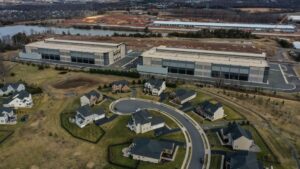
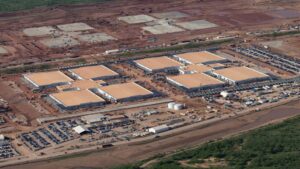
Analysts cited by Reuters see SpaceX’s nearer-term AI payoff as tethered to Earth rather than orbit, with large Colossus facilities offering data center-style compute and orbital AI remaining a more speculative, longer-term story. The argument is not that space-based AI is impossible. It is that the investable, usable infrastructure is still mostly terrestrial.
That matters because SpaceX sits at the intersection of launch capacity, Starlink connectivity, xAI, and a broader Musk-controlled technology stack. It is easy to imagine a future where satellites, communications, and AI compute converge. But imagination is not the same as deployable capacity.
A grounded view starts with what customers can use now. AI labs and enterprises need large clusters, reliable power, fast networking, support contracts, and predictable uptime. Those requirements still point to terrestrial campuses.
Reuters framed the near-term issue around earthbound AI compute, not science-fiction infrastructure. That distinction is the whole article.
Earthbound Data Centers Still Own the Customer Relationship
AI compute is not valuable simply because it exists. It becomes valuable when customers can use it reliably and economically.
That is why terrestrial AI compute has a near-term advantage. A data center can sell capacity to labs, developers, cloud partners, enterprise clients, and internal AI teams. It can run training, fine-tuning, inference, and batch workloads in familiar ways.
Orbital compute must still answer basic commercial questions. Who buys it? What workloads tolerate the latency? How are failures handled? How are data transfers secured? How often can hardware be upgraded? What does pricing look like compared with Earth-based alternatives?
Those questions do not kill the idea, but they slow it down.
| Compute Model | Near-Term Strength | Hardest Limitation |
|---|---|---|
| Terrestrial data centers | Proven operations and customer access | Power, land, cooling, and local opposition |
| Orbital data centers | Access to solar energy and off-planet scale | Launch, latency, maintenance, and refresh cycles |
| Hybrid space-Earth systems | Could combine connectivity and compute | Complex architecture and uncertain economics |
| Starlink-linked AI services | Global reach through network assets | Still depends heavily on ground infrastructure |
The table shows why the market may reward the less glamorous version first. Earth is messy, but it is where compute customers already live.
Colossus Turns SpaceX Into an Infrastructure Story
The Colossus angle matters because it reframes SpaceX’s AI value. If large ground-based compute campuses become central to the company’s AI economics, SpaceX starts looking less like a pure space company and more like a physical AI infrastructure platform.
That would put it closer to the same business tensions facing cloud providers and AI data center developers: securing power, managing utilization, finding customers, controlling cooling costs, and proving margin.
Compute resale can be attractive when demand is strong. It can also become risky if customers negotiate hard, model architectures change, or unused capacity grows.
The key point is data center economics, not orbital imagination. Whoever owns compute still has to monetize it.
The Hardware Constraint Does Not Disappear in Space
Even if SpaceX eventually pushes compute into orbit, the same hardware realities follow. AI accelerators need power. Memory needs bandwidth. Systems need thermal management. Networking needs stability. Hardware eventually becomes obsolete.
In space, those problems become more expensive to correct. Radiation can affect electronics. Launch mass matters. Replacement cycles are slower. Failures cannot be handled like a normal data center incident.
That does not mean orbital AI infrastructure has no future. It means the business case must clear a much higher bar. The first successful use cases may be narrow, specialized, or tied to satellite operations rather than general-purpose cloud AI.
The likely path is gradual: Earth-based compute first, specialized orbital capabilities later, broader space data centers much later.
Orbital Compute Has a Real Logic but a Hard Path
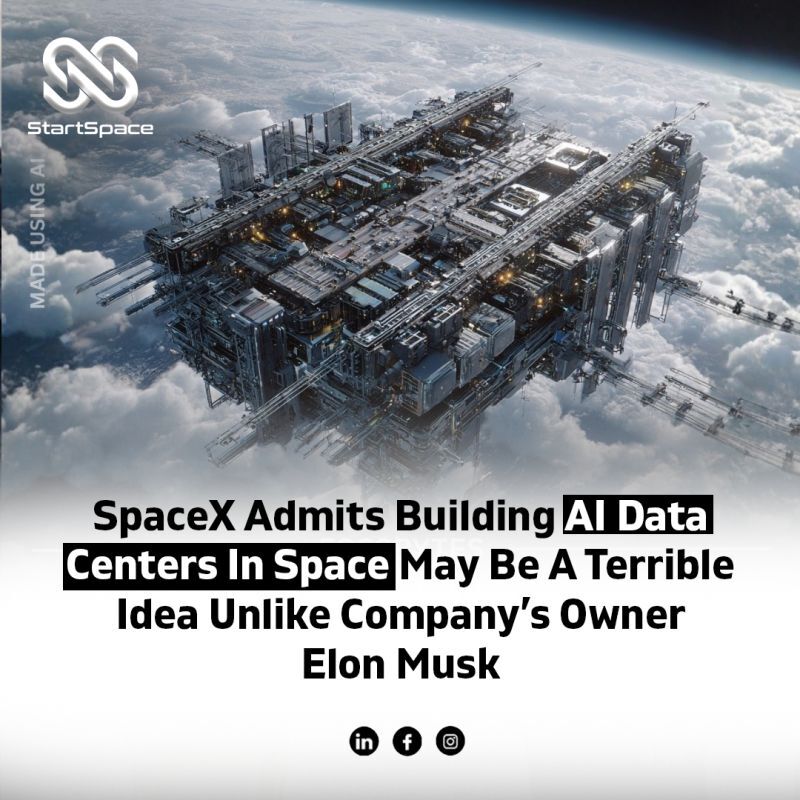
The idea of space-based AI compute is not silly. Space offers access to solar energy, unusual cooling opportunities, and a location outside the land-use fights now surrounding data centers. A future satellite network with compute payloads could theoretically serve certain AI workloads.
A research paper on a future space-based AI infrastructure system described fleets of satellites using solar arrays, optical inter-satellite links, and AI accelerator payloads as one possible long-term design for space-based compute.
But orbital compute faces brutal constraints. Launch cost, satellite maintenance, radiation tolerance, cooling, bandwidth, latency, orbital debris, hardware refresh cycles, and fault recovery all become harder when the data center is not on the ground.
A terrestrial facility may be expensive and controversial, but technicians can enter it. Components can be replaced. Power infrastructure can be expanded. Customers can be connected through established cloud architectures.
Space infrastructure has a romance problem: it sounds cleaner than Earth, but the operational burden is far less forgiving.
The Next Signal Is Whether Customers Pay for the Earthbound Version
The real test for SpaceX’s AI story is not whether people find orbital data centers exciting. It is whether customers pay for terrestrial AI compute at scale.
Watch for long-term compute contracts, utilization signals, power-expansion plans, and whether Colossus-style campuses become part of a durable business model. Also watch whether SpaceX can connect Starlink distribution, xAI demand, and external compute customers into one integrated infrastructure story.
Terrestrial AI compute keeps the argument honest. SpaceX may have a long-term space-compute vision, but the near-term AI value is likely grounded in the same hard infrastructure problem everyone else faces: power, land, chips, cooling, and customers.
Space may become the next frontier for AI infrastructure. For now, the most important frontier is still on Earth.