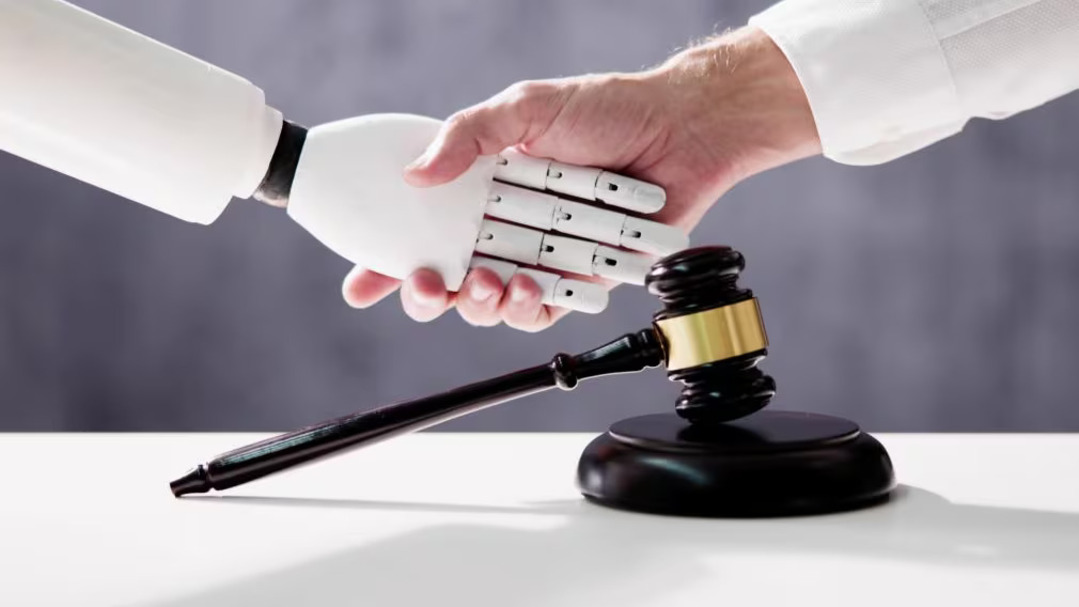
AI legal tools are moving from lawyer productivity software into the hands of ordinary people who cannot afford counsel, cannot find representation, or simply want to understand the legal system before stepping into it. That shift is powerful, but it is also unsettling: if more Americans are using AI to file lawsuits without lawyers, courts may soon face a wave of filings that test access, accuracy, procedure, and public trust all at once.
Why AI Legal Tools Are Suddenly A Courtroom Issue
The legal profession has spent years discussing artificial intelligence as a back-office efficiency tool. Lawyers could use it for drafting, summarizing, research support, document review, and workflow management. The new development is AI moving directly into the hands of self-represented litigants.
That matters because the American civil justice system already has a representation gap. Many people face housing disputes, debt claims, employment conflicts, benefits problems, family matters, and consumer issues without a lawyer. In many civil disputes, no comparable guarantee of counsel exists. The result is a system where legal rights may exist on paper, but practical access depends on money, time, literacy, and procedure.
AI can change that equation. A person who cannot afford a lawyer can ask a chatbot to explain a filing deadline, draft a complaint, organize facts, outline claims, or translate legal language into plain English. That creates value for people who feel locked out of the system. It also creates real risk when the tool gives confident but inaccurate information.
That is why the rise of AI legal tools should be treated as more than a legal-tech novelty. It is an access-to-justice and court-management story. The harder question is whether the justice system is ready for the impact.
The Appeal Is Obvious For People Priced Out Of Legal Help
Anyone who has tried to hire a lawyer understands the problem. Hourly rates can exceed the value of the claim. Contingency representation is not available for every case. Legal aid groups are often overextended. The ordinary person is left trying to decode a system built by professionals for professionals.
AI offers immediate conversation. A user can describe a problem in ordinary language and receive a structured response. The tool can draft, rephrase, summarize, and suggest next steps. It can make a person feel less lost. That emotional confidence is part of the appeal.
Yet confidence is not competence. A litigant may receive a polished filing that looks persuasive but contains weak legal theories, missing elements, incorrect citations, or procedural mistakes. Courts evaluate jurisdiction, claims, evidence, rules, deadlines, and legal standards. AI can help with language, but language alone does not create merit.
This is the first major tension. AI can reduce the fear of starting, but it can also lower the barrier to filing poorly prepared claims. That may empower legitimate plaintiffs, but it may also produce more confusion for judges, clerks, defendants, and court staff. Access without accuracy can become friction instead of justice.
The Pro Se Problem Was Already Growing
Self-represented litigants, often called pro se litigants, are not new. Courts have handled them for decades. What appears to be changing is the level of capability and volume AI may add. A person who once might have abandoned a claim after facing procedural complexity can now generate documents, motions, objections, and replies within minutes. That is procedural leverage.
That could be good. Some valid claims never reach court because the process is too difficult. AI may help people organize facts, understand options, and preserve rights. It may also help litigants identify when a claim is weak or when negotiation is smarter than escalation. Used carefully, the technology can support judgment.
The danger is that generative AI does not naturally understand the stakes. It may present speculation as law, invent case citations, misunderstand local rules, or miss filing requirements. A self-represented person may not know enough to catch those errors. That creates a dangerous gap between apparent authority and actual reliability.
One study referenced in the current legal debate placed self-represented litigants at nearly 17% of federal civil cases in fiscal year 2025, compared with a longer-term average near 11%. That does not prove AI caused the increase, but it fits the broader pattern: as AI becomes easier to use, more non-lawyers will test the courthouse door.

Courts May Face More Volume And More Cleanup
Judges are already busy. Clerks are already stretched. Many courts are still modernizing basic technology. If AI helps more people file, courts may see more cases, more motions, more amended pleadings, and more documents that look formal but require careful screening. That creates institutional pressure.
The burden will not fall only on judges. Defendants may need to respond to AI-generated filings. Lawyers may spend client money addressing claims that should have been narrowed or screened earlier. Court staff may field more questions from litigants who used AI to generate documents they do not fully understand. That is a cost problem.
The issue is not that self-represented people should be discouraged from court. The justice system should be accessible. But access has to be paired with reliable guidance. When a person files a complaint, they are activating public resources and placing obligations on other parties. That requires discipline.
Courts will have to decide where to draw the line. Should filings disclose AI assistance? Should judges warn self-represented litigants about fake citations? Should courts provide approved AI self-help tools? Should clerks be trained to recognize AI-generated confusion? Those questions demand oversight.
The Hallucination Problem Is Especially Dangerous In Law
AI mistakes are not all equal. If a chatbot invents a legal citation, misstates a deadline, or drafts a claim that waives an argument, the damage can be serious. Law is a domain where accuracy, jurisdiction, wording, and timing carry consequences.
The most famous AI legal failures have involved fake cases and false citations. That problem is especially tempting because legal writing often looks formulaic. A fabricated citation can appear authentic to a non-lawyer. A wrong procedural rule can seem official. The presentation creates credibility even when the foundation is missing.
Courts have begun warning lawyers and non-lawyers that AI use does not excuse mistakes. A person who submits a document is still responsible for its content. That principle is fair, but it is harsh for someone who used AI precisely because they lacked legal training. User-friendly tools now create professional-looking work without professional accountability.
This is why AI legal help needs clearer standards. General-purpose chatbots can be useful for orientation, but legal filings demand verification. The more formal the document, the higher the required care.
Access To Justice Is The Strongest Argument For AI
The best argument for AI in law is not efficiency for large firms. It is access. Millions of people face legal problems without meaningful assistance. They may not know whether their issue is legal at all. They may not understand which court handles it, what form to use, or what remedy they can request. AI can act as a first layer of explanation. That is genuine opportunity.
For simple tasks, the benefits could be substantial. AI can help someone summarize a timeline, organize documents, prepare questions for a consultation, understand common terms, or draft a letter before litigation begins. It can make the law less intimidating. That matters because intimidation keeps people silent and weakens participation.
There is also a middle ground between full representation and total self-help. AI could help legal aid organizations serve more people by triaging issues, generating plain-language materials, and preparing draft documents for human review. Courts could build guided tools that keep users inside approved templates instead of letting open-ended chatbots invent legal theories. That model offers scale without abandoning safeguards.
The most promising future is not AI replacing lawyers. It is AI helping people reach the right level of help sooner. Some disputes need a lawyer. Some need a form. Some need mediation. Some need a public agency. Some need a clear explanation that the claim is unlikely to succeed. Better routing would improve efficiency and reduce harm.
Why Lawyers Should Not Dismiss The Trend
Some lawyers may view AI-assisted self-representation as a nuisance. That would be a mistake. When people use AI to sue without lawyers, they are often responding to a market where legal help is too expensive, unavailable, or difficult to access. That gap creates demand.
The profession has to take that seriously. If legal services remain inaccessible for routine civil problems, people will use whatever tools they can find. Complaining about AI will not change that. The better response is to build better pathways: limited-scope representation, affordable document review, court-approved self-help systems, and clearer public education. That requires adaptation.
Lawyers also have an opportunity. A self-represented person who used AI to draft a complaint may still need a professional to review strategy, identify defects, or negotiate a settlement. New service models could meet people where they are rather than forcing them into full representation or no representation. That is a business strategy as much as a public-service need.
Courts Need Their Own AI Strategy
Courts cannot simply wait for private AI tools to shape litigation behavior. If people are going to use AI anyway, courts need a response that protects both access and integrity. That response should be practical, not alarmist, and rooted in institutional stability.
The first step is plain-language guidance. Courts can tell litigants that AI may help explain concepts but must not be trusted blindly. They can warn users to verify citations, local rules, deadlines, and factual claims. They can explain that submitting a document means accepting responsibility for it. That kind of guidance creates clarity.
The second step is approved structure. Instead of letting users generate free-form complaints from scratch, courts can offer guided interviews that gather facts and place them into proper forms. AI can assist inside boundaries. The narrower the tool, the lower the risk of hallucinated law. That creates better quality.
The third step is staff training. Clerks cannot provide legal advice, but they can help users navigate court processes. If AI-generated filings become common, court staff will need to recognize patterns, explain procedural requirements, and direct litigants toward approved resources. That is an operational priority.
The broader discussion about courts are bringing AI into the justice system matters here because the judiciary is not only responding to outside technology. Courts are beginning to consider how AI belongs inside their own workflows, rules, and public-facing systems.
A Better Framework For Responsible Use
The legal system does not need to ban AI-assisted self-representation. It needs to define responsible use. The following framework captures the practical difference between helpful assistance and dangerous overreach.
| Use Case | Helpful Role For AI | Main Risk |
|---|---|---|
| Understanding legal terms | Plain-language explanation | Oversimplification |
| Organizing facts | Timelines and issue lists | Missing key details |
| Drafting letters | Clearer communication | Overstated claims |
| Preparing forms | Better structure | Wrong jurisdiction |
| Research support | Starting point for review | Fake citations |
| Filing lawsuits | Draft assistance only | Procedural failure |
The lesson is straightforward. AI is safer when it helps users understand and organize. It becomes riskier when it substitutes for legal judgment. That boundary should guide courts, lawyers, legal aid groups, and technology companies. Responsible design needs limits.
Technology companies also have responsibility. Legal tools should distinguish between general information and legal advice. They should encourage verification, avoid fabricated citations, and direct users to jurisdiction-specific resources. If a system cannot verify a case, it should not present the case as real. That is basic responsibility.
The Next Phase Of Legal AI Will Be About Trust
The public will not judge legal AI only by innovation. It will judge the tools by outcomes. Did they help someone avoid eviction? Did they help a consumer recover money? Did they help a court understand a dispute faster? Or did they flood the system with confusion and false authority? The answer will determine public trust.
The most likely future is uneven. Some courts will build careful AI-assisted self-help systems. Some litigants will keep using general chatbots. Some judges will be patient. Others will be stricter. Some lawyers will adapt. Others will resist. That unevenness will create confusion until better norms develop.
For now, the responsible view is neither panic nor blind optimism. AI can help people understand a system that has been too difficult for too long. It can also mislead them at the exact moment they need precision. Both statements are true, and serious policy has to hold them together with balance.
AI legal tools matter now because they are changing who feels capable of entering court. That can expand access to justice, but it can also expose courts to flawed filings, false citations, and procedural overload. The next challenge is not stopping people from using AI; it is building a legal system where AI support improves access without sacrificing accuracy.