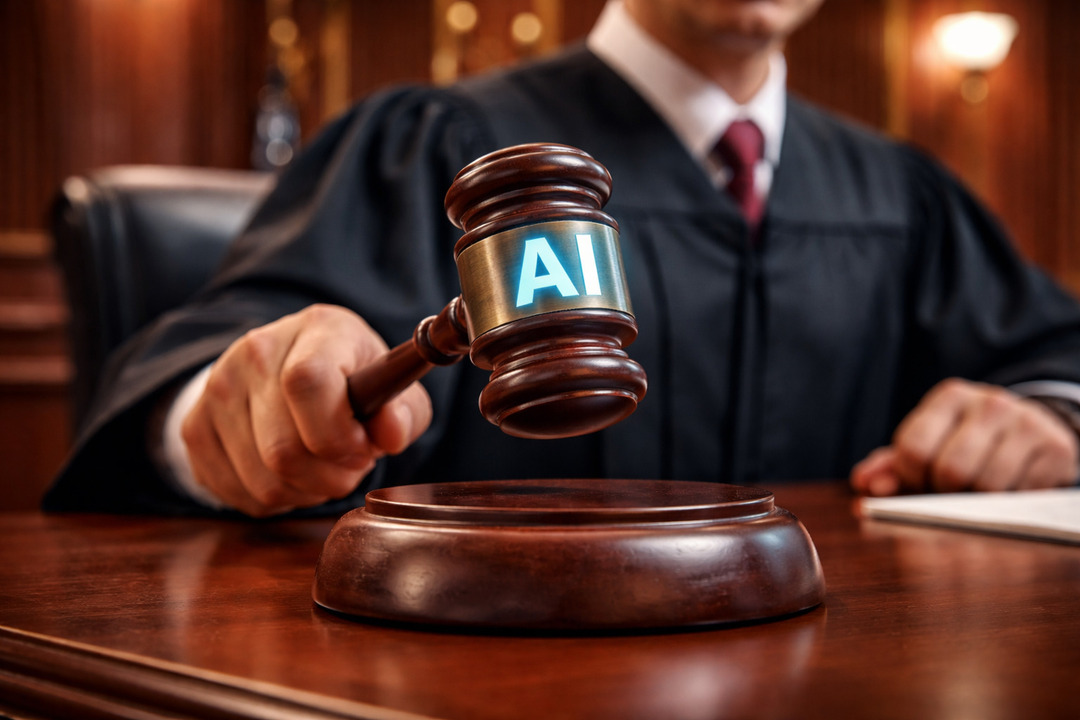
I have covered enough technology cycles to know that most breakthroughs arrive first as spectacle. In law, that phase is ending. Judicial AI is no longer a futuristic talking point or a conference-panel abstraction; it is becoming part of the working machinery of the courtroom.
That shift matters because courts are not startup labs. They are among the most tradition-bound institutions in public life, built on precedent, process, and the slow accumulation of trust. When judges begin folding artificial intelligence into research, drafting, and document-heavy review, the story is no longer about novelty. It is about power, legitimacy, and the quiet modernization of one of the most consequential professional environments in the country.
Why Judicial AI Has Moved From Fringe To Workflow
For years, legal AI was largely framed as a law-firm efficiency tool. The pitch was simple: help lawyers sort documents faster, summarize cases more quickly, and cut time spent on repetitive tasks. What is different now is the setting. The technology is advancing beyond private practice and into the judiciary itself, where the standards for accuracy, neutrality, and accountability are far higher.
That evolution was probably inevitable. Judges and court staff operate inside a system overloaded with information. Motions, briefs, exhibits, procedural histories, precedent, and competing arguments arrive in dense volumes, often under severe time pressure. Even the most experienced chambers must process and organize enormous amounts of text before legal judgment can begin. In that environment, judicial AI offers something courts have always needed: not replacement, but compression. It can surface patterns, sort materials, flag relevant authorities, and accelerate the early stages of legal analysis.
What makes this moment especially significant is that the use cases are no longer theoretical. Judges are beginning to apply AI in narrow, practical ways: to streamline legal research, review filings, organize issues for hearings, and assist with early drafting after the core decision-making has already occurred. That distinction is critical. The technology is entering the workflow not as a substitute for judicial reasoning, but as a support layer wrapped around it.

The Most Important Use Case Is Not What Many People Think
Public debate around AI in law tends to jump immediately to the most dramatic fear: a machine deciding cases. That is not where the real action is. The more meaningful development is far more mundane and, in my view, far more powerful. Judicial AI is being used to manage legal complexity before and after the point of decision.
That means summarizing filings, identifying relevant authorities, structuring competing arguments, and assisting with draft language once the legal conclusion has been reached by a human judge. In other words, the technology is strongest in the zones where legal work is labor-intensive but not inherently discretionary.
This is exactly why adoption has become more plausible. Courts do not need an algorithm to weigh credibility, interpret live testimony, or exercise judgment. They do need help navigating the avalanche of paper and digital text surrounding nearly every contested matter. The administrative and analytical burden of modern litigation is immense, and any system that safely reduces friction without diluting responsibility will draw serious attention.
There is also a generational shift underway. As digital-native tools become commonplace across government, resistance softens. What once seemed improper can begin to look merely practical, provided the boundaries are clear. That is how institutional change often happens: not through grand declarations, but through limited, repeatable uses that prove useful enough to become ordinary.
Efficiency Is Only Half The Story
The strongest case for judicial AI is efficiency, but efficiency alone will not justify its expansion. Courts are not fulfillment centers. They are guardians of due process. Every gain in speed must be weighed against a deeper question: does this technology preserve the integrity of the decision-making process?
That question cannot be answered with productivity metrics alone. A faster draft is not necessarily a better one. A concise summary is not necessarily a faithful one. The legal system depends on nuance, and nuance is exactly where generative systems can fail. They may omit key facts, flatten competing arguments, or present plausible but incorrect reasoning with unsettling confidence.
This is why the human role remains non-negotiable. Judges can use AI to reduce clerical and cognitive drag, but they cannot outsource discernment. The authority of a ruling depends not just on the correctness of the outcome, but on the legitimacy of the reasoning behind it. If judicial AI is to endure, it must operate within a disciplined structure of review, verification, and clearly assigned responsibility.
That is also why training and governance matter more than model performance alone. A powerful tool in an unstructured environment is a liability. A moderately capable tool, carefully bounded and consistently supervised, is far more likely to improve judicial work without undermining confidence in the bench.
The Trust Problem Courts Cannot Ignore
Every institution adopting AI eventually runs into the same wall: trust. In the judiciary, that wall is higher and harder than almost anywhere else. Courts do not simply need technology that works most of the time. They need systems that can be audited, challenged, and understood within a constitutional framework.
The greatest risk is not just factual error. It is opacity. If a judge uses AI to help structure a draft or summarize legal authorities, what record should exist of that assistance? How should chambers verify the output? What happens when a subtle distortion makes its way into an order? And if litigants suspect that machine-generated language shaped a ruling, what level of disclosure becomes necessary to preserve public confidence?
These are not peripheral concerns. They go to the heart of legitimacy. Courts derive authority from transparency of method as much as from force of law. Any widespread use of judicial AI will need norms that explain where the technology belongs, where it does not, and how its use can be scrutinized without turning every case into a technical dispute.
That conversation is already overdue. The judiciary does not have the luxury of waiting for perfect consensus while the tools quietly spread through chambers. The practical question is no longer whether AI will touch legal work inside courts. It is whether the rules governing that touch will be explicit enough to protect both efficiency and fairness.
For courts seeking a broader institutional perspective on technology modernization, the judicial AI conversation belongs within the larger framework of how the federal judiciary manages information, transparency, and public trust.
A Cultural Shift Is Taking Place Behind The Bench
What fascinates me most is not the software itself, but the cultural signal embedded in its use. Judges are trained to be skeptical, precise, and deeply aware of the consequences of language. When professionals with that mindset begin integrating AI into their routines, even cautiously, it suggests the technology has crossed an important threshold.
This does not mean enthusiasm is universal. Nor should it be. Healthy skepticism is exactly what the moment demands. But skepticism is no longer preventing experimentation. Instead, it is shaping the terms of adoption. That is a very different phase of maturity.
In practical terms, we are watching the judiciary separate useful assistance from unacceptable delegation. That distinction may become the governing principle of the next era of legal technology. AI can help courts process, organize, and prepare. It cannot be allowed to decide what only a judge can decide.
Why This Matters Right Now
The rise of judicial AI matters now because it marks a turning point in how public institutions absorb advanced technology. Courts have begun to test whether AI can relieve strain without weakening judgment, and that experiment will influence not only legal practice but public expectations of fairness itself. The stakes are unusually high: if the judiciary gets this right, it could reduce burdens, improve workflow, and modernize legal operations without sacrificing legitimacy. If it gets it wrong, the damage will extend beyond efficiency failures into the far more serious territory of trust. That is why this moment deserves close attention. The future of AI in law will not be decided by the loudest demo or the flashiest product launch. It will be decided in the disciplined, cautious, deeply human world behind the bench.