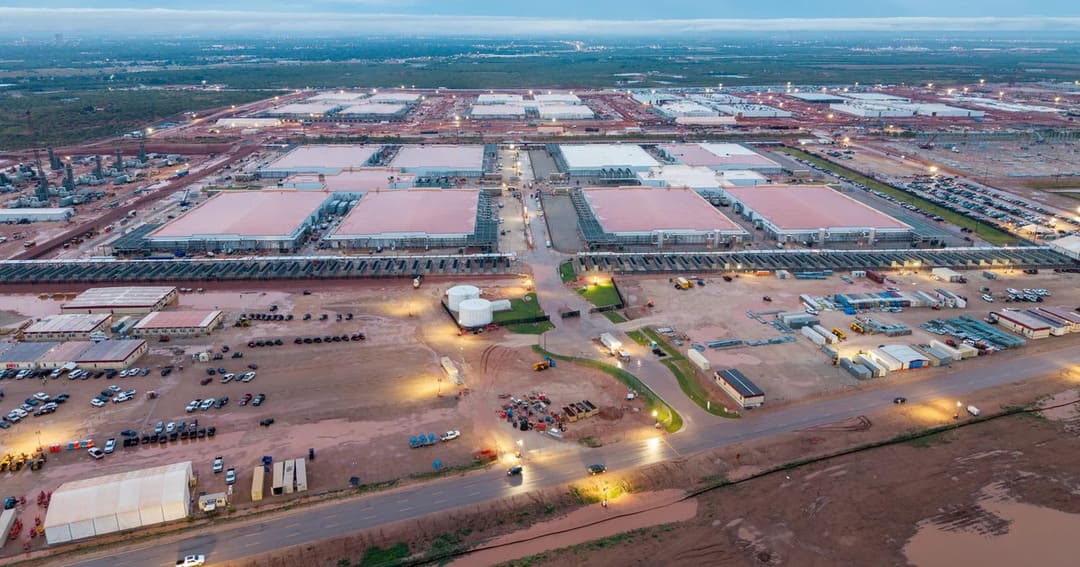
Texas data center politics has moved from zoning rooms into campaign messaging because voters are starting to connect AI infrastructure with electricity bills, rural land, water pressure, Chinese equipment, and local control. Texas still wants to be a major AI power hub, but the politics around who pays for that buildout are becoming harder to manage.
That shift matters because data centers are no longer treated as quiet industrial projects. They now sit inside the same public fight over AI grid rules that is forcing states, utilities, and developers to explain how hyperscale growth affects ordinary ratepayers.
Texas Data Center Politics Has Entered the Senate Race
Texas Attorney General Ken Paxton, a Republican U.S. Senate candidate, released a “Texas First Data Center Plan” on August 24 that pushed data centers directly into the state’s 2026 campaign conversation. The plan includes proposals to ban Chinese technology from U.S. data centers, hold companies criminally liable if their facilities power AI chatbots that endanger children, support limits on rural siting, and revisit tax incentives tied to the industry.
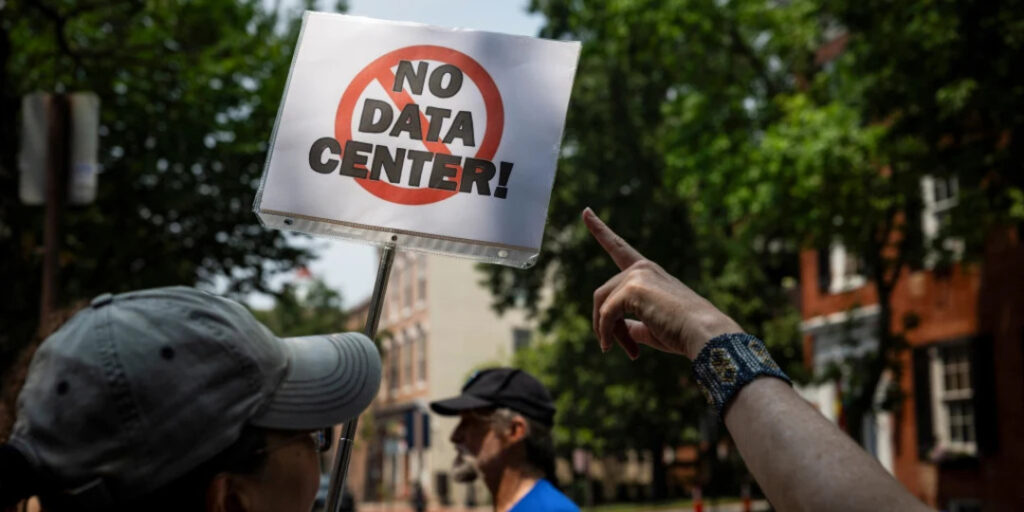
That platform landed after months of rising pressure around data centers in Texas politics. State Rep. James Talarico, a Democratic U.S. Senate candidate, had already made data center accountability a campaign issue, arguing for stronger rules around water, power costs, and local impact.
This article is not about ranking candidates or endorsing a political position. The important infrastructure point is simpler: data centers have become politically visible because the costs and benefits are no longer abstract.
A voter may not care which GPU architecture powers a data hall. They may care very much if the project changes electricity demand, water planning, tax policy, or rural land use near their community.
The campaign issue is local impact at scale.
Why Texas Became the Perfect Flashpoint
Texas is an obvious magnet for AI data centers. It has large land parcels, major energy resources, a business-friendly reputation, fast-growing technology corridors, and an independent grid that gives state officials unusually direct visibility into large-load planning.
Those same strengths create political risk. If data centers arrive quickly, Texans may ask whether the grid can handle the load, whether residential customers will pay for infrastructure upgrades, and whether rural communities have enough authority to shape siting decisions.
The scale of the pipeline makes the issue difficult to ignore. The Texas Tribune has reported that the state has 335 existing data centers and more than 248 additional facilities in development or planning as part of its coverage of Paxton’s data center platform.
That volume changes the politics. One project can be negotiated locally. Hundreds of projects can become a statewide argument about growth, regulation, and fairness.
Texas is not rejecting AI infrastructure. It is debating the terms under which it gets built.
Ratepayer Protection Is Becoming the Center of the Debate
The most powerful political question is not whether data centers create economic activity. Many do. The sharper question is whether households and small businesses end up absorbing costs created by private AI campuses.
Governor Greg Abbott directed the Public Utility Commission of Texas and ERCOT in June to take steps aimed at shielding residential customers from data center infrastructure costs. His office said data centers should reduce costs for residential electricity customers, avoid draining water needed by communities, and account for neighborhood impacts through a ratepayer-cost directive.
That language matters because it reframes the issue. Data centers are no longer being assessed only by jobs and tax revenue. They are being evaluated by whether they bring enough power, pay for the infrastructure they require, and avoid shifting risk to the public.
This is the key pivot in Texas data center politics: AI growth is being asked to prove that it is additive, not extractive.
The industry’s strongest argument is investment. Its weakest argument is silence on costs.
Rural Siting Turns Infrastructure Into Identity
Rural data center fights are not only about megawatts. They are about identity, land use, water, traffic, noise, visual impact, and whether communities feel decisions are being made somewhere else.
In Texas, rural politics can be especially sensitive because land carries cultural and economic meaning. A large AI campus may be seen as industrial modernization by one group and outside corporate intrusion by another.
Developers often emphasize construction jobs, local spending, and tax base expansion. Residents may respond by asking how many permanent jobs remain after construction, how much water will be used, and whether substations or transmission lines will change the character of the area.
The debate now has several competing policy frames.
| Policy Frame | Supporters Emphasize | Critics Question |
|---|---|---|
| Economic development | Jobs, tax revenue, and AI leadership | Whether benefits match local disruption |
| Ratepayer protection | Data centers paying their own way | How costs are tracked and enforced |
| Rural siting limits | Protecting neighborhoods and land use | Whether restrictions slow investment |
| Security screening | Keeping Chinese technology out of critical infrastructure | How broad the restrictions become |
| Local control | Communities shaping approvals | Whether fragmented rules create uncertainty |
The table shows why the issue is politically durable. Each side of the argument speaks to a real infrastructure concern.
Chinese Equipment Adds a National Security Layer
Paxton’s proposal to restrict Chinese technology from data centers adds another dimension to the Texas debate. It moves the topic beyond local opposition and into national security, supply chain control, and critical infrastructure risk.
That angle is likely to grow. AI data centers are not only warehouses of servers. They include optical networking, power systems, surveillance equipment, cooling controls, management software, and other components that can raise security questions.
The politics become more complicated when the same project is discussed as an economic-development opportunity, a grid burden, a rural land-use problem, and a strategic technology asset. Each frame pulls policymakers in a different direction.
For developers, the lesson is clear. A data center proposal now needs a security story, a power story, a water story, and a local benefits story.
Anything less leaves room for opponents to define the project first.
Public Opposition Is Becoming Easier to Organize
National polling gives Texas politicians a reason to pay attention. The Annenberg Public Policy Center found that 61% of U.S. adults opposed construction of new data centers in their area in a survey conducted from June 16 to July 19, up from 49% in a survey ending in March through its local opposition survey.
That rising opposition does not mean every data center will be rejected. It means the default public posture is becoming more skeptical.
The next pressure point is whether Texas turns campaign language into policy. Watch for movement on infrastructure cost allocation, water reporting, tax incentives, rural siting authority, foreign equipment restrictions, and requirements for data centers to bring new power generation.
Developers should also watch whether industry commitments become specific enough to calm voters. General promises about innovation will not settle local fights if residents want numbers, enforceable agreements, and clear cost protection.
Texas data center politics is becoming a campaign weapon because AI infrastructure has become physically visible. The industry’s future in the state will depend on more than power access and land deals. It will depend on whether voters believe the buildout protects the grid, respects rural communities, secures critical systems, and pays for the burden it creates.
The next AI data center fight in Texas may not start with chips. It may start with a campaign ad, a utility hearing, or a county meeting where residents ask a simple question: who benefits, and who pays?