Water utility cybersecurity has moved from a back-office IT issue into an operational safety concern. The recent pattern of attacks and federal warnings shows that drinking water and wastewater operators are being tested through exposed control systems, remote access paths, and weak reporting channels rather than only through conventional enterprise networks.
The risk is not theoretical, but it should not be overstated either. The public evidence points to disruption attempts, control-interface interference, and insecure operational technology exposure. It does not support broad claims that U.S. drinking water quality was widely compromised in the 2026 incidents described in the research record. The more precise lesson is that many utilities are being forced to defend industrial systems that were often designed for availability and long service life, not hostile internet exposure.
Why The 2026 Incidents Changed The Risk Model
The U.S. water sector is unusually fragmented. As of May 2026, the country had nearly 170,000 water and wastewater systems, and the Government Accountability Office reported that many are increasingly connected through internet-enabled operational technologies with potential public health and environmental consequences if disrupted GAO water sector report. That scale matters because the sector includes very large utilities with security teams and small rural systems with limited staff, procurement capacity, and cyber monitoring.
Attackers Are Testing Operational Edges
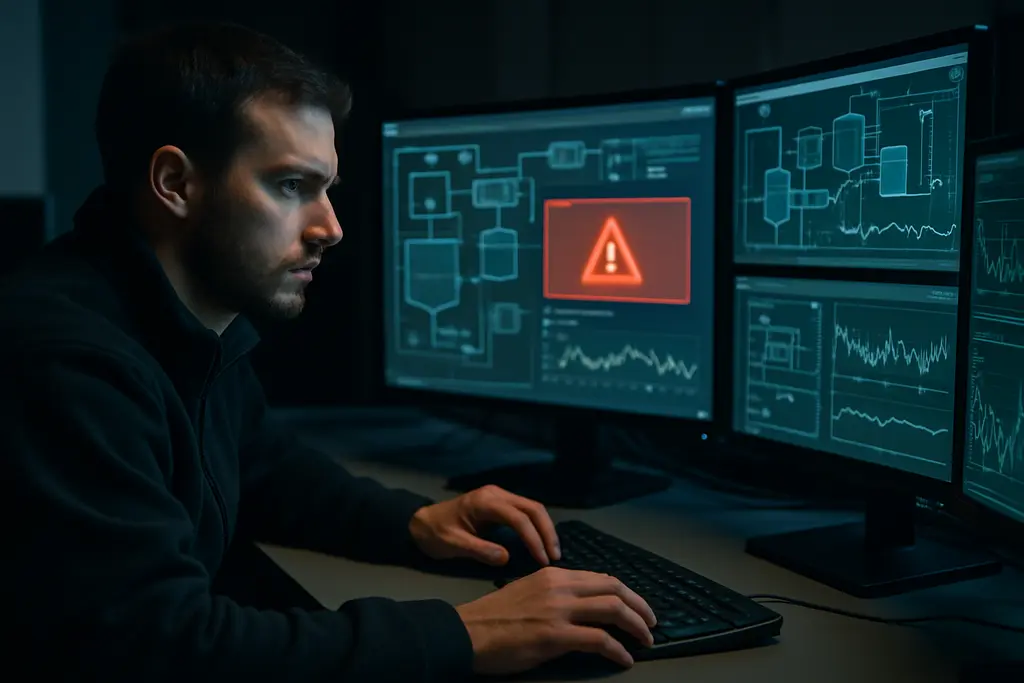
The clearest shift is the attention on operational technology, including programmable logic controllers, sensors, human-machine interfaces, and configuration management. These assets are not interchangeable with ordinary business laptops. A compromised workstation may interrupt billing or email; a compromised control interface can disable automation, mislead an operator, or force manual operation. That distinction is central to any useful risk assessment.
Reported 2026 incidents in municipal water environments showed a pattern that defenders in other infrastructure sectors will recognize: internet-exposed systems, weak segmentation, remote administration, and legacy devices that are difficult to patch without planned downtime. Similar OT constraints appear in smart energy OT security, where monitoring models can help but do not replace asset ownership, configuration control, and tested manual fallback procedures.
What Recent Water Utility Cybersecurity Warnings Show
On April 7, 2026, EPA, FBI, CISA, and NSA issued a joint advisory warning that Iran-affiliated actors were targeting U.S. drinking water and wastewater systems. The advisory described exploitation of operational technologies, including tampering with sensors, disruption of human-machine interfaces, and wiping configurations EPA joint advisory. Those examples are significant because they target operator trust in the control layer.
Water Utility Cybersecurity Depends On OT Visibility
A utility cannot defend assets it cannot identify. For water utility cybersecurity, asset visibility means more than an IP address inventory. Operators need to know which PLCs control which pumps, which remote sessions can reach HMIs, which vendors maintain access, and which systems have externally visible management portals. Passive monitoring can reduce disruption risk during discovery, but it still requires staff who can interpret alerts in the context of treatment operations.
Visibility also has a safety dimension. If a sensor value changes, staff need confidence that the value reflects process conditions rather than interference. If an HMI stops responding, the response plan must distinguish between a network outage, a device failure, and an intentional cyber event. That requires pre-planned operating procedures, not just endpoint tools.
Control Failures Are Often Operational Failures
Recent attacks reinforce an uncomfortable point: many cyber failures in utilities become operational failures because the environment lacks margin. A small operator may have one or two people who understand both the treatment process and the control system. If automated controls are disabled, manual operation may be safe but slower, and staff fatigue can become a real constraint during a prolonged incident.
Remote Access Is A High-Value Weak Point
Remote access is useful for vendors, emergency support, and small teams that cannot keep specialists on site at all times. It is also a common point of failure. Defensive controls should include strong authentication, time-bound access, logging, least-privilege accounts, and a clear process for disabling vendor access when it is not needed. None of these controls is exotic, but implementation is hard in facilities running older equipment and constrained budgets.
The most practical question is whether the utility can operate safely if remote access is cut off. If the answer is no, the system is dependent on a path that attackers will treat as a priority target. Testing that dependency during planned exercises is safer than discovering it during an incident.
| Observed Risk | Operational Impact | Defensive Lesson |
|---|---|---|
| Exposed control interfaces | Unauthorized interaction with plant systems | Reduce exposure and require controlled access paths |
| HMI disruption | Operators lose process visibility | Maintain manual procedures and alternate monitoring |
| Configuration wiping | Devices may require restoration before normal operation | Keep verified backups and restoration runbooks |
| Weak asset inventory | Incident scope is unclear | Map PLCs, sensors, HMIs, vendors, and network paths |
Governance Gaps Still Matter

The technical controls are only part of the problem. The GAO report described persistent cybersecurity threats and actions still needed across the sector, including challenges in prioritizing risk nationally. The research record also points to legal and authority gaps that complicate mandatory risk assessments and minimum protections, especially for small and rural systems. That creates an uneven baseline: some utilities can hire specialists and deploy monitoring, while others struggle to fund basic segmentation or staff training.
Water Utility Cybersecurity Reporting Remains Fragmented
Incident reporting is not only a compliance exercise. It helps federal agencies and peer utilities understand what attackers are targeting, which mitigations are working, and where shared warnings are needed. If reports do not reach the right channels quickly, the sector loses time. If the process is confusing, smaller utilities may delay reporting or avoid it until operations are already affected.
Security teams should treat reporting procedures as part of incident response, not as paperwork after recovery. A usable plan identifies who contacts state regulators, federal partners, vendors, insurers, local leadership, and public communications staff. It should also define what technical evidence can be shared without exposing sensitive plant details.
Readers tracking adjacent topics related to infrastructure security can explore more at Camp Techwise, which offers broader engineering insights. However, the water sector faces its own unique constraints, including public health duties, local funding challenges, legacy process equipment, and a duty to maintain continuous treatment operations even when managing cyber threats.
- Prioritize externally exposed OT assets before lower-risk enterprise systems.
- Use controlled remote access with strong authentication and complete session logging.
- Keep offline or otherwise protected configuration backups for control devices.
- Test manual operations and restoration plans under realistic staffing limits.
- Clarify reporting paths before an incident occurs.
Water Utility Cybersecurity Lessons From 2026 Incidents
The most useful lesson from the 2026 record is not that every utility needs a large security operations center. Many cannot fund or staff one. The lesson is that basic control-system hygiene has to be tied to how the plant actually runs: which assets are reachable, which functions can be performed manually, which configurations can be restored, and who has authority to isolate systems during a disruption.
The near-term lesson for water utility cybersecurity is disciplined reduction of preventable exposure. That means fewer open management paths, tighter vendor access, verified backups, practical monitoring, and incident reporting that operators can use under pressure. AI-assisted monitoring may help some larger utilities classify alerts or detect unusual patterns, but it will not compensate for unknown assets, unmanaged remote access, or missing restoration procedures. For smaller systems, the highest-value improvements are often procedural and architectural before they are algorithmic.
Recent attacks did not prove that the water sector is defenseless. They showed that attackers can find weak operational edges in a fragmented public-service sector. Treating those edges as engineering risks, rather than abstract cyber risks, is the more credible path to reducing harm.