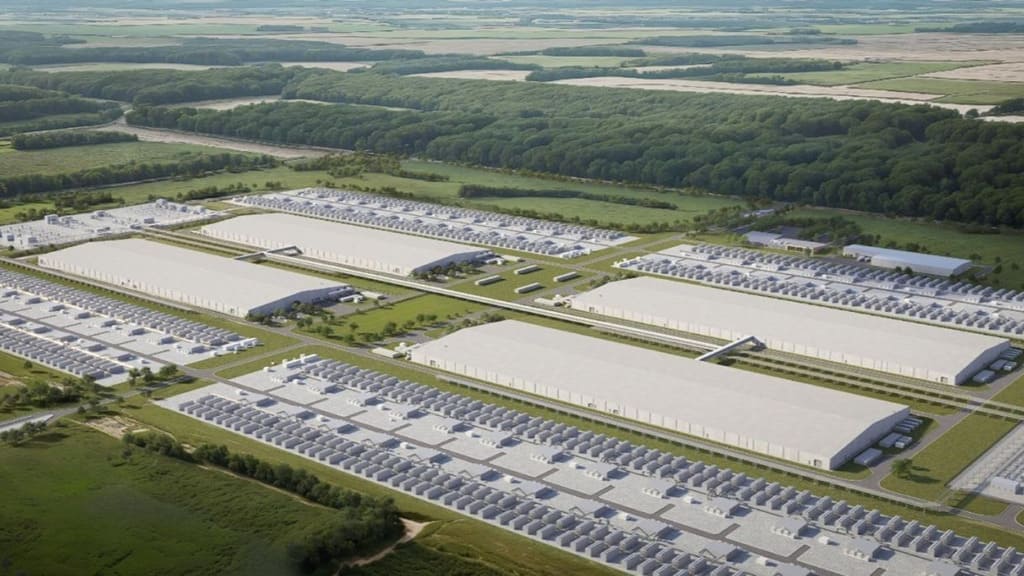
The Meta Alberta data center is not just another hyperscale project with a large price tag. It is a clear signal that AI companies are choosing locations based on power access, climate advantage, land availability, and political appetite for energy-intensive infrastructure.
Meta’s first Canadian data center puts Sturgeon County, Alberta, into the middle of the AI buildout debate. The project belongs in the same conversation as AI data center scale because the next generation of facilities is being shaped as much by electricity and cooling as by GPUs.
Meta Alberta Data Center Turns Site Selection Into Strategy
Meta said it is breaking ground on a 1-gigawatt AI-optimized data center in Sturgeon County, its first in Canada and its 33rd globally. The company said the project represents more than CAD $13 billion in investment, with more than 3,000 construction workers expected at peak and more than 300 operational jobs once running.
The official project announcement also said Meta plans about CAD $60 million in local infrastructure improvements, grants, and nonprofit funding tied to the first Canadian campus. Those details matter because they show how hyperscale operators now have to sell more than compute capacity. They have to sell the civic case for hosting it.
The Alberta pitch is direct: large land parcels, colder weather, available energy, and a government eager to attract AI infrastructure. Reuters reported that the site is planned as a 1-gigawatt facility with potential to scale to 1.8 gigawatts, making energy strategy the center of the story rather than a supporting detail.
That is the real shift. AI data center planning is becoming location economics with servers attached.
Cheap Gas and Cold Weather Are Not Small Advantages
Alberta’s appeal is not hard to understand. Cooler temperatures can help data center cooling economics. Large sites can support campus-style development. The province also has abundant natural gas, which can be attractive to operators looking for reliable power supply.
For AI workloads, that reliability matters. Dense GPU clusters do not behave like ordinary office buildings. They need power at scale, cooling at scale, and a long-term view of utility capacity.
But Alberta’s advantage comes with a political tradeoff. A data center anchored partly around natural gas will face climate questions, even if the facility uses advanced cooling or offsets electricity with renewable energy arrangements. The public will ask whether AI growth is compatible with emissions goals, and whether local communities receive enough benefit for the infrastructure burden.
Meta can point to jobs, investment, and infrastructure funding. Critics can point to water, emissions, grid strain, and land use. Both arguments will shape how similar projects are received.
What Alberta Is Really Testing
| Site Factor | Why It Helps Meta | Question It Raises |
|---|---|---|
| Cold climate | Can reduce cooling stress | Does it offset the scale of power demand? |
| Natural gas access | Supports reliable energy planning | Will emissions become a political liability? |
| Large land base | Allows campus-style expansion | How much local infrastructure must change? |
| Government support | Speeds economic-development momentum | Will public oversight keep pace? |
| Canadian location | Expands Meta’s global data center footprint | Does Canada become an AI infrastructure hub? |
The table shows why the Meta Alberta data center is more than a regional investment. It is a test of whether AI campuses can use power, climate, and geography as competitive advantages without creating a local backlash.
Canada Gets an AI Infrastructure Moment
Canada has strong AI research history, but AI infrastructure is a different test. Research talent and model ambition matter, yet the physical layer decides whether large-scale AI services can be built and operated domestically.
A major Meta campus gives Alberta a chance to claim a role in North America’s AI hardware footprint. It also gives Canada a larger stake in the practical side of AI expansion: data centers, energy, water systems, workforce pipelines, and permitting.
That does not mean Canada suddenly becomes the center of the AI compute race. The United States still dominates hyperscale AI infrastructure. But the Canadian buildout shows how the map is widening.
If Alberta proves attractive, other provinces and countries will study the model. The question will be whether they can offer the same blend of power, land, climate, and political support.
The opportunity is regional AI positioning, not just one corporate facility.
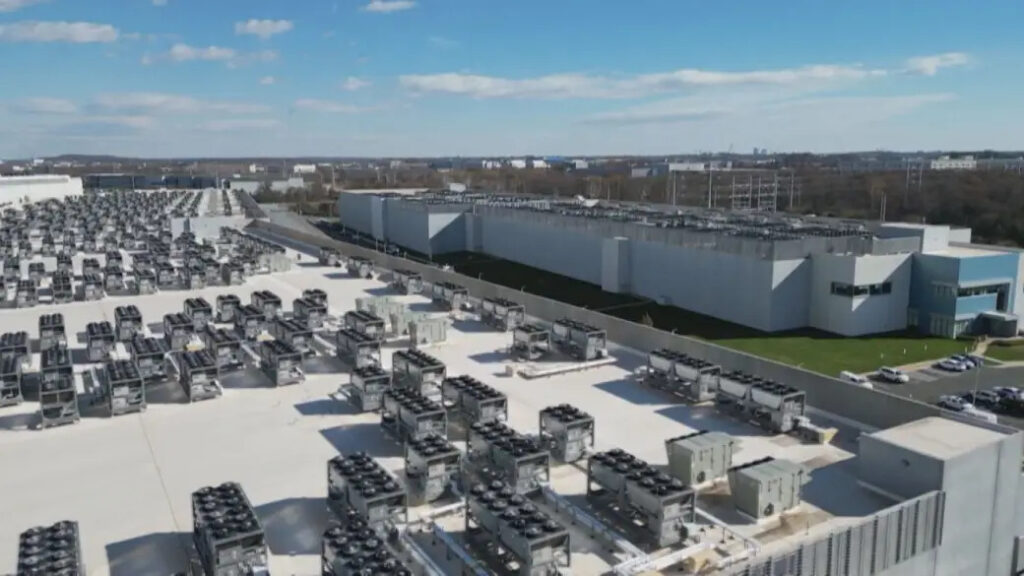
The Local Benefits Must Be More Than Announcements
The job figures are meaningful, but data center employment is often front-loaded. Construction work can be large during the build phase, while permanent operational roles are smaller relative to the capital invested.
That does not make the project weak. It means the long-term value proposition must include more than jobs. Tax revenue, infrastructure upgrades, local suppliers, workforce training, energy investment, and community grants all become part of the equation.
Local governments should also ask harder questions early. What happens if the facility expands toward 1.8 gigawatts? What grid upgrades are needed? What backup power systems will be used? How will water use be measured? How will emissions be reported?
Those questions are not anti-development. They are the price of hosting infrastructure at AI scale.
The Next Signal Is Whether Alberta Becomes a Pattern
The Meta Alberta data center will matter most if it becomes a template. If other hyperscalers follow, Alberta could become a serious AI infrastructure zone. If not, the project may remain a high-profile outlier.
The key signals are clear. Watch whether Meta secures long-term power supply smoothly, whether local opposition grows, whether Canadian regulators add stricter data center rules, and whether other operators target similar cold-climate, gas-rich regions.
The broader lesson is already visible. AI campuses are no longer built only where fiber, talent, and tax incentives are attractive. They are increasingly built where power is available, cooling is easier, and governments are willing to host industrial-scale digital infrastructure.
The Meta Alberta data center shows that AI site selection has entered a new phase. The next winning region may not be the one with the most software engineers. It may be the one that can provide power, climate advantage, land, and public consent without letting the infrastructure story turn against it.