By Ruben Salgado Published: February 18, 2026
If you’ve been wondering what the Democratic Party is “building” for 2028, allow me to translate the current strategy into plain English:
- Fly to Germany.
- Find a microphone.
- Try to win the Gold Medal in Anti‑Trump Freestyle.
And look—Munich is a serious place. The Munich Security Conference is where global leaders and security officials gather to debate the big stuff. Alliances, deterrence, Ukraine, Iran, the whole “world on fire” menu.
So naturally, American politicians arrived and… auditioned.
The Munich “Soundbite Olympics”
California Gov. Gavin Newsom stepped onto the Munich stage and essentially offered Europe a motivational poster with a countdown timer:
“Donald Trump is temporary. He’ll be gone in three years.”
He didn’t stop there—he also slammed U.S. climate policy as “doubling down on stupid.”
Meanwhile, Rep. Alexandria Ocasio‑Cortez (yes, the “Cortez” in your prompt—America’s most famous two‑surname headline generator) warned Munich that Trump is trying to usher in an:
“age of authoritarianism.”
And if you’re thinking, “Wow, these people talk about Trump like he’s Voldemort but with better merch,” you’re not alone. It’s like the party isn’t just opposed to Trump—they’re in a competitive tournament to see who can describe him with the most apocalyptic phrase without accidentally pitching the trailer for a Netflix dystopia.
Which brings us to the punchline.
When your bench is thin, your lonely eyes turn to ESPN
In Mrs. Robinson, Paul Simon famously asked: “Where have you gone, Joe DiMaggio?”
That line always hit because it’s not just nostalgia—it’s searching. It’s the sense that the country wants someone competent, recognizable, calm… and maybe a little heroic.
And in 2026, I swear the Democrats’ lonely eyes have started drifting… to a man who yells for a living.
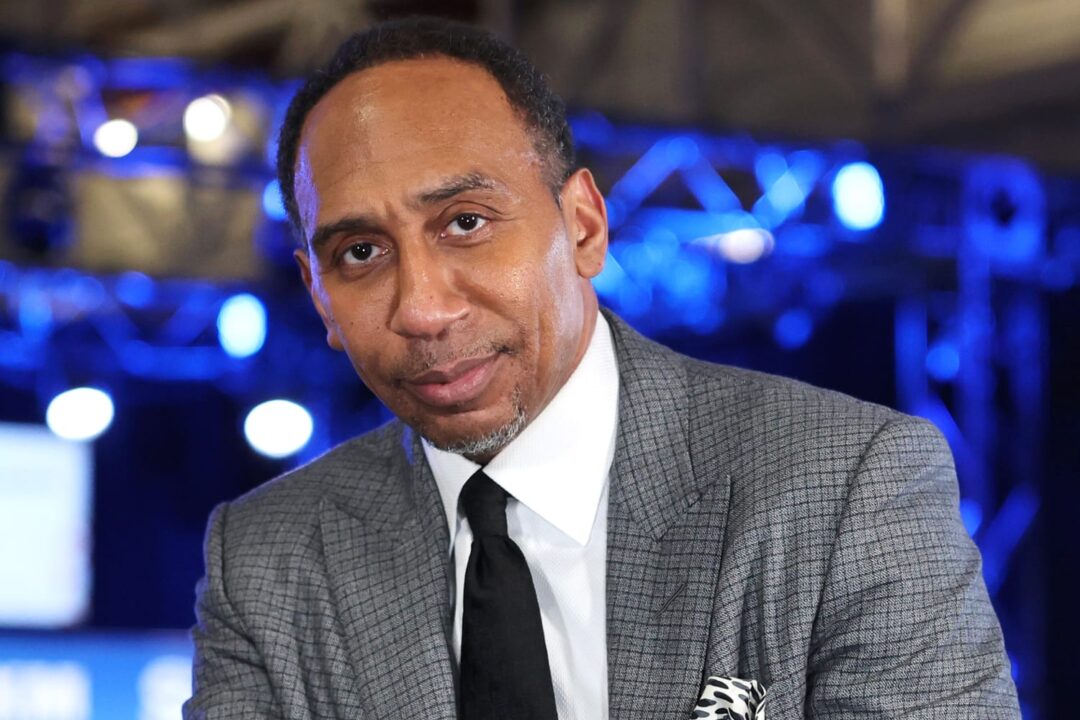
Enter: Stephen A. Smith, accidental “adult in the room”
Stephen A. Smith is not a senator. Not a governor. Not even a mayor of a town that has one stoplight and a Dairy Queen. He’s the face of ESPN’s First Take—a professional volcanologist of hot takes.
And yet he has publicly suggested he has “no choice” but to consider a presidential run because (in his telling) elected officials, pundits, and wealthy donors have approached him about exploratory committees.
That’s the moment you realize: politics is now a reality show where the producers are panicking and yelling, “Get me someone who can hold the audience!”
Are Democrats really “competing to say the dumbest things”?
Here’s the charitable version: they’re trying to signal “resistance” to European allies and domestic voters at the same time.
Here’s the uncharitable version: a lot of Democratic messaging has turned into a high‑budget contest to prove who has the most advanced case of “TDS” (Trump‑Derangement‑Syndrome, as conservatives call it)—except the judges are cable news panels, and the prize is another segment on your opponent’s channel.
Munich didn’t start this behavior. It just gave it better lighting.
The betting markets: what are Stephen A.’s odds?
You asked for the odds—including person‑to‑person markets—so here’s what the markets were signaling as of mid‑February 2026 (and remember: these are not “truth,” they’re liquid opinion + vibes + cash).
Polymarket (peer‑to‑peer prediction market)
On Polymarket’s 2028 Democratic nominee market, Stephen A. Smith is sitting around 1%. BetAnyThing Sportsbook is a 50-1 longshot.
In the same Polymarket market snapshot, Gavin Newsom is listed as the front‑runner at about 27%, with other familiar names (AOC, Buttigieg, Shapiro, Harris, Whitmer, etc.) clustered behind.
Kalshi (U.S. regulated event market)
Kalshi is another major “trading” style market (closer to a regulated event contract than a sportsbook).
Recent reporting tied to Bovada’s spurtsbook pricing said that a $100 “yes” bet on Stephen A. Smith to win the Democratic nomination would net about $1,241 if he pulled it off—an implied probability in the high‑single‑digits range.
So: Polymarket says ~1%; Kalshi reporting implies ~7–8%. Those are very different realities—and that gap matters.
Why the difference? Different user bases, different liquidity, different “meme candidate” behavior, and different incentives. One market can treat a celebrity as a punchline; another can treat him as a plausible chaos‑hedge.
Could a “non–far-left” personality win the nomination?
In theory? Sure. In practice? It would take three miracles and a meteor.
The case for Stephen A. (why this isn’t totally insane)
- He’s famous in a way politicians aren’t. “Name recognition” is the first gate, and he’s already past it.
- He’s media-trained at an elite level. Most candidates spend two years learning not to say the quiet part loud. Stephen A. has spent two decades learning to say the loud part louder.
- He can perform “normal.” Not “normal” like a policy memo. “Normal” like: someone who isn’t auditioning for the weirdest wing of Twitter.
The case against him (why the nomination isn’t an ESPN segment)
- Politics is a credential cartel. Democrats, especially, tend to reward coalition-building and governing resumes.
- Primary voters are not one audience. They’re a coalition of coalitions—labor, progressives, moderates, institutional donors, activist groups, unions, etc. Being “not a lunatic” is not a platform; it’s an absence of a platform.
- The microscope is unforgiving. A sports-media career is a lot of tape. And politics eats tape like a woodchipper eats plywood.
So yes—he’s the kind of guy you imagine in a general-election debate landing punchlines while the other candidate answers in footnotes. But winning the Democratic primary is not First Take. It’s Last Coalition Standing.
Should conservatives be worried… or should they celebrate?
Both, depending on what conservatives want.
Why conservatives should worry (a little)
A celebrity who isn’t steeped in the activist language game could:
- Pull moderates who are exhausted by ideological performance art
- Shrink the “he’s too extreme” line of attack
- Make politics feel less like a seminar and more like a football game (which, tragically, is how many Americans prefer it)
Why conservatives might embrace it
If Stephen A. became a serious contender, it would signal Democrats are drifting toward:
- Populist messaging
- Media-first politics
- Potentially less appetite for the party’s most niche cultural battles
Some conservatives would welcome that shift. Others would see it as “the enemy finally learned how to talk like a human being” and panic accordingly.
So… is Stephen A. Smith the Democrats’ Joe DiMaggio?
Joe DiMaggio was quiet excellence—an icon people projected stability onto.
Stephen A. is loud competence—an icon people project clarity onto.
And maybe that’s the point. In an era where politics feels like an endless group chat where everyone is fighting and nobody can find the “mute” button, the Democrats appear to be looking around and asking:
Who can talk, who can cut through, and who can look sane on camera?
Paul Simon asked: “Where have you gone, Joe DiMaggio?”
In 2026, Democrats might be asking: Where have you gone, normal candidate?
And somewhere, under the glow of a studio light, Stephen A. Smith is already clearing his throat.