Frontier AI Model Testing has moved from a policy idea to a practical checkpoint for the most powerful systems in artificial intelligence. The new U.S. agreements with Google DeepMind, Microsoft, and xAI matter because they put national-security review closer to the moment when frontier models are still private, unstable, and potentially more revealing than their polished public versions.
Why Frontier AI Model Testing Matters Now
The public usually meets artificial intelligence at the product layer: a chatbot, a coding assistant, a search feature, an image tool, or an enterprise agent. That interface is convenient, but it hides the harder question beneath it. What happens when a model becomes capable enough to accelerate cyber operations, support dangerous technical workflows, or expose weaknesses in critical infrastructure?
That is the reason Frontier AI Model Testing has become a serious policy issue. The phrase refers to structured evaluation of advanced AI models before wide release, especially when those models may have capabilities that matter for cybersecurity, biosecurity, national defense, or large-scale public safety. The goal is not simply to grade a model. It is to understand whether the system creates risk before the market discovers that risk through misuse.
I see this as a sign that AI governance is entering a more operational phase. For the past several years, the debate has often sounded philosophical: innovation versus safety, openness versus control, speed versus caution. The new model review approach is more concrete. It asks who gets early access, what they test, how findings are handled, and whether companies can improve safeguards before public deployment.
The new agreements place government reviewers closer to the actual development cycle. That is a meaningful shift. Testing a model after release is useful, but it is reactive. Reviewing models before release creates a chance to identify severe issues while developers can still change behavior, strengthen safety layers, or adjust deployment conditions.
What The Deal Actually Means
The U.S. Center for AI Standards and Innovation, housed within the Commerce Department’s National Institute of Standards and Technology, is expanding work with major AI developers. Google DeepMind, Microsoft, and xAI are now part of a pre-deployment review effort intended to evaluate frontier models for national-security-relevant capabilities and security weaknesses.
The practical significance is not that Washington will write every product rule for every AI company. The deal is better understood as a structured access arrangement. Developers provide early access to powerful systems, and government-linked evaluators examine capabilities that ordinary users may never see directly. The public-facing product may arrive later with safeguards, restrictions, or system changes already applied.
Readers who want the policy context behind Frontier AI Model Testing should focus less on symbolism and more on process. Pre-release access gives evaluators time to test model behavior under controlled conditions. It also gives companies a channel for feedback before a model becomes embedded in consumer products, enterprise software, cloud platforms, or developer tools.
The table below captures the key distinction.
| Review Area | What It Tests | Why It Matters |
|---|---|---|
| Cybersecurity capability | Whether a model can assist offensive or defensive cyber work | Powerful coding and vulnerability workflows can affect critical systems |
| Safeguard durability | Whether safety controls can be bypassed or weakened | Public release can expose controls to adversarial probing |
| Deployment readiness | Whether the model is suitable for broad or limited access | Some systems may need staged rollout or restricted features |
| Government coordination | Whether public-sector evaluators understand emerging capabilities | National-security agencies need visibility before crises emerge |
This kind of testing also changes the relationship between AI companies and the state. Frontier labs have spent years arguing that they understand their systems best. Governments are now signaling that private assurances are not enough when the systems may carry national-security implications. That does not make companies adversaries. It does mean their claims need external scrutiny.
The National Security Logic Behind Early Reviews
The national-security argument is straightforward. Frontier models are becoming more capable at reasoning, coding, tool use, planning, translation, and technical explanation. These capabilities can be productive in ordinary settings, but they can also lower barriers for harmful activity. A model that helps a security engineer understand a vulnerability might also help a malicious actor refine an exploit.
That dual-use nature makes AI different from many consumer technologies. The same capability can be beneficial or dangerous depending on the user, context, and guardrails. A model cannot be judged only by its average helpfulness. It must be judged by what it can do under pressure, when prompted strategically, connected to tools, or asked to operate near sensitive domains.
The government’s interest is not surprising. Critical infrastructure, defense systems, supply chains, financial networks, public health systems, and software ecosystems all depend on cybersecurity. If advanced models can accelerate vulnerability discovery or automate parts of intrusion work, national-security officials will want visibility before those systems reach millions of users.
That visibility matters because public release changes the game. Once a model is broadly available, adversarial testing becomes distributed and relentless. Bad actors can search for jailbreaks, chain prompts, test edge cases, and combine the model with external tools. The first week of a major release can reveal weaknesses faster than internal teams expect. Early review is a way to reduce that exposure.
What Changes For AI Companies
For leading AI companies, pre-release government evaluation creates a new layer of accountability. It does not replace internal red teaming, independent audits, or product safety teams. It adds another audience that must be considered before launch. That audience is less interested in marketing polish and more interested in capability boundaries.
This may slow some releases, but delay is not the only issue. The bigger change is strategic. Companies will need to build testing workflows that can survive outside examination. Documentation, model cards, safety reports, access controls, and post-review remediation plans will become more important. A company that cannot explain how it tested a model may struggle to earn trust when the model is powerful enough to raise public concern.
There is also a commercial dimension. If government review becomes a mark of responsible deployment, companies may use it to reassure enterprise customers. Banks, insurers, defense contractors, cloud customers, and public agencies do not want vague promises. They want evidence that advanced systems have been examined for dangerous capabilities, security gaps, and misuse pathways.
That creates an opportunity for serious AI firms. A strong testing record can become a form of credibility. The companies that treat evaluation as engineering discipline rather than public-relations theater will have an advantage in regulated and security-sensitive markets.
The Trade-Offs That Cannot Be Ignored
There is no free version of pre-release AI oversight. Every model review system creates trade-offs. The first is speed. Frontier AI companies operate in a competitive market where timing matters. If one company faces slower review while another launches quickly, pressure builds. A review process that feels unpredictable could become a strategic burden.
The second trade-off is secrecy. National-security testing may involve sensitive findings, classified environments, or unreleased model details. Public transparency will therefore be limited. That may be necessary, but it also creates tension. Citizens are being asked to trust a review system they may not be able to inspect fully.
The third trade-off is regulatory capture. If only the largest companies can manage the cost, access requirements, and government relationships involved in frontier testing, the process could strengthen incumbents. Smaller labs may find themselves locked out of major distribution channels or cloud partnerships unless they can meet similar expectations. Oversight meant to improve safety could accidentally reduce competition.
The fourth trade-off is international. AI development is global. A U.S.-centered review process may improve visibility into American-linked companies, but it will not automatically cover every powerful model developed elsewhere. If other jurisdictions create different rules, companies may face overlapping review systems and inconsistent expectations. That could add complexity to global deployment.
Still, the existence of trade-offs does not make testing unnecessary. It means the review architecture must be designed with care. A careless system could become performative. A disciplined system could make advanced AI deployment more responsible without freezing innovation.
Where Cybersecurity Fits Into The Model Review Debate
Cybersecurity is the sharpest part of this conversation because the risk is immediate, technical, and practical. AI models are already useful for code explanation, vulnerability triage, scripting, system administration, and defensive automation. As they improve, the line between helpful assistant and offensive accelerator becomes harder to manage.
This is where pre-release review should be especially demanding. Evaluators need to understand whether a model can identify exploitable flaws, chain technical steps, generate working attack logic, evade safeguards, or assist social engineering. They also need to test how the model behaves when connected to tools, repositories, terminals, or agents. A model in isolation is one thing. A model with permissions is another.
For security teams, the lesson is clear: AI governance cannot be separated from vulnerability management. The same organizations considering advanced AI adoption must also understand where their systems are already exposed. A serious security program should connect model risk with first-priority vulnerability remediation because powerful AI tools can make existing weaknesses more consequential.
This is not a reason to reject AI. Defensive teams can use AI for faster analysis, better triage, and improved response. But the defensive benefit depends on discipline. Organizations that deploy AI into weak security environments may simply make bad processes faster. The stronger approach is to pair AI adoption with asset visibility, patch prioritization, access control, and incident planning.
How The Public Should Read This Moment
The public should not read these agreements as proof that frontier AI is either safe or unsafe. They are evidence that the stakes have risen. Government review exists because advanced systems may matter beyond ordinary consumer satisfaction. That alone is a major signal.
The public should also resist the easy narrative that testing is just government interference. Safety review can be a condition for public confidence. Aviation, medicine, nuclear energy, finance, and critical infrastructure all have forms of evaluation because failure can spread beyond the immediate user. AI is not identical to those sectors, but the social logic is familiar: when private products create public consequences, private judgment is not enough.
At the same time, public confidence requires more than private meetings between officials and companies. Review programs need clear purposes, competent evaluators, credible standards, and mechanisms for learning over time. The public may not see every technical detail, but it should see enough to know that testing is serious, repeatable, and not merely ceremonial.
The challenge is to create a review culture that rewards honesty. Companies must be able to disclose weaknesses without turning every flaw into a reputational catastrophe. Regulators must be able to demand improvements without drifting into vague control. The public must be able to ask for accountability without expecting impossible certainty.
What Comes Next For AI Oversight
The next phase will likely be less about whether frontier models are tested and more about how testing becomes standardized. What counts as a severe capability? Which safeguards are adequate? How should evaluators handle models with removed or reduced safety layers? How should findings be shared among companies, agencies, and international partners? These questions will define whether model review becomes useful infrastructure or bureaucratic theater.
I expect more attention on staged deployment. Instead of a simple release-or-withhold decision, companies may use restricted access, monitored rollouts, capability gating, enterprise-only features, or delayed tool access. That approach will not satisfy everyone, but it reflects a realistic point: frontier models are not single products. They are platforms whose risk changes depending on access, tooling, and context.
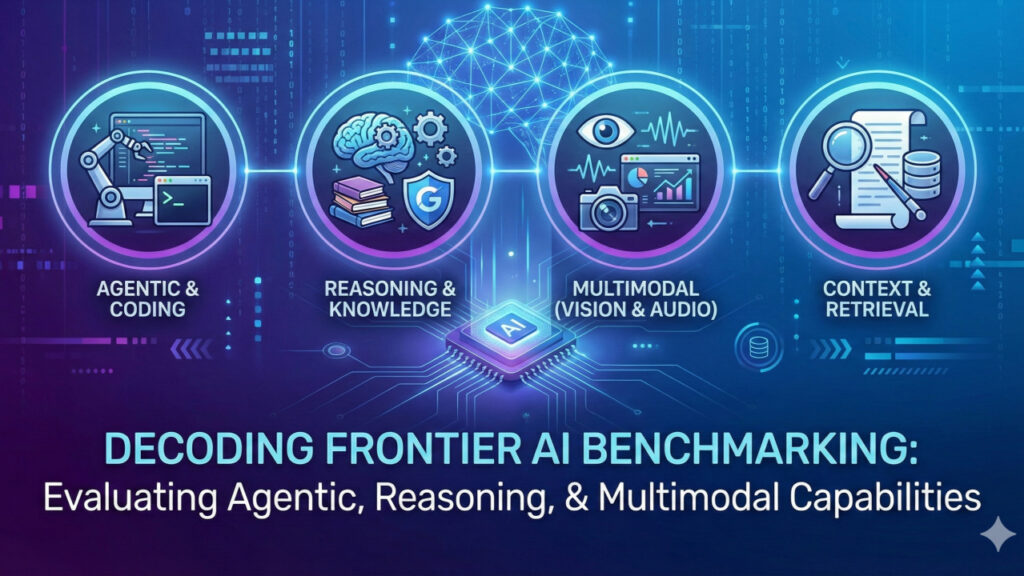
We should also expect more technical investment in evaluation science. Model testing is still young. Benchmarks can be gamed. Red-team prompts go stale. Capabilities emerge unexpectedly. Safety layers can fail under pressure. The work requires continual adaptation.
The official frontier AI national security testing effort points toward a world where measurement becomes part of AI infrastructure. That is the right direction. The harder part is making measurement rigorous enough to matter.
A More Serious Era For Frontier AI
Frontier AI Model Testing matters because powerful AI systems are moving into domains where failure is not merely embarrassing. The risk may involve cyber operations, critical infrastructure, dangerous technical assistance, enterprise dependency, and public trust. A pre-release review deal between the U.S. government and major AI firms does not solve those issues, but it changes the default posture from reactive concern to early examination.
The opportunity is real. Better testing can improve safeguards, strengthen deployment decisions, and give enterprises more confidence in advanced AI tools. It can also help governments understand capabilities before crisis forces rushed action. The risk is that review becomes opaque, inconsistent, politicized, or tilted toward the largest companies.
The right path is neither panic nor complacency. Advanced AI needs room to develop, but power without evaluation is not innovation; it is avoidable vulnerability. The next generation of AI governance will be judged by whether it can identify danger early, preserve useful progress, and earn public confidence through serious practice. That is why Frontier AI Model Testing is no longer a niche policy concern. It is becoming one of the central tests of how powerful AI enters public life.