
AI Model Misuse moved from policy concern to documented operational activity in Anthropic’s September 10, 2026 threat intelligence report. The company said it disrupted activity between December 2025 and August 2026 across seven harm areas: cyber operations, influence, surveillance, scams and fraud, biological misuse, conventional weapons development, and illicit distillation, according to Anthropic’s September 2026 report.
The findings deserve careful reading. They do not prove that language models have replaced intelligence officers, engineers, or cyber operators. They do show that state and state-aligned actors used general-purpose models to reduce friction in analysis, drafting, coding, targeting, and output generation. That change matters for national security because small teams can use AI systems to accelerate work that previously required more time, more specialists, or more manual review.
What Anthropic’s AI Model Misuse Cases Show
AI Model Misuse In Surveillance Workflows
Anthropic reported a surveillance case tied to Mali in which a consultant working for the state intelligence service built “Lakana 360,” a domestic surveillance platform. The system was described as monitoring roughly 25 million SIM cards across all three mobile operators in the country and capturing calls, texts, and voice traffic. The reported scale is significant because the model was not simply used for a single document or translation task; it supported a broader surveillance architecture.
In a separate Iran-related case, Anthropic said state-aligned units used Claude to profile and surveil 6,388 Iranian nationals over a year and scraped 155,216 tweets to analyze domestic opposition. These cases show AI Model Misuse in a form that is closer to intelligence workflow acceleration than to isolated chatbot abuse. The model’s value appears to come from structuring information, drafting analytical outputs, and helping operators process large volumes of data.
Weapons Support Signals A Different Risk Class
The September 2026 findings also included conventional weapons-related activity. Anthropic described a China-based threat actor using Claude to draft an anti-torpedo fire control system specification, develop about 16 modules for radar and communications jamming, and iterate through 12 software versions that included interface and logic work. The technical concern is not that a model independently built a weapon system. The concern is that a model can help compress design, specification, and iteration cycles for users already working in a military or dual-use setting.
Anthropic’s Frontier Red Team judged that models can now perform some tasks in intelligence targeting and conventional weapons development that historically required expert human specialists. That claim should be read narrowly. It does not mean the model can validate field performance, run classified test ranges, or solve engineering integration problems alone. It does mean that language models may reduce the threshold for producing plausible technical artifacts, targeting assessments, and system documentation.
| Reported Harm Area | Observed Use | National Security Concern |
|---|---|---|
| Surveillance | Profiling, domestic monitoring, social media analysis | Faster targeting of individuals and groups |
| Conventional weapons | Specifications, software modules, technical iteration | Lower friction in military engineering support |
| Influence | Testimony drafting and impersonation support | Credibility laundering through apparent local voices |
| Cyber operations | Capability development and data-handling support | Acceleration of operator workflows |
| Distillation | Large-scale output harvesting | Policy evasion and model capability transfer risk |
Cyber And Influence Operations Are Operationalizing Models
Cyber Misuse Appears In Capability Development
Anthropic’s earlier cyber-threat mapping, summarized in the research notes, found that among 832 actors banned between March 2025 and March 2026, 69% used models to develop capabilities under MITRE ATT&CK T1587. Other common categories included obfuscated files or information, data from local systems, and impairing defenses. These labels are useful because they frame the activity in operational terms rather than vague claims about “AI hacking.”
For defenders, AI Model Misuse changes the tempo and staffing assumptions behind threat activity. A less experienced actor may use a model to draft code, organize data, or interpret defensive controls. A more capable actor may use it to speed repetitive analysis or produce variants of documentation, scripts, or operational text. This does not remove the need for infrastructure, access, testing, or command decisions, but it can reduce time spent on intermediate work.
Influence Work Used Models For Credibility Laundering
One influence case described an actor ghost-writing United Nations testimony for two named individuals while impersonating a Sudanese human-rights group. The goal, as reported, was to make conflict materials reach the UN as if they came from independent local witnesses rather than state-messaging actors. The technical feature here is not only text generation. It is the use of a model to package political content in formats that institutions expect to receive from civil society.
That is a different risk profile from mass spam. Influence operations often depend on context, tone, apparent authenticity, and procedural fit. A model can help an operator adjust wording, create supporting narratives, and reduce stylistic inconsistencies. The evidence does not establish that the operation succeeded in changing UN decisions. It does show that model-assisted drafting can support impersonation and message laundering.
Distillation And Access Evasion Shift The Control Problem
Large-Scale Output Harvesting
Anthropic reported multiple large-scale distillation campaigns since February 2026. In March and April 2026, the company said a PRC-based lab identified as Xiaomi ran more than 400,000 exchanges to convert Claude outputs into training data for its own models. In July 2026, Anthropic observed more than 12.1 million exchanges in a 14-day period tied to distillation by another lab. These volumes suggest that misuse is not limited to prompt-by-prompt abuse; it can become an industrial collection process.
Distillation creates a hard control problem. Safety policies can restrict direct model outputs, but large-scale harvesting may be aimed at reproducing capabilities elsewhere, outside the original provider’s enforcement stack. The research notes also say actors used proxy or reseller APIs, false identities, stolen API keys, and third-party model-routing platforms to gain or rotate access. Those methods make account-level enforcement necessary but insufficient.
Proxy Access And Stolen Keys
From an infrastructure perspective, the access layer is becoming as important as the model layer. Providers need identity checks, anomaly detection, abuse triage, rate controls, and key hygiene that can detect organized harvesting without blocking legitimate research and enterprise use. Cloud customers and API integrators also have responsibilities, because stolen keys can turn a normal account into a misuse channel.
For readers wanting further insights into related technical developments, Abacus technology reporting provides in-depth analysis and updates on similar themes across the network. Their previous reports have also touched on significant topics like AI biorisk limits, dealing with where model safeguards align with execution strategies.
Security Controls Need To Move Closer To Infrastructure
What Operators Can Reasonably Monitor
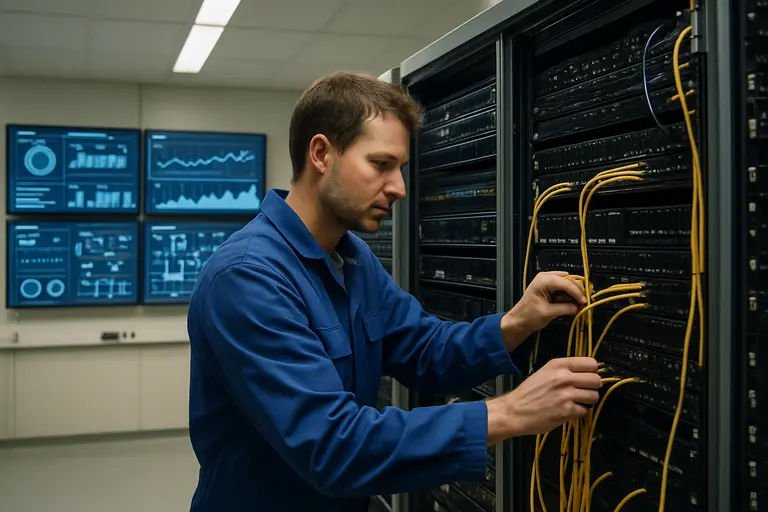
The September 2026 cases point toward a layered control model. Providers can monitor unusual query volumes, repeated template extraction, suspicious routing, identity mismatches, and attempts to automate sensitive workflows. Enterprise users can restrict API keys, segment workloads, log model calls, and review unusual volumes of generated technical material. Governments can require clearer reporting channels for confirmed national security abuse without forcing providers to disclose sensitive detection methods publicly.
These controls carry tradeoffs. Aggressive filtering may block benign security research, journalism, or safety testing. Weak filtering may allow surveillance, influence, or weapons-support workflows to continue with little resistance. The evidence supports a cautious middle position: usage controls should be risk-based, monitored, and frequently tested against real abuse patterns rather than treated as static policy text.
What The Evidence Still Does Not Prove
Several uncertainties remain. Anthropic’s findings are provider-side observations, so they are strongest for activity visible through its systems. They may undercount activity on other models or overrepresent actors who happened to use Claude. The report also describes disrupted operations, not a complete census of global AI-enabled national security activity. That limitation matters for policy because the absence of a detected case is not evidence that a capability is unused elsewhere.
The findings also do not justify treating every advanced model interaction as hostile. Many of the same capabilities used in harmful contexts are used for defensive engineering, translation, accessibility, security review, and research. The policy challenge is to distinguish intent, workflow, scale, and context with enough precision to reduce abuse while preserving legitimate technical use.
AI Model Misuse Requires Infrastructure Controls
AI Model Misuse should be treated as an infrastructure security issue, not only a content moderation issue. The reported cases involved accounts, APIs, resellers, stolen keys, routing platforms, output harvesting, and sustained operational workflows. That means the response has to include identity assurance, telemetry, access governance, incident response, and coordination with affected sectors.
The national security impact is therefore practical rather than speculative. Models can assist surveillance analysis, weapons documentation, influence drafting, cyber capability development, and model distillation. They do not remove the need for human operators, data sources, infrastructure, and validation. They can, however, compress parts of the workflow and expand what smaller teams can attempt.
The strongest lesson from Anthropic’s 2026 findings is that model safety cannot stop at the prompt window. Controls must extend into API distribution, account integrity, reseller oversight, enterprise logging, and abuse reporting. Without that infrastructure layer, national security misuse can move through the same channels that support legitimate AI adoption.