
The consumer AI story has entered a new phase, and it is happening in a place far more revealing than a lab demo or developer conference. When a national pizza chain turns conversational AI into a practical ordering channel, it signals that artificial intelligence is no longer a novelty layered on top of daily life. It is becoming part of the routine mechanics of how people choose, shop, and spend.
The Moment AI Stopped Feeling Experimental
I have spent the last two years watching companies talk about AI as if it were always on the verge of changing everything. Much of that discussion lived in abstract language: productivity, transformation, disruption, enablement. What makes this latest moment different is its simplicity. A customer can now use chat to decide what to eat, shape an order, and move toward checkout with the same conversational logic used to ask for travel advice, summarize a document, or brainstorm an email.
That matters because consumer adoption rarely moves in a straight line. People do not adopt technology simply because it is impressive. They adopt it when it becomes convenient enough to disappear into familiar behavior. Ordering dinner is one of the clearest examples of that threshold. It is repetitive, low stakes, highly personalized, and often rushed. In other words, it is exactly the kind of consumer task that rewards an interface capable of translating vague intent into a usable result.
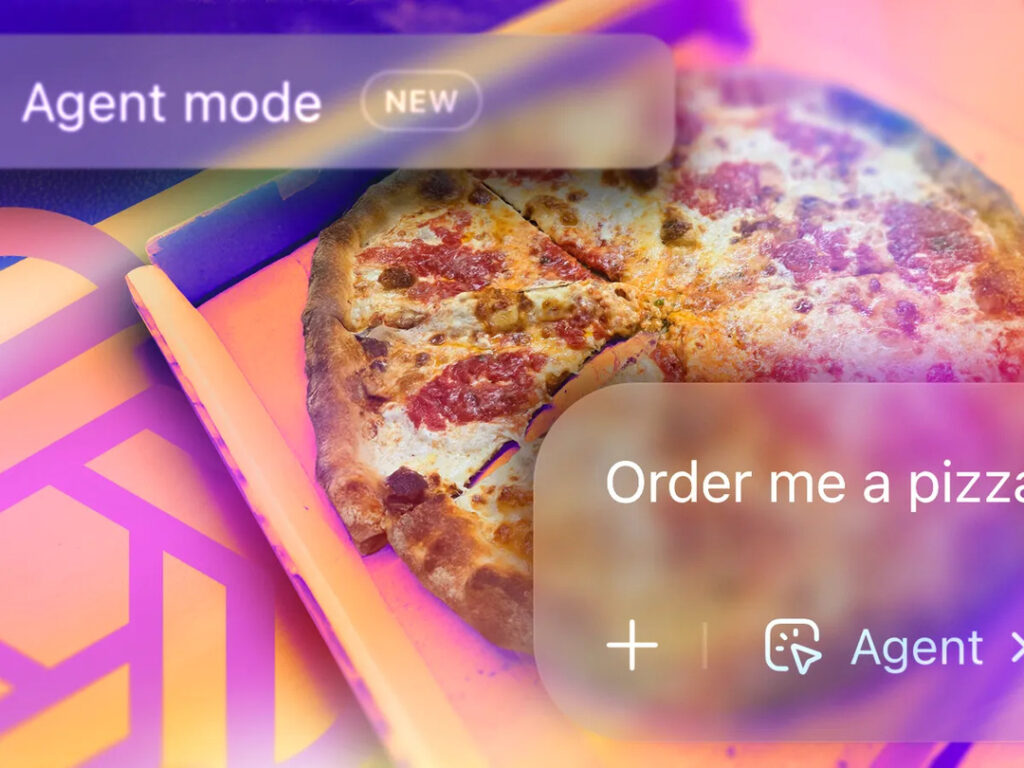
Little Caesars’ move into AI chat ordering is significant for that reason. It does not ask customers to learn a new behavior so much as formalize one they already have. Millions of people now use chat interfaces to ask open-ended questions in plain language. Extending that habit into commerce is a logical next step, and one that makes the boundary between search, recommendation, and transaction feel much thinner than it did even a year ago.
Why Pizza Is a Smarter AI Test Case Than It Looks
At first glance, pizza may seem like a gimmicky proving ground for AI. I see the opposite. Fast food and quick-service ordering offer a nearly ideal environment for conversational systems because the use case combines customization, time pressure, budget sensitivity, and group decision-making. Those are conditions in which traditional app navigation can feel clumsy, especially on mobile.
A customer planning dinner for four does not necessarily want to scroll through menus, toggle filters, compare prices, and manually assemble combinations. That customer may want to say something closer to a real thought: I need something affordable for a family, one person wants vegetarian options, and I want to keep this simple. A competent conversational system can turn that messy request into a practical recommendation much faster than a static menu can.
That shift is bigger than one chain or one product category. It points to a broader redesign of digital commerce interfaces. For years, brands trained consumers to click through rigid menus and predefined funnels. Now the interface is beginning to adapt to human language rather than forcing human behavior to adapt to software structure.
The significance becomes even clearer in comparison.
| Consumer Experience | Traditional App Ordering | AI Chat Ordering |
|---|---|---|
| Starting point | Menu browsing | Natural-language request |
| Personalization | Manual filtering and selection | Conversational recommendations |
| Complexity handling | User does the assembly work | System interprets intent |
| Group ordering | Often fragmented and tedious | Easier to describe shared needs |
| Speed to decision | Depends on app fluency | Depends on prompt clarity |
This is why pizza is not a sideshow. It is a practical stress test for the future of retail interaction.
How AI Quietly Enters Everyday Consumer Life
The most important technology shifts are often the least theatrical. They slip into ordinary routines before the public fully recognizes what has changed. I believe that is what we are seeing now with AI in consumer experiences. It is not arriving only through headline-grabbing robots, advanced image generators, or enterprise software. It is showing up in small transactional moments: what to order, what to buy, what to watch, what to compare, what to book.
That pattern matters because frequency drives normalization. A person may use AI to help draft a resume a few times a year. They may use AI to help decide on dinner several times a month. Repetition builds trust, and trust builds habit. Once consumers become comfortable using chat to handle simple commercial tasks, the psychological barrier to using it for more meaningful ones begins to fall.
I would argue that this is the real mainstreaming of AI. Not fascination with the tool itself, but indifference to the fact that it is there. The technology succeeds when the user no longer thinks, I am trying AI. The user simply thinks, this is the easiest way to get something done.
That is why AI chat ordering deserves more attention than it may initially receive. It represents a subtle but important migration of consumer expectations. If people can describe what they want instead of navigating an app step by step, many will start to expect that level of flexibility elsewhere too.
What Brands Stand To Gain And Risk
For brands, conversational commerce creates an appealing promise: less friction, more personalization, and potentially higher conversion. A system that can interpret budget, taste, dietary needs, and group size in one exchange has the power to move customers from uncertainty to purchase more efficiently than a grid of menu tiles ever could.
There are at least three reasons this matters commercially:
- It shortens the path between discovery and transaction.
- It creates more room for personalized upselling without feeling mechanical.
- It positions the brand inside a behavior consumers are already forming.
But I do not think the opportunity is limitless or risk free. Every layer of conversational convenience introduces new expectations around accuracy, transparency, and control. If the AI suggests the wrong item, misreads a dietary concern, builds a cart that feels manipulative, or creates confusion during checkout, the brand rather than the model absorbs the reputational cost.
That is especially true in food ordering, where convenience and trust are tightly connected. Consumers will forgive a clunky app more easily than they will forgive a system that sounds confident while misunderstanding what they asked for. The interface may feel friendlier, but the margin for error can become smaller because the experience appears more human.
The central business challenge is not simply adding AI. It is making AI reliable enough to feel invisible.
The Interface War Is Moving From Screens To Language
The larger strategic implication is that user interfaces are changing shape. For decades, digital commerce revolved around visual hierarchy: menus, categories, buttons, search bars, filters, carts. That model is not going away, but it is being supplemented by something more fluid. Language is becoming a front-end layer.
I find that shift especially important because it redistributes power in the customer journey. In a traditional app, the brand controls the architecture of choice very tightly. In a conversational system, the customer starts with intent rather than navigation. That sounds liberating, but it also means brands must rethink how merchandising, promotion, and discovery work when consumers are not necessarily seeing the same menu pathway.
This could alter everything from product bundling to loyalty strategy. It may even reshape how brands write descriptions, price combinations, and structure offers, because the AI has to interpret and present that information dynamically rather than through a fixed visual layout.
In practical terms, brands now have to prepare for a commerce environment in which the customer may never “browse” in the old-fashioned sense. The query itself becomes the storefront.
Why This Matters Right Now
The timing is critical because AI has moved past the stage where consumer companies can dismiss it as a future-facing experiment. What happens in pizza ordering today can quickly spread to coffee, grocery, pharmacy, travel, entertainment, and retail. Once consumers become accustomed to expressing needs conversationally, static interfaces begin to feel less intuitive by comparison.
I think this moment also exposes a truth the AI industry sometimes obscures: mainstream adoption does not require dramatic reinvention of daily life. It requires modest improvements to existing habits. If ordering dinner becomes easier through chat, that alone can do more to normalize AI than another round of speculative debate about what the technology may someday become.
The deeper significance of Little Caesars’ move is not that a pizza company has adopted a trendy tool. It is that a familiar consumer brand has treated AI as ordinary infrastructure for a common task. That is how technological change becomes durable. Not when it dazzles, but when it blends into behavior so naturally that opting out begins to feel less efficient than opting in.
We are now entering that phase. AI is no longer waiting for a grand consumer breakthrough. It is becoming the quiet operating layer beneath everyday decisions. That is why this matters right now: once convenience and conversation merge at scale, the mainstreaming of AI stops being a prediction and becomes a habit.