AI data center protests are no longer isolated fights over one project, one county board, or one noisy substation. The backlash has started to look national because the infrastructure behind artificial intelligence is now large enough to touch water systems, electricity bills, land-use rules, public health concerns, and local political identity at the same time.
That is the shift data center developers should be studying closely. The same pressure behind AI data center scale is turning ordinary permitting disputes into a broader referendum on whether communities believe the AI boom is being built with them or around them.
AI Data Center Protests Have Moved Beyond Local Zoning
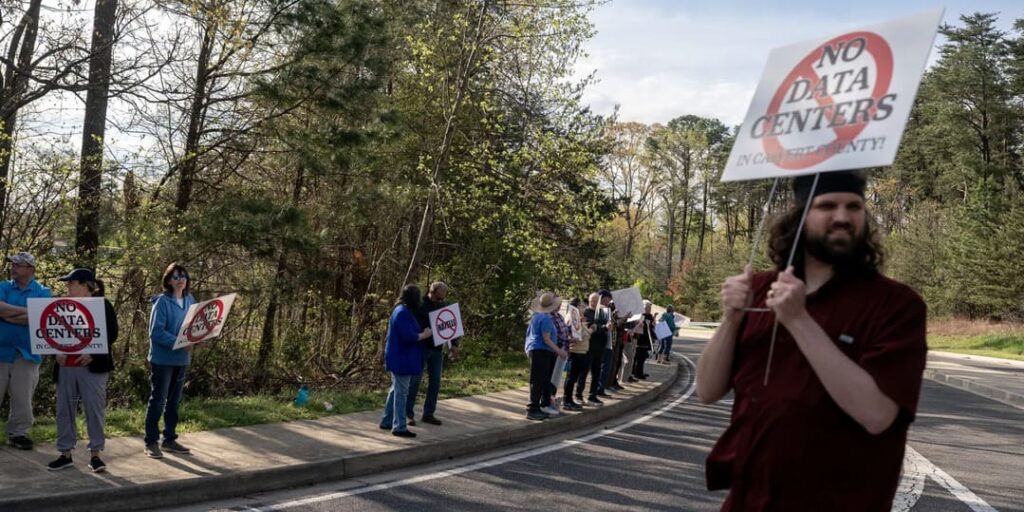
Opponents of rapid data center expansion staged 142 protests across 42 U.S. states on July 18, making it the first nationwide effort to channel anger over the AI infrastructure buildout. The rallies were coordinated by HumansFirst, a conservative group that framed the expansion of AI data centers as unchecked, unaccountable, and too disconnected from local consent.
That matters because local resistance has usually been treated as a project-by-project nuisance. One county objects to water use. Another town worries about noise. A rural area fights rezoning. A city questions backup generators.
The national protest wave changes the meaning of those disputes. It suggests that data center opposition is becoming a shared political language, not just a collection of unrelated neighborhood complaints.
The demands also show why this issue travels so easily. Organizers have called for transparency in development, protection of local resources, community benefits, and accountability when developers fail to keep promises. Those are not narrow technical objections. They are questions about who gets to decide what AI infrastructure costs a place should absorb.
The Backlash Is Politically Hard to Classify
One reason the issue is becoming difficult for policymakers is that it does not fit neatly into a partisan box. Data center opposition can sound environmental, populist, conservative, localist, anti-corporate, pro-ratepayer, anti-surveillance, or pro-community depending on who is speaking.
Reuters found that the protests reached red states, blue states, and battleground states, with Texas hosting 18 events, Georgia 11, California eight, and Pennsylvania, Florida, and Indiana seven each. That spread matters more than turnout alone because it shows the argument is portable across different political environments.
A June Reuters/Ipsos poll found that only 14% of respondents supported an AI data center being built in their community for large technology firms, a striking signal for an industry that depends on local approvals to keep expanding. The broader nationwide protest count shows why developers cannot assume this is a fringe problem.
The uncomfortable reality is that AI data centers are becoming a rare issue where different ideological groups can arrive at similar objections for different reasons.
Communities Are Challenging the Whole Resource Stack
The protests are not only about data centers as buildings. They are about the entire stack of resources those buildings require.
A large AI campus can involve transmission upgrades, gas turbines, backup generators, diesel testing, road work, construction traffic, cooling systems, water withdrawals, and long-term utility planning. Each layer can become a public concern when residents believe they were informed too late or given too little leverage.
| Community Concern | What Residents Fear | Why It Matters for AI Infrastructure |
|---|---|---|
| Water demand | Local supplies may be strained | Cooling needs can collide with drought or growth |
| Electricity use | Utility bills may rise | Grid upgrades can trigger cost-shifting fears |
| Land conversion | Rural or residential character may change | Large campuses need major parcels |
| Pollution | Generators and power plants may affect air quality | Backup and onsite energy plans face scrutiny |
| Job promises | Benefits may be smaller than advertised | Permanent data center staffing is often limited |
| Local control | Decisions may feel predetermined | Trust can collapse before permitting ends |
This is why the fight is more serious than a messaging problem. The concerns are tied to visible infrastructure choices, and residents increasingly want enforceable answers before projects break ground.
New York Shows How Fast Policy Can Respond
The protest movement is landing in a policy environment already shifting against automatic approval. New York imposed a one-year moratorium on large new data centers using 50 megawatts or more of electricity, citing concerns over utility bills, natural resources, and the burden on communities.
That move made New York the first U.S. state to halt construction of large new data centers through this kind of statewide restriction. It also signaled that data center politics may move from local zoning boards into state-level energy and economic policy.
The state’s large data center freeze matters because it gives other policymakers a template. Even officials who do not want a moratorium may now face pressure to explain why their rules are strong enough without one.
Developers should read the New York decision as a warning. Once public concern becomes organized, governments may act faster than the industry expects.
The Industry’s Old Approval Playbook Looks Too Thin
For years, data center developers could lean on tax revenue, construction jobs, digital modernization, and quiet technical compliance. That approach is less persuasive when projects are tied to AI, megawatt-scale demand, and hyperscale companies already viewed with suspicion.
Communities increasingly want hard numbers. How much water will the facility use on peak days? Will electricity bills rise? How many permanent jobs will remain after construction? What fuel will backup systems use? What happens during a grid emergency? Who pays for substations, transmission lines, and road work?
If the answer is vague, opposition gains room to grow.
The better playbook starts earlier and goes deeper. Developers need credible public disclosure, enforceable benefits, transparent energy plans, local hiring commitments, and honest explanations of tradeoffs. They also need to stop treating residents as obstacles after a site has already been chosen.
The industry’s real challenge is permission before momentum.
The Next Pressure Point Is Community Consent
The next signal to watch is whether the July 18 protests turn into sustained local organizing. One rally does not stop a national infrastructure boom. But a national network of residents, lawyers, activists, local officials, and policy groups can slow projects, raise costs, and change legislation.
The second signal is whether lawmakers start linking data center approvals to stronger water reporting, power-cost protections, emissions disclosure, and community benefit agreements. If that happens, the industry’s cost model changes.
The third signal is whether developers respond with better project design or simply lobby harder. If the response is only political pressure, local anger may intensify. If the response includes real transparency and shared benefits, some projects may still earn durable support.
AI data center protests are becoming the public face of a deeper infrastructure bargain. The AI industry wants speed, scale, and reliable power. Communities want control, protection, and proof that local costs will not be hidden behind national innovation language.
That is why this moment matters. The future of AI infrastructure may still depend on chips, grids, and cooling systems, but the next bottleneck could be democratic patience. If communities decide the buildout is being forced on them, even the richest data center projects may discover that local consent is not a soft constraint. It is the foundation under the whole stack.