
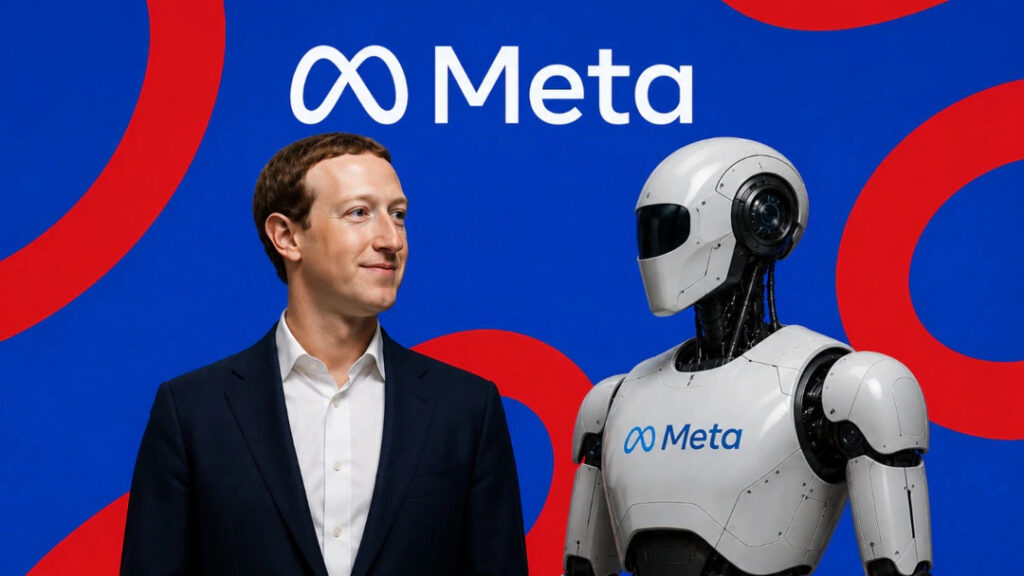
The agentic AI assistant race has moved from lab demo to platform strategy, and Meta’s latest reported push makes the stakes clear: whoever controls the assistant may control digital behavior. Meta is not chasing another chatbot moment; it is trying to place a task-doing AI between users and the apps, brands, searches, purchases, messages, and habits that define online life.
Why The Agentic AI Assistant Race Matters Now
For years, artificial intelligence felt impressive but contained. A user typed a prompt, waited for an answer, judged the response, and moved on. That model created real productivity gains, but it still left the human doing the final work: opening the app, comparing options, checking the price, booking the table, sending the message, or deciding whether the recommendation deserved trust and attention.
Agentic AI changes that relationship. Instead of simply responding, an agent can pursue a goal across steps. It can remember preferences, interact with tools, make suggestions, and eventually complete tasks with varying degrees of supervision. A chatbot is a feature. An agent is a possible operating layer with real leverage and reach.
That difference explains why Meta’s reported work matters. If an AI assistant becomes the front door to daily digital activity, the company behind it gains influence over discovery, commerce, communication, and user loyalty. The next phase of AI competition will not be won only by the smartest model. It will be won by the company that makes delegation feel useful, safe, and routine.
Meta has a rare advantage in that contest. It already sits inside social behavior through Facebook, Instagram, WhatsApp, Messenger, and Threads. If it can turn that distribution into a personalized assistant layer, the company could reshape how users shop, plan, communicate, and discover content without asking them to adopt a completely new product. That is enormous scale with built-in momentum.
The risk is just as large. An assistant that can act for users needs more context than a search box. It may need preferences, history, permissions, identity signals, payment pathways, social graphs, and behavioral patterns. The more useful it becomes, the more sensitive the underlying data and access become.
From Chatbot Answers To Action-Taking Agents
The easiest way to understand agentic AI is to separate answers from actions. A chatbot can tell me what to buy. An agent could compare options, check delivery windows, apply preferences, ask for confirmation, and place the order. A chatbot can draft a message. An agent could understand the recipient, choose the tone, schedule the send, and follow up later.
That creates value, but it also introduces new risk. A bad answer is frustrating. A bad action can spend money, damage a relationship, share the wrong file, book the wrong trip, or expose private information. Once AI moves from suggestion to execution, the quality standard rises.
Meta’s reported interest in an Instagram shopping agent is especially revealing. Shopping is one of the cleanest early use cases for agentic AI because it combines intent, recommendation, personalization, and transaction. Instagram already influences taste and discovery. A shopping agent could turn that influence into a more direct path from inspiration to purchase.
Imagine seeing a creator’s outfit, asking an assistant for similar options under a specific budget, getting size-aware recommendations, checking availability, and narrowing the purchase without leaving the social environment. That is not just a better shopping experience. It is a way to compress the consumer journey with more speed and less friction.
The same logic can extend to restaurants, travel, events, messaging, local services, and small-business discovery. The agent becomes a broker of choice. It does not need to own every product or service. It only needs to guide the user through the decision and make the next step feel obvious.
The Platform Battle Behind Meta’s AI Push
That is the deeper story behind the reported assistant push. Meta does not need every user to think of AI as a separate destination. It needs AI to become embedded inside existing habits: messaging friends, browsing Reels, asking questions, shopping from creators, planning weekends, and interacting with businesses. That lowers adoption barriers and strengthens retention.
The current Meta AI assistant experience is one visible piece of a larger direction: AI moving from novelty into navigation. The public assistant familiarizes users with conversational interaction, while more advanced agentic tools could eventually make that conversation operational.
For Meta, the opportunity is not simply to put a clever assistant inside Instagram or WhatsApp. Its opportunity is to build agents that understand social context. Who are you messaging? What brands do you follow? What creators influence your purchases? That context can create personalization, but it can also create unease.
What Makes An AI Agent Different From A Smarter Chatbot
Not every AI feature deserves the agentic label. A system becomes meaningfully agentic when it can pursue a goal through multiple steps, use tools, adapt to feedback, and maintain enough context to make progress without constant hand-holding.
| AI Capability | Basic Chatbot | Agentic Assistant |
|---|---|---|
| Main Function | Answers prompts | Completes multi-step tasks |
| User Role | Directs each request | Sets goals and supervises |
| Context | Often session-based | Uses preferences and history |
| Tool Use | Limited or manual | Integrated across services |
| Main Benefit | Information and drafting | Execution and delegation |
| Main Concern | Accuracy | Control and accountability |
That distinction matters because it shows why agentic AI creates a different market. Better text output is no longer the whole game. The real contest becomes execution: how reliably can the system act in a way the user actually intended?
For a consumer platform, the product problem is delicate. An agent must feel capable without feeling uncontrolled. It must be personalized without feeling invasive. It must be proactive without becoming annoying. It must make decisions without hiding the logic behind them. That balance requires judgment as much as engineering.
Why Instagram Could Become The First Real Test
Instagram is an obvious proving ground because it already blends identity, aspiration, entertainment, and commerce. People open it to discover styles, places, personalities, products, and experiences. That makes it a natural environment for a shopping-oriented agent and a strong test of intent.
The logic is straightforward. A user sees something desirable, expresses intent, and expects the platform to reduce friction. Today, that path can involve searching comments, tapping links, leaving the app, comparing sellers, checking sizing, and second-guessing quality. An agent can make that process less fragmented and more direct.
This creates a clear commercial opportunity and advantage. Meta can strengthen Instagram’s role in social commerce without turning the app into a conventional marketplace. The assistant becomes a transaction guide rather than a storefront. That may be more natural for a platform built around discovery.
Yet the shopping use case is also a test of credibility. If the agent recommends products, users will want to know why. Is the recommendation based on personal preference, paid placement, creator partnerships, inventory availability, or platform incentives? If the assistant blurs those lines, trust can erode quickly.
This is the central tension in AI commerce. The more personalized the experience becomes, the more users need transparency. A shopping agent that feels like a helpful stylist can become powerful. A shopping agent that feels like a disguised ad engine can become a liability.
Meta already understands ad-driven personalization. The hard part is translating that machinery into an assistant experience where users expect advocacy, not just targeting. That demands clarity about when the AI is helping, selling, ranking, or nudging.
The Trust Problem Meta Cannot Avoid
The agentic AI assistant race will ultimately depend on trust because delegation is a psychological leap. People may accept imperfect recommendations from a feed. They may laugh off a bad chatbot answer. But when an AI assistant starts taking steps on their behalf, they will ask harder questions.
What exactly does the agent know? Which services can it access? Can it spend money? Can it message contacts? Can it remember sensitive preferences? Can it explain its decisions? Can the user reverse an action? Who is responsible when something goes wrong? These questions define user confidence and platform accountability.
This is where Meta faces a particular challenge. The company has enormous reach, but its history around privacy, recommendation systems, youth safety, and advertising will shape how users interpret the next wave of AI products. A new assistant may be useful, but usefulness alone does not erase skepticism.
The same issue appears in next-generation AI security risks, where capability gains can expose weaknesses faster than organizations expect. The more connected an AI assistant becomes, the more every permission, integration, and memory layer becomes part of the security surface.
Why Investors Are Watching The Cost Side
Agentic AI sounds like a product story, but it is also a capital story. Building assistants that can serve billions of users requires infrastructure, model development, talent, safety systems, testing environments, and integration work. The cost curve can become steep before the revenue model is fully proven.
That creates investor pressure and scrutiny. Meta has shown a willingness to spend heavily on long-range technology bets. Sometimes that patience has been rewarded; sometimes markets have questioned the timing and scale. Agentic AI sits in the middle of that debate because it looks both defensive and expansive.
The Competitive War Will Be About Defaults
The AI industry often talks as if model quality alone decides the future. Model quality matters, but consumer markets are usually won through defaults, habits, ecosystems, and convenience. The best assistant is not always the one with the most impressive benchmark. It may be the one sitting exactly where the user already is.
That gives Meta an advantage, but not a guaranteed victory. Apple can lean on devices and privacy positioning. Google can lean on search, Android, Gmail, Maps, and Workspace. Amazon can lean on commerce and home devices. OpenAI can lean on brand recognition and a fast-moving assistant ecosystem. Meta’s differentiator is social context and habitual presence.
But social context is combustible. A mistaken product recommendation is one thing. A mistaken action involving a friend, a private message, or a sensitive interest is another. The stronger the context, the higher the stakes.
That is why the agentic AI market may fragment by domain. Users may trust one assistant for work, another for shopping, another for travel, another for finance, and another for personal planning. The dream of one universal agent is attractive, but trust may develop in narrower lanes first.
For Meta, Instagram commerce may be the lane with the clearest near-term fit. It is visual, social, commercial, and habit-driven. If Meta can prove agentic shopping works there, it can extend the model into other parts of its ecosystem with more authority and evidence.
What Brands And Publishers Should Watch Next
The rise of AI agents will change more than platform competition. Search engine optimization trained everyone to optimize for pages. Social media trained everyone to optimize for feeds. Agentic AI may force everyone to optimize for delegation.
Brands will need stronger product information, cleaner data, clearer return policies, reliable inventory, credible reviews, and more consistent reputation signals. Publishers will need authority and usefulness, not thin summaries chasing traffic. Creators will need trust with audiences because assistants may amplify signals that feel authentic and punish experiences that look manipulative.
This creates pressure for better digital hygiene. If an AI agent is comparing options on behalf of a user, messy information becomes a disadvantage. Unclear pricing, weak descriptions, inconsistent metadata, and poor customer support can make a brand invisible in an assistant-mediated journey.
Paid placement will be one of the biggest unresolved issues. If agents become shopping guides, platforms will be tempted to monetize recommendations. That could work, but only if disclosure is obvious. The fastest way to damage an AI assistant is to make users suspect it serves the advertiser before the user. That is a signal problem and a strategy problem.
The Real Question Is How Much Autonomy Users Want
The agentic AI future is often described as inevitable, but adoption will be uneven. Some users will eagerly delegate. Others will want AI help only as a suggestion layer. Many will move gradually, allowing small tasks first and more sensitive tasks later.
That adoption curve matters for control. Product design should not force autonomy before users are ready. The best agents will likely offer adjustable control: suggest, prepare, confirm, execute, and monitor. Users should be able to choose the level of involvement.
That kind of design builds discipline into the experience. It recognizes that autonomy is not a single switch. It is a ladder. A user might allow an assistant to compare products but not buy them. They might allow it to draft messages but not send them. They might allow it to summarize private information but not share it with another app.
Meta’s reported strategy appears to recognize that consumer AI has to live where people already spend time. That is smart. Yet the harder problem is not access. It is restraint. A powerful assistant that knows when not to act may be more valuable than one that constantly tries to prove autonomy.
What This Means For The Next Phase Of AI
The agentic AI assistant race marks a turning point because it moves artificial intelligence from content generation into behavioral infrastructure. The central question is no longer whether AI can answer a prompt. It is whether AI can manage intent across real-world digital systems.
That shift has commercial, social, and editorial consequences. Commerce could become more personalized and less searchable in the traditional sense. Social platforms could become service platforms. Creators could influence agents, not just audiences. Brands could compete for machine-mediated recommendations. Users could gain convenience while surrendering more context to private platforms.
That trade-off is the heart of the moment. Agentic AI promises efficiency, but efficiency often asks for access. It promises personalization, but personalization requires memory. It promises convenience, but convenience can weaken user awareness. It promises better decisions, but better for whom?
The agentic AI assistant race is relevant now because it is not just about smarter software. It is about who gets to interpret user intent, which platforms become the default brokers of action, and how much control people are willing to trade for convenience. If Meta can make an agent feel genuinely useful without making it feel invasive, it could turn AI from a feature into a new layer of power and influence.