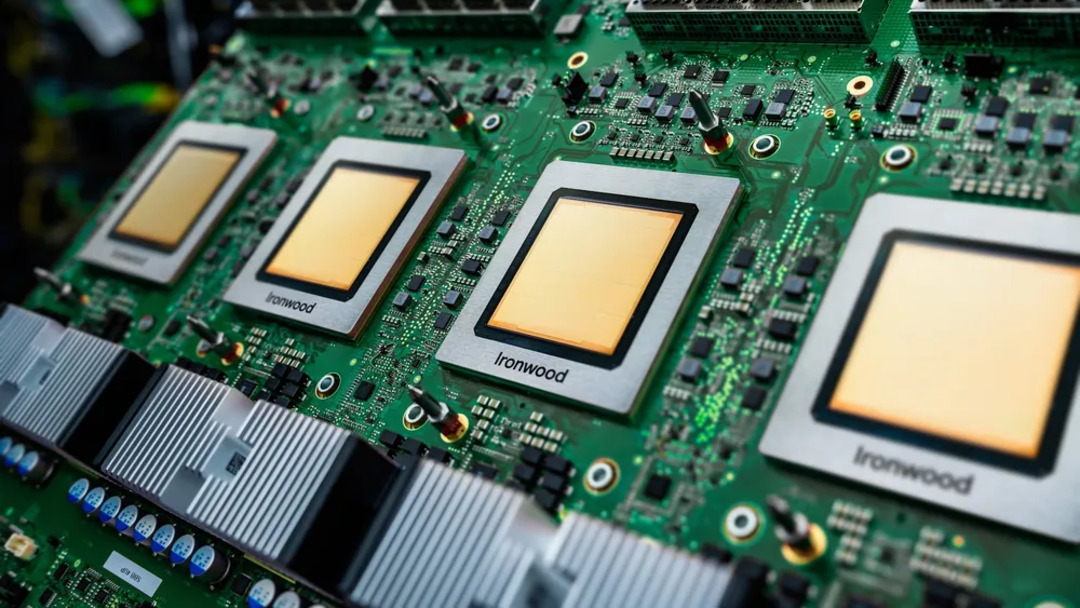
The race to build faster, smarter, and more efficient AI infrastructure has entered a new phase, and the timing could hardly be more consequential. As demand for large-scale model training and inference intensifies, the arrival of Google TPU7x (Ironwood) signals more than a routine hardware refresh; it marks a strategic escalation in the battle over who will power the next era of enterprise AI.
I see this launch as a defining moment for cloud computing because it turns a next-generation accelerator into something customers can actually deploy now. With general availability beginning on March 31, 2026, Google has moved its latest TPU from announcement territory into operational reality.
Why This Launch Matters Now
In AI infrastructure, “latest” is not just a marketing word. It carries real weight because hardware cycles increasingly determine which companies can train larger models, serve more users, reduce latency, and control costs. That is why the debut of a new cloud AI chip matters so much in 2026. The market is no longer driven only by research milestones; it is being shaped by the industrial demands of production AI.
What makes this moment especially notable is that Ironwood is not merely an incremental upgrade. It is the first seventh-generation TPU, placing it at the center of Google’s newest cloud AI offering. That alone makes it significant. But the broader importance lies in what it represents: a deeper push by Google to tighten the connection between custom silicon, cloud services, and AI development at scale.
For customers, availability changes the conversation. Announcements generate interest, but general availability changes procurement plans, architecture decisions, and deployment timelines. Once a chip reaches that stage, it becomes part of the infrastructure choices businesses are actively making today.
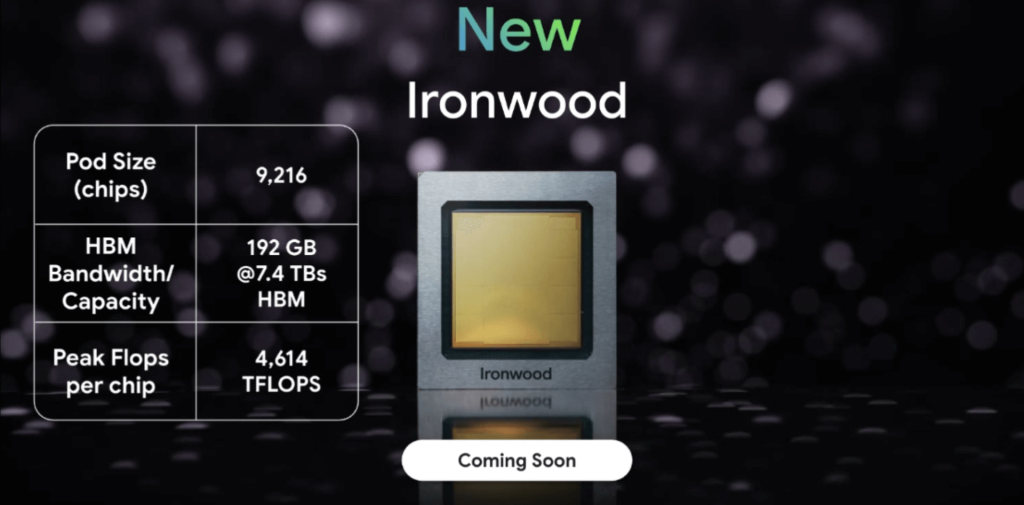
The Significance Of A Seventh-Generation TPU
A seventh-generation TPU tells me Google is continuing to bet heavily on custom AI hardware as a competitive differentiator. That matters because cloud providers are increasingly defined not just by data centers and software stacks, but by the chips they design for their own ecosystems. The value proposition is no longer limited to raw performance. It includes optimization, efficiency, scalability, and the degree to which hardware is tuned for modern AI workloads.
Ironwood enters the market at a time when enterprises are asking tougher questions about where their AI workloads should run. Some want maximum performance for frontier-scale training. Others care more about serving models efficiently in production. Many are looking for a balance between speed, reliability, and cost. A new TPU generation gives Google a stronger answer to all three groups.
The naming matters, too. By branding the chip as Ironwood while also identifying it as TPU7x, Google is signaling both lineage and novelty. It remains part of a familiar TPU family, but it is also being positioned as a fresh step forward rather than a minor extension of the past.
What Google TPU7x Means For Cloud Customers
The practical impact of a new accelerator becomes clearer when viewed through the lens of adoption. Customers choosing AI infrastructure are not only comparing chips; they are comparing ecosystems. They want to know how quickly they can get access, how well the hardware integrates with existing cloud services, and whether the platform can support rapid scaling as workloads grow.
That is where Google TPU7x (Ironwood) becomes especially relevant. Its availability on Google Cloud turns advanced TPU access into a direct option for organizations building or expanding AI systems inside Google’s infrastructure. In my view, that makes Ironwood less of a standalone product story and more of a platform story.
The launch also reinforces a broader industry pattern: hyperscale cloud providers increasingly prefer to compete with vertically integrated AI stacks. Compute is no longer separate from storage, orchestration, model tooling, and networking. The newest chip is valuable partly because it strengthens the whole environment around it.
Where Ironwood Fits In The AI Hardware Race
The AI hardware market has become a contest between general-purpose accelerators and highly specialized cloud-native chips. Google’s TPUs have long occupied a distinctive place in that landscape. They are built to serve Google’s own priorities, but they also function as commercial infrastructure for external customers. That dual role gives them unusual strategic importance.
Ironwood arrives at a time when every major cloud player is trying to prove that its AI hardware roadmap is not theoretical. The pressure is no longer just to unveil next-generation chips; it is to make them usable in ways that influence buying decisions right now. General availability is therefore more than an operational milestone. It is a credibility test.
Here is where Ironwood stands in the current conversation:
| Category | Ironwood’s Position |
|---|---|
| Product Class | Cloud AI accelerator |
| TPU Generation | Seventh generation |
| Availability Status | Generally available |
| Availability Date | March 31, 2026 |
| Strategic Role | Latest TPU offered on Google Cloud |
That compact picture helps explain why the launch has drawn such attention. It is new, available, cloud-native, and strategically central to Google’s AI positioning.
What Stands Out Most About This Release
Several aspects of the Ironwood rollout deserve close attention:
- It is the first seventh-generation TPU, giving Google a fresh flagship in AI infrastructure.
- It is generally available now, which moves it from roadmap status to real deployment.
- It is presented as the latest TPU on Google Cloud, making it the company’s current top cloud TPU offering.
- It strengthens Google’s argument that custom silicon remains a core advantage in the AI era.
Each of those points matters on its own. Together, they tell a larger story about maturity. Google is not simply introducing another specialized chip; it is advancing a long-term hardware strategy that is becoming increasingly important to cloud customers.
Why The Timing Is So Important
I think the timing is what elevates this from a product update to a consequential industry moment. AI workloads are expanding rapidly, and infrastructure choices made this year will shape how companies operate for years. Businesses cannot afford to wait for vague future roadmaps. They need hardware that exists, scales, and fits into current cloud strategies.
That is why Ironwood’s arrival lands with unusual force. It enters a market hungry for available capacity, better optimization, and infrastructure built specifically for AI-heavy tasks. The companies that win in this environment will be the ones that can translate chip innovation into immediate utility. General availability is the clearest sign that this translation is underway.
Conclusion
Google TPU7x, or Ironwood, matters right now because it converts the idea of next-generation cloud AI hardware into an active choice for customers. In a market driven by speed, scale, and execution, the newest chip is not simply the one with the newest name; it is the one that can shape live infrastructure decisions today.
That is exactly why Ironwood stands out. It is the latest TPU on Google Cloud, the first seventh-generation TPU, and now a generally available platform at a moment when AI demand is forcing every enterprise to rethink how it builds. For Google, this is a hardware milestone. For the broader market, it is a reminder that in 2026, the real AI race is being decided as much in silicon and cloud architecture as it is in models.