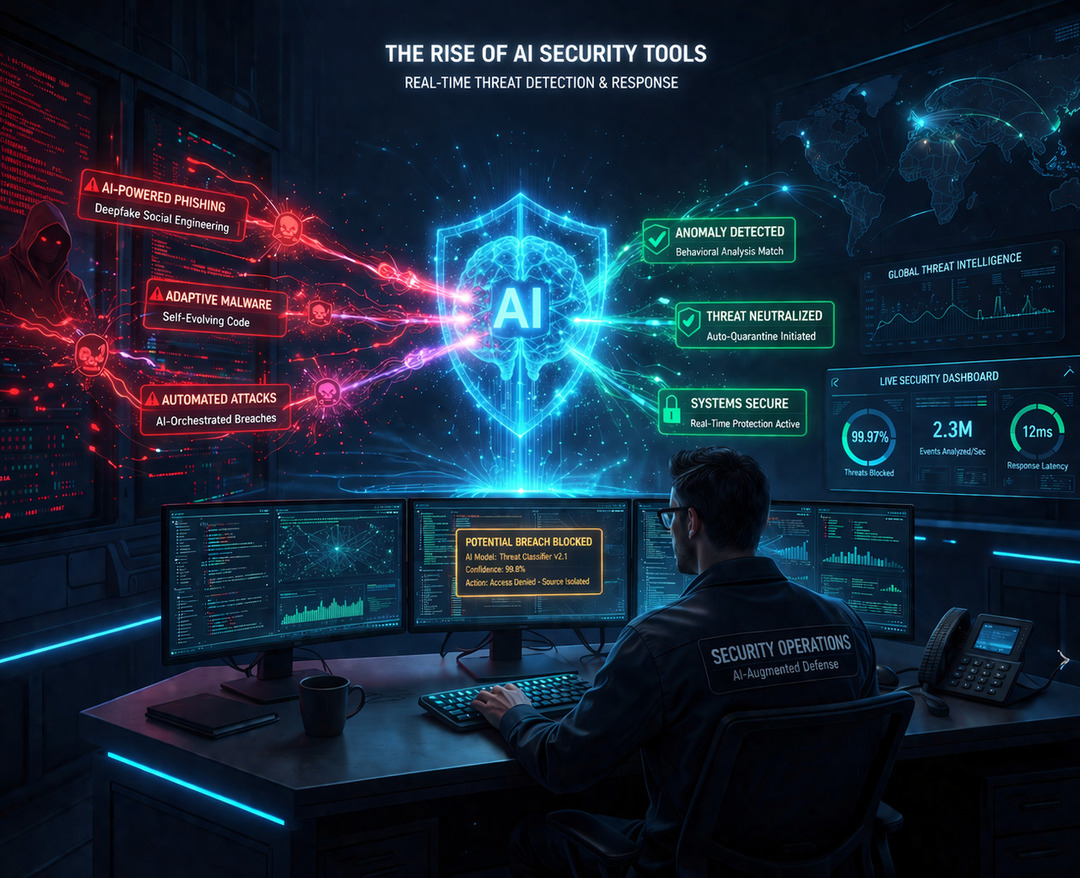
I’ve been closely tracking how cybersecurity is evolving, and one thing has become undeniable: the rise of AI security tools is reshaping how we defend against increasingly intelligent threats.
Not long ago, cyberattacks were largely manual, requiring time, effort, and human coordination. Today, attackers are leveraging artificial intelligence to automate everything from phishing campaigns to malware deployment. This shift has forced organizations into a new reality fighting AI with AI.
The result is a rapidly growing ecosystem of intelligent defense systems designed to detect, predict, and neutralize threats in real time.
How AI-Based Threats Are Changing the Game
To understand the importance of AI security tools, we first need to recognize how threats themselves have evolved.
Modern cybercriminals are no longer relying solely on traditional hacking methods. Instead, they are deploying AI to create adaptive malware, generate convincing deepfake communications, and execute large-scale attacks with minimal human input. These threats can learn, adjust, and evade detection faster than conventional security systems can respond.
From my perspective, this is where the real danger lies: speed and scalability. AI-powered attacks can analyze vulnerabilities across thousands of systems simultaneously, making them far more efficient and harder to stop than anything we’ve seen before.
The Role of AI Security Tools in Real-Time Detection
What fascinates me most about AI security tools is their ability to operate in real time.
Unlike traditional security systems that rely on predefined rules or signature-based detection, AI-driven platforms use machine learning algorithms to identify patterns and anomalies. This means they can detect previously unknown threats by recognizing unusual behavior rather than matching known attack signatures.
For example, if a user account suddenly begins accessing sensitive data at odd hours or from unfamiliar locations, AI systems can flag the activity instantly. In many cases, they can even automatically respond, isolating the threat before it spreads.
This shift from reactive to proactive defense is one of the most significant advancements in cybersecurity.
Machine Learning at the Core of Modern Defense
At the heart of these innovations lies machine learning, the engine powering today’s most effective AI security tools.
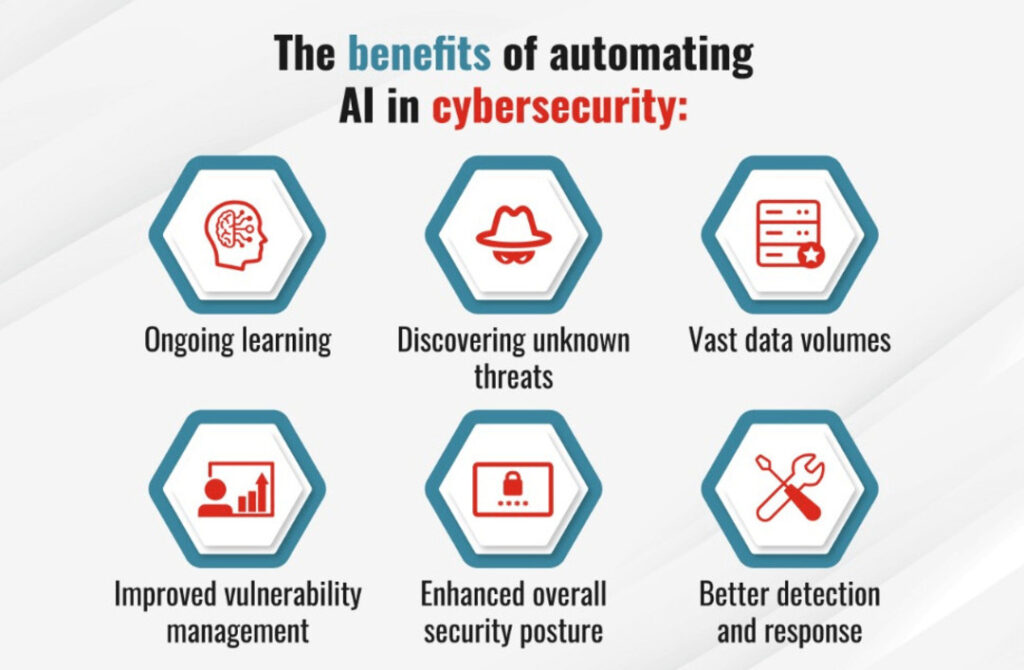
Machine learning models are trained on vast datasets of network activity, user behavior, and historical attack patterns. Over time, they become increasingly accurate at distinguishing between normal operations and potential threats.
What stands out to me is how these systems continuously improve. Every new data point enhances their ability to detect anomalies, making them more resilient against evolving attack strategies.
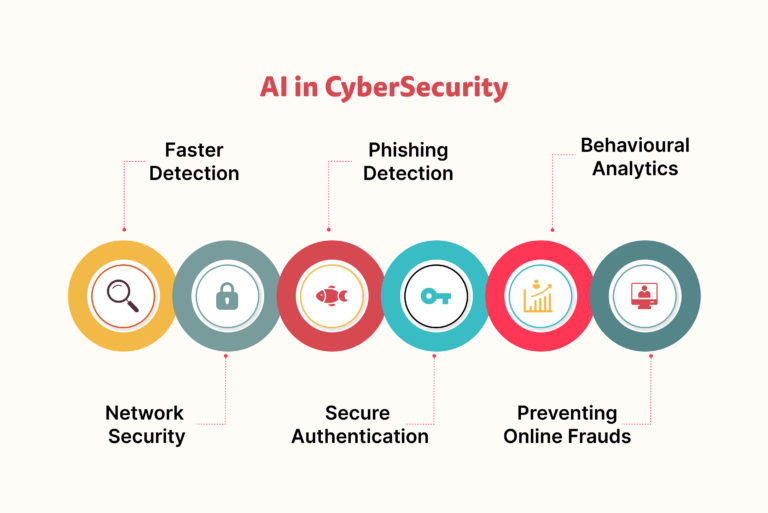
Companies are now deploying AI across multiple layers of security, including endpoint protection, network monitoring, and identity management. This layered approach creates a comprehensive defense ecosystem that adapts in real time.
Automation and Speed: The Key Advantages
One of the biggest advantages of AI security tools is automation.
In traditional cybersecurity environments, response times often depend on human analysts reviewing alerts and taking action. This process can take minutes or even hours giving attackers a critical window to exploit vulnerabilities.
AI changes that dynamic completely.
Automated systems can detect and respond to threats in seconds, significantly reducing the potential damage. They can quarantine compromised devices, block suspicious traffic, and even initiate countermeasures without human intervention.
From what I’ve observed, this level of speed is no longer optional it’s essential. In a world where attacks unfold in milliseconds, human-only defense strategies simply can’t keep up.
Challenges and Limitations of AI Security Tools
Despite their advantages, AI security tools are not without limitations.
One concern is the risk of false positives. While AI systems are highly effective at detecting anomalies, they can sometimes flag legitimate activity as suspicious. This can lead to unnecessary disruptions if not properly managed.
There’s also the issue of adversarial AI where attackers design strategies specifically to deceive machine learning models. This creates an ongoing arms race, with both sides continuously adapting and evolving.
Additionally, implementing AI-driven security requires significant investment in infrastructure, data management, and expertise. Smaller organizations may struggle to adopt these technologies at scale.
These challenges highlight an important reality: AI is powerful, but it’s not infallible.
Industry Adoption and Real-World Applications
Across industries, the adoption of AI security tools is accelerating.
Financial institutions are using AI to detect fraudulent transactions in real time. Healthcare organizations rely on machine learning to protect sensitive patient data. Technology companies are integrating AI into cloud security platforms to monitor vast, distributed networks.
According to insights from AI security tools guidance by the National Institute of Standards and Technology (NIST), integrating advanced technologies like AI into cybersecurity frameworks is becoming essential for modern risk management.
What I find particularly compelling is how AI is enabling organizations to scale their defenses. Instead of relying solely on human teams, companies can now monitor millions of events simultaneously, ensuring broader and more effective protection.
The Human Factor: Still Essential in AI Security
Even as AI security tools become more advanced, I don’t believe they will replace human expertise.
Cybersecurity professionals play a critical role in interpreting data, refining algorithms, and making strategic decisions. AI can identify patterns and automate responses, but it lacks the contextual understanding and judgment that humans bring to complex situations.
In my view, the future of cybersecurity lies in collaboration between humans and machines. AI handles the speed and scale, while human experts provide oversight, creativity, and critical thinking.
Can AI Truly Defend Against AI?
So, can AI security tools defend against AI-based threats?
From everything I’ve observed, the answer is yes but with important caveats.
AI has become an indispensable part of modern cybersecurity, offering unprecedented speed, accuracy, and scalability. It enables organizations to detect and respond to threats in ways that were unimaginable just a few years ago.
However, it is not a standalone solution. The effectiveness of AI-driven defense depends on how well it is integrated with human expertise, robust strategies, and continuous adaptation.
And in that evolving landscape, AI will not just be a tool it will be a defining force shaping the future of digital security.
What’s clear is that we are entering a new era one where cybersecurity is no longer just about protecting systems, but about outsmarting intelligent adversaries in real time.