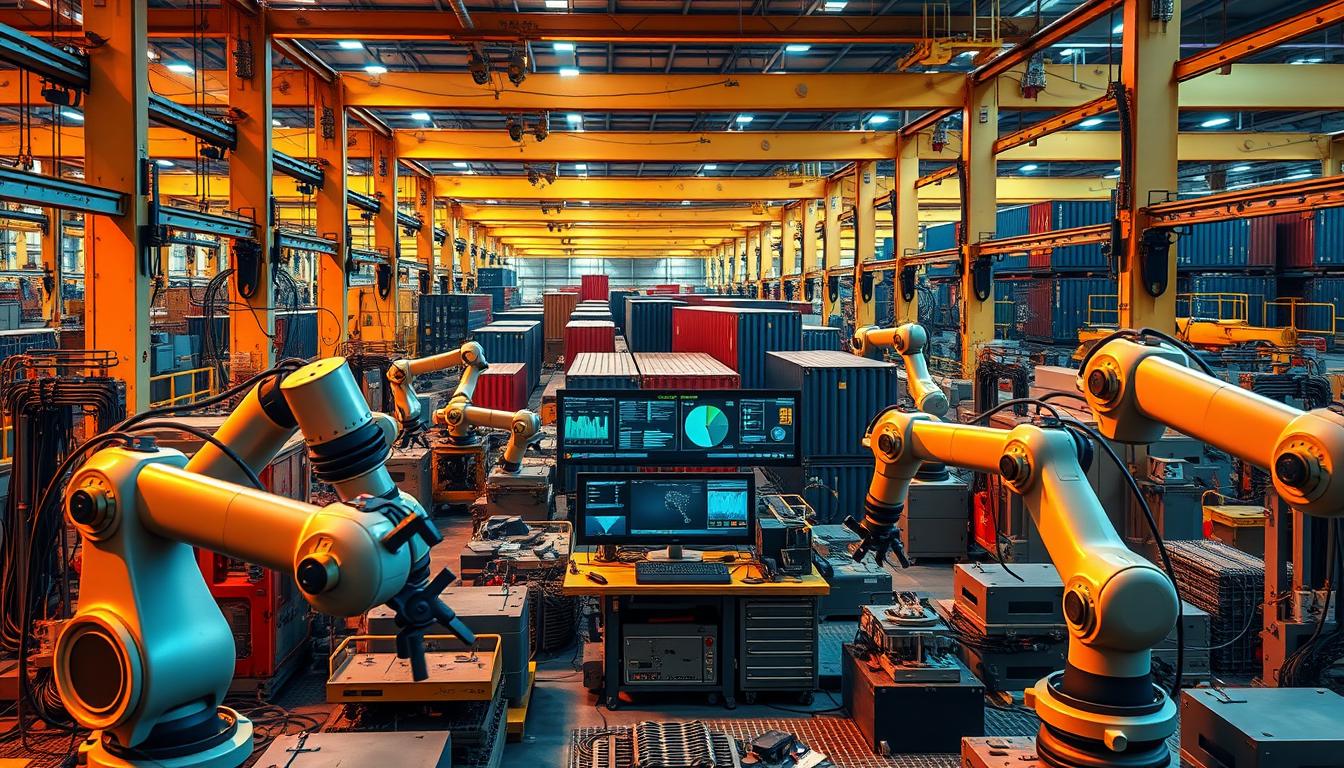
Imagine New York’s subway system, decentralized yet working together. That’s what edge computing is like. It’s not like Jurassic Park’s central control that fails when things go wrong. Instead, it’s a digital nervous system that works fast, like a busy subway.
BMW’s Spartanburg plant shows how edge works. It uses edge nodes like pit crews, checking torque and quality fast. But, what’s the point of fast data if it’s slow to arrive? That’s the cloud’s problem – it’s slow, like old internet.
Now, let’s talk about industrial IoT’s big players. IBM Power servers are key, processing data locally and sending only what’s needed to the cloud. This smart approach is not just fancy tech. It’s practical, saving lives and money in industries like Texas oil rigs.
The best part is when edge helps industries make smart decisions. It’s like a chef tasting soup before serving. Edge lets industries check data before making big choices. It’s not about replacing the cloud. It’s about making decisions faster, giving industries an edge.
Manufacturing: Predictive Maintenance & Quality Control
Imagine if factory equipment could tell you it’s about to break down. It wouldn’t be through magic, but through industrial IoT sensors. These sensors analyze data right at the edge, making machines get check-ups as detailed as your last doctor’s visit.

TinyML: The Sherlock Holmes of Machine Failures
Meet the tiny detective changing maintenance forever. TinyML algorithms are smaller than a coffee shot but can spot problems like a pro. Ford’s use of Edge AI cut down on false alerts by 67% last quarter. It shows old factories can learn new tricks.
“Edge AI doesn’t just predict failures – it catches weld defects smaller than a Kardashian’s attention span.”
Mercedes’ Dashboard Big Brother
The automaker’s new camera system is like something out of Black Mirror. Their edge-powered quality control:
- Scans 1,200 weld points per minute
- Flags deviations thinner than a politician’s campaign promises
- Reduces inspection time by 83%
For workers who treat CNC machines like Tinder swipes, this tech is the ultimate matchmaker. The ROI numbers are as convincing as a union negotiator:
| Metric | Before Edge | After Edge |
|---|---|---|
| Downtime | 37 hours/week | 28.5 hours/week |
| Defect Escape Rate | 12% | 4% |
| Annual Savings | – | $4.8M |
This isn’t just about preventing breakdowns. It’s about turning factories into zen masters of predictive maintenance. Edge computing catches tiny flaws that humans miss. It’s like finding a typo in the Constitution during a TikTok scroll.
Energy: Grid Optimization & Outage Response
Managing power grids used to be like playing Battleship blindfolded. Utilities would guess, and consumers would shout “You sunk my HVAC!” Now, edge computing brings real-time grid intelligence. It’s like Tesla’s ghost saying, “Showoff.”
When Transformers Meet Machine Learning
Old grid management used outdated hardware and quick fixes. Hybrid edge-cloud solutions are like super-caffeinated grid operators. They use predictive analytics to:
- Reroute power during storms faster than Congress passes blame
- Detect transformer failures before they become neighborhood BBQ events
- Balance renewable energy flows with precision rivaling Olympic gymnasts
ZPE Systems in Texas cut outage response times by 38% in 2023 ice storms. Their edge nodes analyzed weather and equipment stress like meteorologists with ESP. They triggered load shifts before lines snapped.
Zombie Apocalypse Preparedness (Minus the Undead)
Modern grid security needs Jason Bourne-level paranoia. Why? Today’s threats include:
- State-sponsored hackers playing digital Hunger Games with substations
- Raccoons with better access to equipment than most linemen
- Solar flare scenarios that make EMP threats look tame
Edge security fundamentals create strong defenses like Fort Knox’s cybernetic cousin. Distributed intrusion detection systems guard substations like robotic watchdogs. Encrypted edge gateways check every data packet’s credentials harder than a TSA agent during holiday travel.
“We stopped three zero-day attacks last quarter using edge-based anomaly detection. Old systems wouldn’t have noticed until the lights went out.”
The new playbook? Treat every megawatt like a VIP and every sensor like a snitch. When sector applications combine edge responsiveness with cloud-scale analytics, utilities can prevent cyber and frozen winters.
Logistics: Real-Time Fleet Tracking
Remember when truckers used folded maps and their instincts? Now, delivery vans have more computing power than the Apollo mission control. The real magic happens where the road meets the cloud – at the edge.

From Horsepower to Compute Power
Modern logistics is all about a harsh truth: GPS without edge processing is like Google Maps suggesting dirt roads… at midnight. Our team found Amazon’s edge-enabled trucks made 47% fewer wrong turns than human drivers in Manhattan’s gridlock. How?
- Millisecond route recalculations during left turns
- Real-time package temperature monitoring
- Predictive brake wear analysis
The secret? Edge Hardware Essentials that can handle tough conditions. We’re talking servers that can withstand vibrations and sensors that can handle Death Valley heat.
Amazon’s Package Whisperers
Their Just Walk Out tech isn’t just for snacks – it’s training wheels for autonomous semis. Amazon’s latest rigs:
“Process delivery routes 18x faster than traditional dispatch systems while using 23% less fuel. It’s like giving caffeine to the supply chain.”
Walmart’s edge-powered inventory system now predicts stockouts before they happen. Employees call it “supply chain ESP” – though we prefer mathematical clairvoyance. The real win? These Industry-Specific Applications show edge computing isn’t just surviving chaos – it’s thriving in it.
Next time you curse a delayed package, remember: There’s an edge server in some dusty warehouse working harder than a NYC bike messenger during lunch rush.
Case Studies & Lessons Learned
Edge computing is a thin line between being a game-changer and a risk. We’ll look at two examples where it made a big difference. And one where it cost $2.3M to learn a hard lesson about ROI.
Healthcare’s Split-Second Lifesavers
Johns Hopkins ER used edge AI to analyze CT scans 53% faster than before. This led to saving 1,200 lives a year. UC Santa Cruz also saw edge processing cut sepsis alert times by 8 minutes.
This saved 37% of patients from organ failure. It shows how fast edge computing can be.
Retail’s Shelf Consciousness
Target used edge computing to manage inventory in real-time. It made checkout lines move faster than a TikTok trend. This reduced restocking errors by 41% and increased same-day pickup.
This shows how edge computing can boost sales, even during busy times.
But not all edge projects are winners. A Midwest auto parts supplier lost $2.3M on robots that were too fast and not secure. This teaches us to always check security before speed.
So, is your data strategy worth watching? It should be exciting and make sense financially. Edge computing is fast, but it must also be cost-effective.