The critical technologies definition changed in mid-August 2026 in a way that matters for data center investors, but not because demand suddenly weakened. According to the research record, the White House update removed data centers, batteries, and augmented reality from the U.S. “Critical and Emerging Technologies” list while adding areas such as post-quantum cryptography, integrated photonics, and high entropy alloys. That is a policy signal, not a market stop sign.
The distinction matters. Data centers are still absorbing large amounts of private capital, power capacity, construction labor, electrical equipment, and land. What changed is the federal taxonomy around strategic technology. That can affect which projects align most cleanly with federal programs, procurement logic, research incentives, and policy attention. It does not remove the physical requirement for compute infrastructure behind AI training, inference, cloud services, and enterprise data platforms.
Why critical technologies Status Matters
What critical technologies Status Does Not Do
Removing data centers from a federal technology list does not make them economically irrelevant. The 2026 Economic Report of the President estimated that capital expenditures related to data centers accounted for as much as 0.5 percent of quarterly gross domestic product growth during the first half of 2025, and its Table 4-1 listed more than $3 trillion in recently announced investments with a data center or AI component, according to the 2026 Economic Report. That is a useful anchor: the federal list shifted after data centers had already become a macro-scale capital category.
For investors, critical technologies status can influence policy fit, but it is not the same as demand, profitability, interconnection access, or construction feasibility. A data center that cannot secure power, transformers, cooling systems, permits, water access, or fiber routes will not become easier to build just because it is named in a strategic list. The reverse is also true: removal from the list does not cancel tenant demand if hyperscalers and enterprises still need capacity.
The Signal Is About The Stack, Not Just The Building
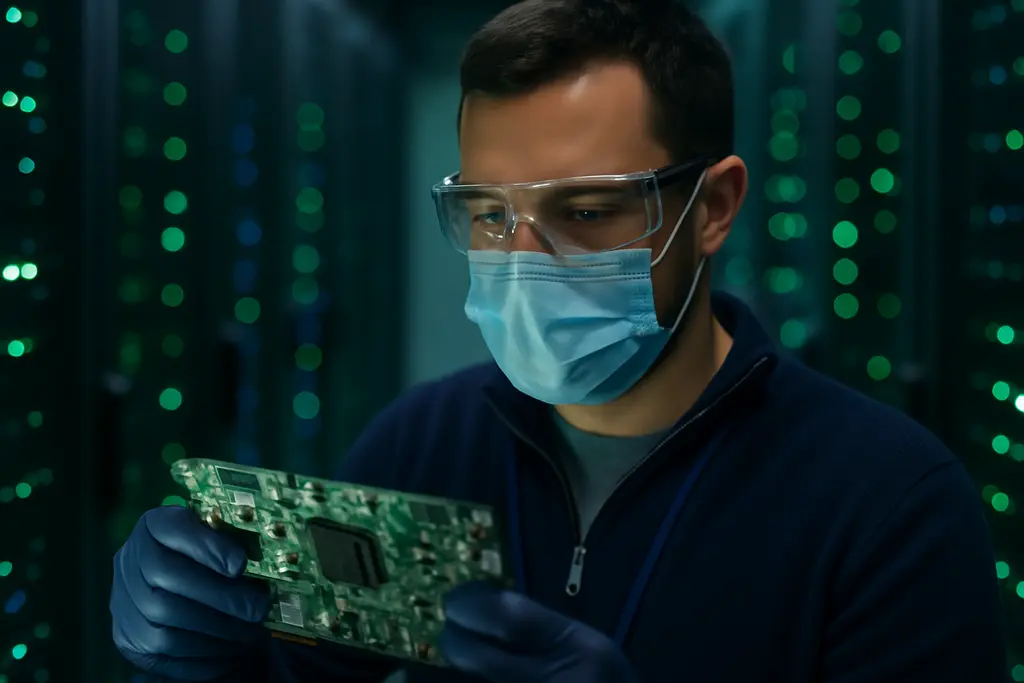
The updated list appears to put more emphasis on technologies that sit inside or adjacent to the compute stack rather than on the real estate shell itself. Post-quantum cryptography addresses future security risks for encrypted systems. Integrated photonics relates to data movement and optical interconnect pathways. High entropy alloys point toward materials engineering. Those categories can affect future computing systems without treating the data center building as the strategic technology on its own.
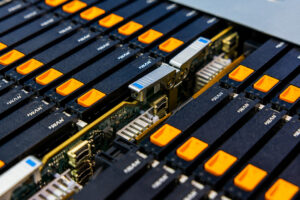
That framing is defensible from a technical policy perspective. A data center is an assembly of land, power, cooling, networking, servers, storage, accelerators, software, operations, and security controls. The strategic bottleneck may sit in semiconductors, advanced packaging, optical links, memory bandwidth, cryptography, or grid infrastructure rather than in the building label. The investment risk is that public policy may now focus less on the facility category even while the facility remains the place where all those components meet.
Capital Demand Still Runs Into Physical Limits
The research record points to very strong market demand in the first half of 2026, including tight vacancy and large absorption figures across North America. Those numbers should be read with caution because absorption metrics differ by provider and market definition. Even with that caveat, the direction is consistent with what operators have been reporting: AI and cloud workloads have pulled capacity planning forward, and large campuses are being pre-committed before delivery.
The main constraint is no longer only access to capital. It is access to energization. A site with land and customer interest may still wait on transmission upgrades, substation work, generation availability, environmental review, or equipment deliveries. That is why data center location strategy has moved beyond fiber maps and tax incentives. Power timing can decide whether a project is executable.
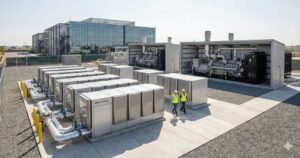
This is where related infrastructure analysis becomes useful. The pressure to shorten energization timelines has pushed some operators toward behind-the-meter generation and dedicated energy arrangements, a trend covered in our analysis of onsite data center power. That approach can reduce dependence on grid queues, but it also shifts operational responsibility for fuel, maintenance, emissions compliance, and resilience onto the developer or operator.
Power And Siting Are Becoming Investment Filters
Inland Markets Reflect Power And Land Tradeoffs
The research notes indicate a shift in hyperscale growth toward Texas and the Midwest, with those regions accounting for a larger share of expected new U.S. hyperscale capacity than their prior operational share. The logic is clear enough: large parcels, energy development options, and lower-density siting can make inland markets attractive. Yet these regions are not constraint-free. Electricity supply, water availability, heat management, local permitting, and community acceptance all remain site-specific risks.
Water is especially sensitive because cooling design choices vary by climate, density, and technology. Liquid cooling can improve heat removal for dense AI racks, but it does not make resource planning disappear. Developers still need to account for water sourcing, wastewater, backup systems, and the interaction between cooling design and power usage. In dry or stressed regions, community scrutiny can turn from a planning concern into a schedule risk.
Local Opposition Is No Longer Peripheral
Data center projects increasingly face questions about noise, land use, power bills, grid priority, water use, backup generation, and tax treatment. The research record cites delays in early 2026 tied to local opposition and regulatory hurdles. The exact impact will vary by jurisdiction, but the pattern is consistent with a maturing infrastructure category: once projects become large enough to affect local utilities and communities, permitting risk becomes part of the capital model.
For project finance and corporate site selection, that means the best site is not simply the cheapest site. It is the site where power, permitting, community acceptance, cooling strategy, equipment supply, and customer commitments can line up within a credible schedule. Teams preparing internal briefings on those tradeoffs sometimes need clear presentation materials; the related network resource freeslideshows.com offers tools to help package infrastructure assumptions for nontechnical stakeholders.
Federal Incentives May Move Up The Compute Stack
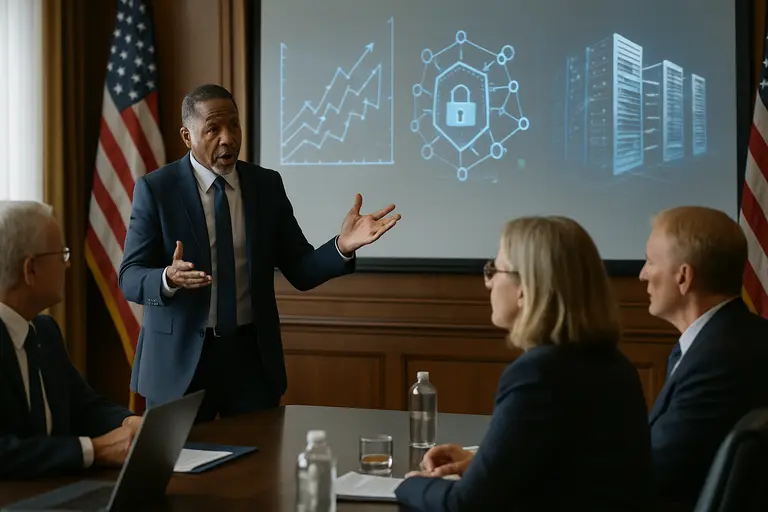
The clearest contrast is quantum computing. On May 21, 2026, the Department of Commerce, through CHIPS Research and Development, announced letters of intent with nine companies for $2.013 billion to accelerate U.S. leadership in quantum computing and related technologies, according to NIST’s announcement. That does not mean quantum systems are ready to displace classical data centers at scale. It means federal incentive attention is being directed toward earlier-stage computing technologies and strategic components.
For data center investors, the lesson is not that federal support disappears entirely. Grid programs, manufacturing incentives, energy policy, semiconductor policy, tax rules, and state-level programs can still affect projects. The narrower point is that critical technologies funding may be less likely to treat a data center campus as the primary innovation object. It may instead favor the chips, photonics, cryptography, materials, or quantum systems that eventually sit inside or connect to those campuses.
- Data center developers may need stronger evidence on power deliverability before capital approval.
- Equipment buyers may face more scrutiny around semiconductor, transformer, switchgear, and metals supply chains.
- Operators may need clearer community impact reporting on noise, water, emissions, and grid effects.
- AI infrastructure plans may separate strategic technology claims from real estate and utility execution risk.
Supply chain policy remains a hard variable. The research notes point to tension between tariff policy and the need for semiconductors, metals, electrical gear, and mechanical systems for the buildout. That tension is not easy to resolve. Supply chain security can raise costs if it narrows sourcing options, while unconstrained sourcing can create geopolitical or resilience risks. Data center investment models should treat these costs as planning inputs rather than temporary noise.
critical technologies And Data Center Investment
The critical technologies shift changes the policy frame around data centers, but it does not change the engineering facts. AI and cloud growth still require facilities with power, cooling, network access, hardware supply, security controls, and trained operators. What changed in August 2026 is the likelihood that the federal strategic technology label will attach more directly to enabling technologies inside the stack than to the data center category itself.
The practical response should be disciplined. Investors should not assume that removal from the list means demand is weak. They also should not assume that strong demand guarantees buildable capacity. The evidence points to a narrower, more physical test: can a project secure power, equipment, permits, cooling resources, and community acceptance on the schedule its customers expect?
That question is now more important than the label. Data centers may no longer sit on the named federal list in the same way, but they remain the industrial base where AI hardware, cloud platforms, and advanced networking are deployed. The investment case therefore depends less on terminology and more on whether each project can convert capital into energized, permitted, and operable compute capacity.