The Electrotech Stack is a useful shorthand for the linked systems that now shape U.S. competitiveness: generation capacity, storage, manufacturing, critical minerals, charging infrastructure, software control, and defensive security operations. The evidence from 2024 through mid-2026 does not support either complacency or simple decline narratives. It shows a country adding large amounts of planned generation, improving some parts of EV infrastructure, and still carrying exposure in minerals, manufacturing depth, and operational reliability.
For technology operators, the stack matters because compute, electrification, industrial automation, and transport are no longer separate planning exercises. A data center campus, a battery plant, a charging corridor, and a semiconductor supplier base all meet the same constraints: available power, predictable interconnection, equipment supply, maintenance labor, and secure control systems.
Electrotech Stack Competitiveness Starts With Power
Electrotech Stack Load Growth Signals
The clearest near-term signal is planned U.S. generation buildout. The U.S. Energy Information Administration reported that developers planned 86 GW of new utility-scale electric generating capacity for 2026, which would be a record if completed; solar accounted for 51% of planned additions, battery storage for 28%, and wind for 14% EIA capacity data. That mix matters because it points toward a more inverter-heavy grid, with batteries increasingly used to manage timing, ramping, and short-duration balancing.
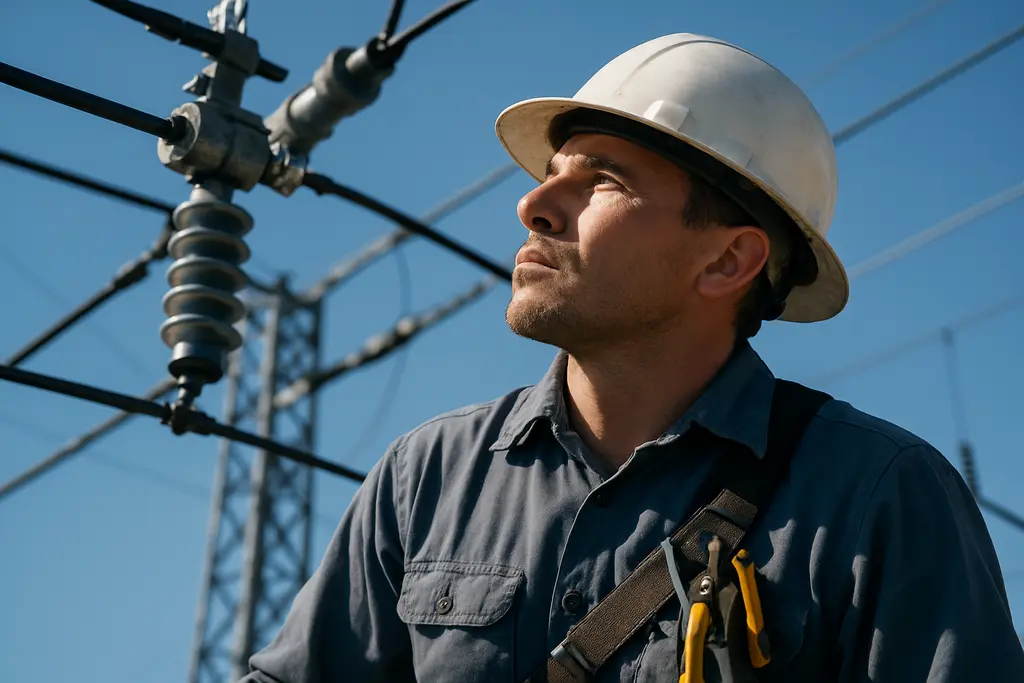
Capacity additions, however, are not the same as firm deliverability at every site that needs power. Data centers, electrolyser projects, EV charging hubs, and factories may all compete for interconnection capacity in the same regions. For the Electrotech Stack, the question is not only how many gigawatts are announced, but whether transmission, distribution equipment, transformers, protection systems, and operations teams are ready when load arrives.
Power Quality And Siting Constraints
Large industrial and compute loads are sensitive to outages, voltage disturbances, and schedule slippage. Solar and storage can reduce some energy-cost exposure, but they do not remove the need for grid engineering, protection coordination, and backup strategies. Natural gas still supplied a large share of U.S. electricity generation in 2024 according to the research set, so near-term reliability planning remains hybrid rather than purely renewable.
This is where energy efficiency becomes a competitiveness factor, not just a sustainability metric. A data center that lowers cooling power, improves utilization, and uses demand controls can reduce its grid impact relative to one that only seeks more capacity. The same logic applies to factories and charging depots: avoided load is often faster than new interconnection.
Manufacturing Capacity Is Necessary But Not Sufficient
Clean Technology Manufacturing Signals
Manufacturing investment data in the research set shows a mixed picture. Global investment in manufacturing capacity for six clean energy technologies fell from nearly US$220 billion in 2023 to just under US$200 billion in 2024, with the decline estimated to have continued through 2025. At the same time, the U.S. solar PV module manufacturing base expanded rapidly in 2024, and the research set states that U.S. module capacity nearly tripled to 42 GW.
Those figures point to progress, but they do not prove a complete domestic stack. Module assembly is only one layer. Polysilicon, wafers, cells, inverters, glass, power electronics, and factory automation each carry separate supply-chain exposures. Battery manufacturing presents a similar issue: the research set places the U.S. share of global lithium-ion battery production at 8% across 2015–2024, which indicates that capacity growth starts from a limited global position.
Minerals And Component Exposure
Critical minerals remain a structural constraint. The research notes state that China imposed export bans on antimony, gallium, and germanium to the U.S. in December 2024. By mid-2025, U.S. importers had sourced antimony oxides from Thailand and Mexico at volumes greater than nearly the previous three years combined. That substitution may reduce single-source exposure, but it also suggests that supply-chain rerouting can be reactive and administratively heavy.
The practical lesson is cautious: competitiveness cannot be measured only by headline factory announcements. It depends on whether upstream materials, midstream processing, components, testing capacity, and qualified labor are available at production scale. A plant that waits on a mineral, transformer, or specialized component is still capacity on paper.
Charging Infrastructure Shows The Execution Gap
Ports, Stations, And Reliability
EV charging illustrates the difference between deployment counts and user-grade availability. The Government Accountability Office reported that by May 2025 the United States had about 219,000 publicly accessible EV charging ports at roughly 77,000 stations, including about 162,000 Level 2 ports, 56,000 DC fast chargers, and 800 Level 1 ports GAO charging report. The research set also notes that public and workplace non-home chargers reached about 204,000 by the end of 2024.
Those numbers show material deployment, but charging infrastructure is judged by more than port counts. Reliability, payment systems, connector compatibility, station uptime, repair cycles, queueing, and local distribution capacity all affect the driver experience. The 2025 JD Power study cited in the research set found that failed public charging attempts fell to 14% among surveyed EV owners who tried to charge, down five percentage points from 2024. That is improvement, but a 14% failure rate remains significant for infrastructure intended to replace a mature fueling model.
Lessons For Industrial Electrification
Charging networks offer a preview of wider electrification challenges. Public infrastructure needs hardware, communications, authentication, field maintenance, software updates, and utility coordination. The same pattern appears in heat pumps, distributed storage, fleet depots, and factory energy systems.
The Electrotech Stack therefore depends on service operations as much as capital equipment. A charger, inverter, or battery system that is installed but offline creates stranded value. Maintenance contracts, spares planning, remote diagnostics, and technician training should be treated as core infrastructure, not afterthoughts.
Security And Reliability Are Stack-Level Issues

Control Systems And Endpoint Hygiene
Electrification increases the number of connected devices that can influence physical operations. Charging stations, battery systems, building-management platforms, industrial controllers, and data center power equipment often depend on networked monitoring and remote management. Defensive security should focus on asset inventory, patch governance, least-privilege access, logging, segmentation, and tested recovery procedures.
This is not a call for alarm. It is a recognition that availability and security now intersect. A compromised management console, exposed remote-access service, or neglected endpoint can become an operational issue for energy assets. For readers seeking consumer endpoint security comparisons, related resources such as Best Antivirus Pro can provide background, though industrial and energy systems require stricter engineering controls and vendor-specific procedures.
Reliability Engineering Beyond The Grid
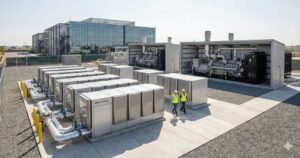
Reliability is often discussed as a utility problem, but more responsibility is moving to site owners. A large data center or manufacturing campus may operate its own substations, backup generators, battery energy storage, switchgear, and power-management software. That creates more control, but also more maintenance burden.
- Track electrical assets with clear ownership, maintenance intervals, and failure histories.
- Separate administrative IT networks from operational energy-management systems where practical.
- Test backup power and recovery procedures under conditions that resemble real operating loads.
- Plan spare parts for long-lead electrical equipment, not only servers, chargers, or production tools.
These practices are not exotic. They are the engineering discipline needed when energy infrastructure becomes part of the technology product.
The Electrotech Stack
What U.S. Competitiveness Depends On
The evidence supports a cautious reading. The United States is adding planned generating capacity at a record level for 2026 if projects are completed as reported by EIA. It has built a sizeable public charging footprint, while GAO data shows that the network remains uneven across charger types and locations. Manufacturing investment has shown both gains and setbacks, and mineral exposure remains a practical vulnerability.
The Electrotech Stack should be assessed through execution metrics: completed capacity rather than announced capacity, uptime rather than installed devices, domestic capability across multiple production layers rather than single factory counts, and secure operations rather than connected equipment alone. U.S. competitiveness in energy and technology will depend less on any one breakthrough than on whether these interdependent systems can be built, maintained, powered, and defended at scale.