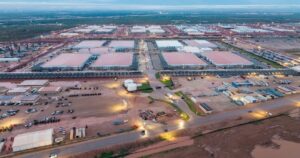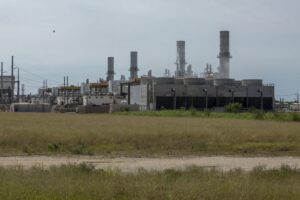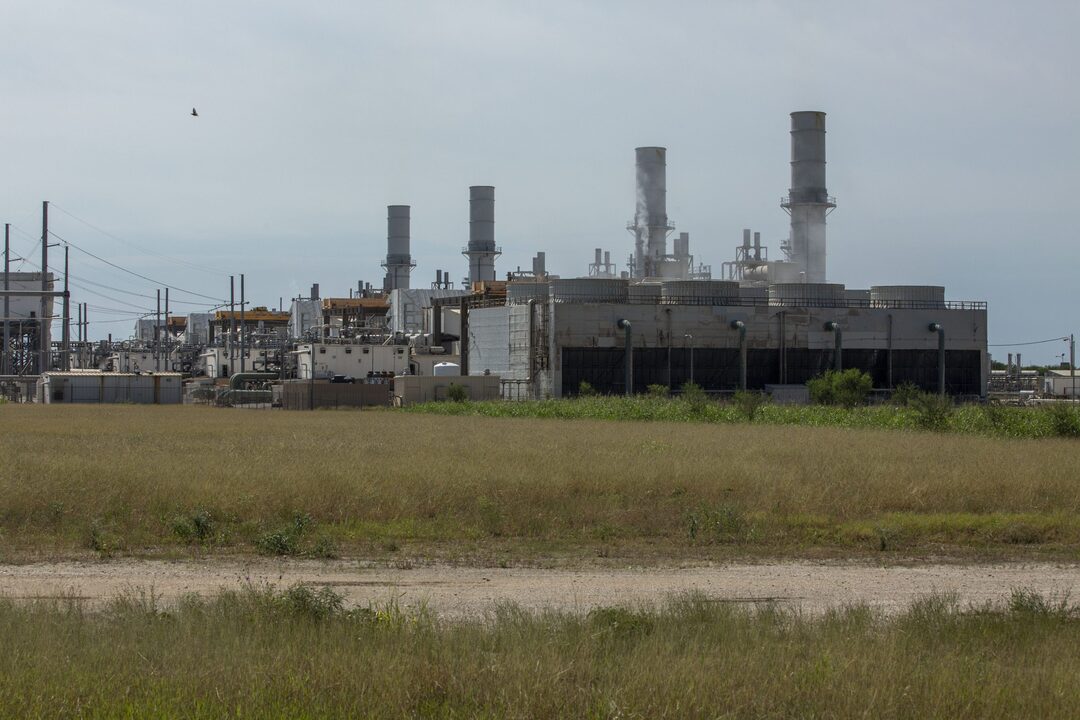
Gas-powered AI campuses are becoming one of the clearest signs that the AI boom is no longer waiting patiently for the electric grid. In West Texas, energy firms are beginning to package power generation, land, fiber, and data center readiness into one product for hyperscale customers that need capacity faster than conventional interconnection queues can deliver it.
That makes Texas more than a growth market. It is becoming a test ground for AI data center power risk, where compute demand, gas supply, grid reliability, and local politics are being forced into the same infrastructure decision.
Gas-Powered AI Campuses Put Power First
Liberty Energy and PowerBridge announced a strategic joint venture in July focused on powered data center campus development. The current scope supports PowerBridge’s Alpha Digital Campus, a planned 2-gigawatt powered campus in West Texas, with an initial phase expected to include more than 300 megawatts of generation capacity and first power targeted for the fourth quarter of 2027.
The structure is built around a simple but important shift: the power plant is no longer being treated as a late-stage dependency. It is part of the campus model from the start.
Liberty brings integrated power generation, energy management, and operational capabilities through Liberty Power Innovations. PowerBridge brings digital campus development assets, fiber planning, site infrastructure, and a platform aimed at hyperscale, AI, and other large-load customers. The joint venture was framed as a way to give customers greater certainty around both site infrastructure and power supply through a powered campus venture.
That certainty is the product. In the AI data center market, megawatts are becoming as important as square footage.
Why West Texas Fits the Model
West Texas has the ingredients developers now want: energy resources, large land positions, industrial familiarity, and proximity to the Permian Basin’s natural gas ecosystem. That makes it a logical place to test data center campuses designed around power availability rather than conventional urban cloud locations.
LandBridge previously announced an agreement giving PowerBridge the option to lease roughly 3,400 acres in Reeves County for the Alpha Digital Campus, with up to 2 gigawatts of initial co-located power generation under development. The site is near the Waha natural gas hub, a key detail in the broader West Texas campus plan.
That location says a lot about the next phase of AI infrastructure. Developers are not simply asking where the customers are. They are asking where energy, land, permitting, and connectivity can be assembled into a repeatable buildout model.
For AI companies, a rural power-first campus may be more attractive than waiting years for grid upgrades in a constrained market.
The new question is where power can move fastest.
The Grid-First Data Center Playbook Is Being Challenged
Traditional data center development often assumed the grid would be the central supply source. Developers would find land, secure utility interconnection, negotiate power agreements, and build around the existing electric system.
That playbook is under strain. AI loads are larger, faster, and denser than many utility planning cycles expected. Interconnection queues are crowded. Transformers and other grid equipment can face long lead times. Communities are asking who pays for upgrades when one campus changes regional power demand.
PowerBridge’s model is different. Its public materials describe move-in-ready digital campuses where on-site power generation, high-voltage electrical infrastructure, land, water, and fiber are engineered together as a single system. The company says its campuses are built for hyperscale and AI workloads with a path to multi-gigawatt expansion through an integrated campus model.
That is not just branding. It is an answer to the biggest AI infrastructure bottleneck: grid timing.
| Development Model | Main Advantage | Main Risk |
|---|---|---|
| Grid-first data center | Uses established utility infrastructure | Long interconnection delays |
| Gas-powered campus | Speeds power access near fuel supply | Emissions and fuel-price exposure |
| Hybrid grid campus | Balances onsite generation with grid support | Complex operating and regulatory design |
| Renewable-backed campus | Supports cleaner power claims | Storage and firming may be difficult |
| Nuclear-adjacent campus | Offers large firm clean power | Long timelines and limited site availability |
The comparison shows why gas-powered AI campuses are gaining attention. They may solve speed and scale problems, but they create a new set of public, regulatory, and climate questions.
Natural Gas Is a Shortcut, Not a Free Pass
Natural gas can provide firm power in ways intermittent resources cannot easily match without storage or backup. That makes it attractive for AI workloads that need reliable electricity around the clock.
But gas-powered data centers will face scrutiny. Emissions, local air quality, methane leakage, water use, and grid impacts will all become part of the public debate. If a campus is connected to the grid as well as onsite generation, regulators may also ask how it behaves during scarcity events and whether it helps or stresses nearby systems.
The strongest argument for this model is reliability and speed. The weakest argument is that it can look like the AI industry is bypassing slower clean-energy and transmission challenges by building fossil-backed compute islands.
That tension will define the politics of West Texas AI development.
A power-first campus can be operationally smart and still politically exposed. Those two things can be true at once.
The real test is reliability without backlash.
Energy Firms Are Becoming AI Infrastructure Vendors
Liberty’s involvement is part of a wider shift in which oilfield, gas, and power-services companies see AI data centers as a new market for their expertise. They understand fuel logistics, generation equipment, industrial operations, and large-scale energy deployment.
That gives them a role that cloud operators and chipmakers cannot easily fill alone. AI companies may own the demand. Semiconductor firms may own the hardware. But energy firms can own the path from fuel to electricity to powered sites.
Liberty’s second-quarter materials described the PowerBridge joint venture as part of its expansion into digital infrastructure and large-load power markets, including an initial deployment of more than 300 megawatts targeted for late 2027 through its latest power-market expansion.
That phrase, “large-load power markets,” is important. AI data centers are becoming industrial energy customers, not just technology facilities.
For energy companies, this is a chance to turn gas, generation assets, and operational experience into a data center growth business.
The Next Signal Is Customer Commitment
The first pressure point is whether hyperscale customers commit to the Alpha Digital Campus. A 2-gigawatt plan is meaningful, but the project’s credibility will increase when named tenants, lease terms, or capacity commitments become clearer.
The second signal is power delivery. First power targeted for late 2027 is ambitious enough to matter. Any delay in generation equipment, interconnection, permitting, or construction could test the model.
The third signal is regulatory treatment. Behind-the-meter or co-located generation can reduce some grid bottlenecks, but it does not remove public oversight. Air permits, transmission relationships, reliability rules, and local approvals still matter.
The fourth signal is replication. If the Liberty-PowerBridge model works, other gas-rich regions may try to package powered AI campuses around fuel supply, land, and fiber access.
Gas-powered AI campuses are not a side story in the AI buildout. They are a sign that the industry’s center of gravity is moving toward energy-first development.
Texas is becoming the test case because it has the gas, land, developers, and appetite for large infrastructure bets. But the model will be judged by more than speed. It must prove that power-first AI campuses can deliver reliable compute without creating a new round of cost, emissions, and local-control fights.