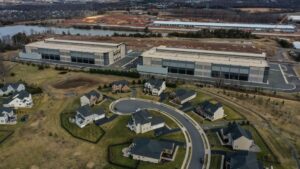
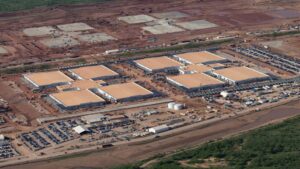
Data center capital is no longer a niche bet inside commercial real estate. AI demand, cloud growth, and data-localization pressure are pulling institutional investors toward digital infrastructure at a pace that makes warehouses, offices, and retail property look like the old conversation.
The shift matters because data centers are becoming one of the physical asset classes behind the AI economy. They sit beside data center land constraints as investors compete for sites that can support power, cooling, fiber, and long-term tenant demand.
Data Center Capital Is Moving Toward the Core
Data centers drew 40% of institutional capital in the June quarter, making the sector the second-largest recipient of institutional investment during the period. The surge was tied to AI adoption, cloud expansion, and data localization needs through the reported June-quarter capital share.
That number is striking because it shows how quickly data centers have moved from specialist infrastructure to mainstream capital allocation. Investors are not only chasing technology upside. They are buying the buildings, power access, land banks, and lease structures that make AI deployment possible.
The appeal is obvious. AI workloads require more compute. More compute requires more facilities. More facilities require enormous capital. That creates a real-asset opportunity for investors with long-duration money.
But the opportunity is not risk-free. A data center is only valuable if it has power, customers, connectivity, cooling, and regulatory support.
This is real estate with electrical risk.
AI Has Changed What Makes a Site Valuable
Traditional commercial real estate often starts with location, tenant demand, transport access, and local economic growth. Data centers add a different hierarchy.
Power comes first. A site without near-term power availability may be attractive on a map but unusable for years. Fiber matters. Water or cooling strategy matters. Local permitting matters. Grid upgrade responsibility matters.
AI makes these constraints more intense because the facilities need higher density. JLL’s 2026 Global Data Center Outlook forecast a 14% compound annual growth rate through 2030 and noted rising global development costs through its global data center outlook.
That means investors are no longer underwriting generic digital demand. They are underwriting power scarcity, construction cost inflation, lease premiums, and the ability to deliver capacity before competitors.
The best sites may not be in the obvious places. They may be wherever power, permitting, cooling, and tenant demand overlap.
Investors Like the Demand but Must Price the Constraint
Institutional investors like data centers because the demand story feels durable. AI, cloud computing, enterprise digitization, cybersecurity, gaming, streaming, and data sovereignty all support long-term usage.
Yet the supply story is constrained. Many prime markets already face power shortages, interconnection delays, land scarcity, and local opposition. That scarcity can raise rents and asset values, but it can also delay projects and increase costs.
CBRE’s 2026 North American Data Center Investor Intentions Survey found that more than half of surveyed investors expected to increase their capital allocations to data centers this year, with some raising allocations by as much as 10% through an investor allocation survey.
That appetite will test discipline. When capital floods into a favored sector, investors can overpay. Data centers may have strong demand, but not every powered site becomes a premium asset.
| Signal | What It Suggests | Investor Risk |
|---|---|---|
| Rising capital allocation | Data centers are becoming mainstream | Crowded pricing |
| Power scarcity | High-value sites may command premiums | Delivery delays |
| AI workload growth | Tenant demand may stay strong | Dependence on hyperscaler capex |
| Local opposition | Communities are scrutinizing projects | Permitting uncertainty |
| Higher build costs | New supply is expensive | Returns depend on lease pricing |
The table shows why data center capital is attractive and complicated. The asset class rewards scarcity, but scarcity can also break timelines.
Data Localization Adds a Second Demand Engine
AI gets most of the attention, but data localization is another reason capital is moving into the sector. Governments and enterprises increasingly want sensitive data stored or processed within specific jurisdictions.
That favors local and regional data center development. Financial services, healthcare, public agencies, telecom operators, and regulated enterprises may need infrastructure close to users and inside legal boundaries.
This creates demand beyond frontier AI labs. A market can attract data center investment because it supports sovereign cloud, regulated workloads, disaster recovery, and enterprise digital services.
The result is a broader demand base. AI may be the hottest driver, but it is not the only one.
For investors, that matters because diversified demand can make data center capital less dependent on one hyperscaler or one AI cycle.
The Weak Link Is Public Trust
Institutional capital can move faster than local politics. That creates tension.
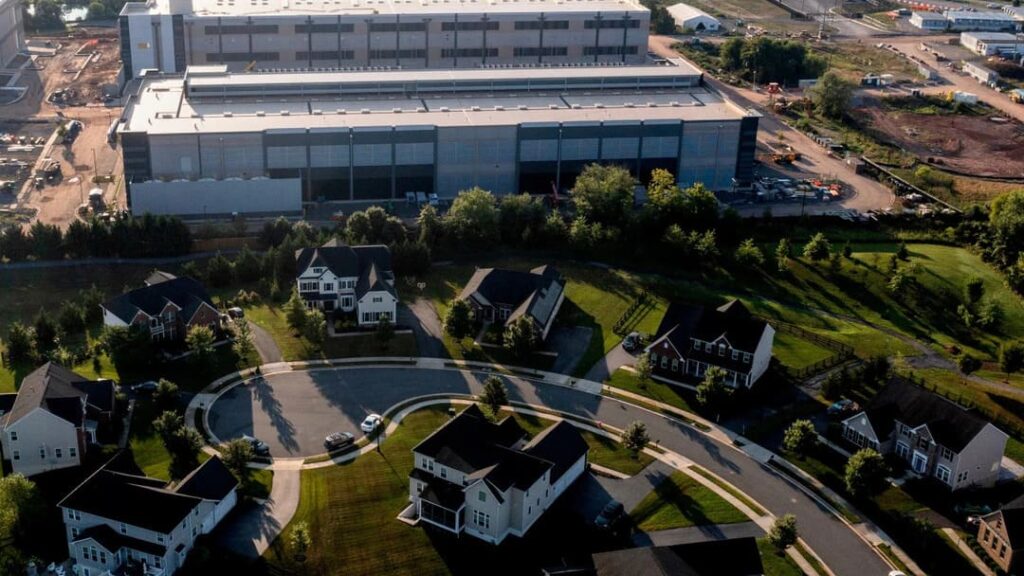
A fund may see data centers as a clean infrastructure allocation. A local community may see noise, power demand, water use, tax incentives, and limited permanent jobs. Those views can collide quickly.
Investors need to treat community acceptance as part of asset quality. A project with strong tenant demand but weak local trust may face lawsuits, delays, moratoriums, or stricter operating rules.
The old real estate question was whether the tenant would pay. The new question is whether the community will tolerate the infrastructure.
That makes social license part of underwriting.
The Next Signal Is Capital Discipline
The next pressure point is whether investors keep pricing data centers as scarce infrastructure or start chasing deals at any cost. If underwriting stays disciplined, the sector can grow with durable returns. If investors overpay for weak sites, the correction will arrive through delays and lower yields.
Watch three signals: power-secured land values, preleasing rates, and financing spreads. Together, they show whether the market is matching real demand with realistic delivery.
Data center capital will stay at the center of AI infrastructure because the buildout needs long-duration money. But the winners will not be the investors who simply buy anything labeled “AI.” They will be the ones who understand that a data center’s value begins with power, permitting, cooling, and tenant quality.
The AI supercycle is becoming a real estate cycle too. That makes capital essential, but not magical. Money can buy land and buildings. It cannot instantly buy grid capacity, community trust, or operational excellence.