Nvidia AI financing may become the next uncomfortable question in the data center boom. If the company that sells the chips also helps finance the facilities and customers that buy them, AI demand starts to look less like a clean market signal and more like a tightly looped infrastructure machine.
That does not mean the demand is fake. It means the financial plumbing behind AI growth deserves much closer attention, especially as AI supply chain security now includes not only chips and export controls, but also debt, leases, guarantees, and customer solvency.
Nvidia AI Financing Changes the Shape of Demand
Nvidia is reportedly in talks to provide a roughly $250 billion financing guarantee tied to OpenAI’s lease of a massive data center project in southern Ohio. The reported structure would help support debt for a facility being developed by SB Energy, a SoftBank subsidiary, while OpenAI would lease the compute capacity rather than directly fund the whole buildout.
That is a very different story from simply selling GPUs into strong demand. A guarantee would make Nvidia part of the financing chain that enables the demand for its products.
The concern is not subtle. If a supplier helps a customer raise money for infrastructure that will buy the supplier’s products, investors will ask how much demand is organic and how much is being financially enabled.
The pressure point is circular AI economics.
The OpenAI Relationship Was Already Gigawatt-Scale
Nvidia and OpenAI already announced a strategic partnership in 2025 to deploy at least 10 gigawatts of Nvidia systems for OpenAI’s next-generation AI infrastructure. Nvidia said at the time that it intended to invest up to $100 billion progressively as each gigawatt was deployed through the 10-gigawatt partnership.
That earlier announcement already blurred the line between supplier, investor, and strategic infrastructure partner. The newly reported guarantee talks would push the same logic further into project finance.
OpenAI needs enormous compute. Nvidia needs customers with the scale to absorb future systems. Data center developers need credit support to finance projects measured in hundreds of billions. Each party benefits if the wheel keeps turning.
The risk is that the wheel becomes too dependent on the same participants funding one another’s growth.
This is where AI infrastructure begins to look less like ordinary cloud procurement and more like a capital-market ecosystem built around chips.
Ohio Shows the Energy Scale Behind the Financing
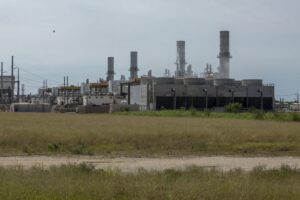
The Ohio project is not only a data center. It is tied to a large energy-development plan. The U.S. Department of Energy said in March that SB Energy planned to build 10 gigawatts of new power generation, including at least 9.2 gigawatts of natural gas generation, to support a 10 GW data center development at the Portsmouth Site in Pike County, Ohio through a broader Ohio AI power plan.
That energy footprint explains why the financing numbers are so large. A 10 GW data center ecosystem is not comparable to adding a few enterprise racks. It touches land, gas generation, grid interconnection, transmission, construction finance, chips, cooling, and long-term customer leasing.
Nvidia’s possible role becomes more consequential because it would not merely help one customer. It could help shape the financing template for massive AI campuses.
That makes the Ohio project a test of supplier-backed infrastructure.
Vendor Financing Can Help Scale and Distort the Market
| Financing Model | How It Helps AI Buildout | Main Risk |
|---|---|---|
| Traditional customer purchase | Clear demand signal from buyer | Slower if customer lacks cash |
| Cloud lease | Spreads cost over time | Lease obligations can pile up |
| Project debt | Funds large facilities faster | Lenders need strong credit support |
| Supplier guarantee | Improves financing terms | Demand may look circular |
| Supplier equity investment | Aligns long-term incentives | Supplier becomes exposed to customer risk |
The table shows why Nvidia AI financing is not automatically bad. It can accelerate badly needed infrastructure. But it can also blur the market’s ability to judge real end demand.
Vendor financing has history in technology. It can support adoption when customers need capital to buy expensive systems. It can also create bubble-like behavior if sales depend too heavily on the vendor enabling the buyer.
The distinction is repayment. If financed projects generate durable cash flow, the model can work. If they rely on future AI revenue that does not materialize fast enough, the weakness becomes visible later.
Nvidia’s Data Center Exposure May Be Getting Broader
Nvidia is also tied to reports of a major Texas data center lease connected to Hut 8. Reuters, citing Financial Times reporting, said Nvidia signed leases worth up to $50 billion for a Texas facility expected to use Nvidia chips through a separate Texas lease report.
That points to a wider pattern. Nvidia may no longer be only the seller of accelerators. It may become a capital participant, lease participant, or financial backstop in the facilities that create demand for accelerators.
That can strengthen the company’s ecosystem. It gives Nvidia visibility into customer roadmaps, power needs, deployment timing, and chip demand. It can also raise questions about concentration risk.
If too many AI infrastructure commitments depend on Nvidia-linked financing, then Nvidia’s exposure is not only to chip demand. It is also to data center construction, customer credit, and AI revenue timing.
The Next Signal Is Whether Investors Demand Cleaner Proof
The first signal to watch is whether Nvidia confirms, denies, or restructures any reported OpenAI guarantee. Talks can change, and any final agreement may look different from current reporting.
The second signal is whether lenders require supplier guarantees more often. If massive AI campuses cannot be financed without help from chip suppliers, that says something important about customer credit risk.
The third signal is whether OpenAI and other AI labs can turn leased capacity into revenue fast enough to support the commitments.
The Wall Street Journal described the talks as a potential guarantee covering the data center lease and construction-related debt, separate from chips that would go inside the project through the financing guarantee talks.
The fourth signal is whether hyperscalers and chip companies separate infrastructure financing from product sales more clearly. Investors will want transparency.
That transparency matters for AI data center power because financial risk and physical infrastructure risk now move together.
The AI Boom Needs Demand That Can Stand Alone
Nvidia AI financing could become a powerful tool for scaling the infrastructure needed to run frontier models. The company has the balance sheet, strategic leverage, and product demand to help unlock projects that might otherwise stall.
But the same strategy carries a credibility problem. If the supplier finances the customer, backs the lease, and sells the chips, the market needs better ways to separate real demand from financially supported demand.
The AI race may still justify enormous infrastructure spending. The question is whether each new project can stand on customer revenue, utilization, and durable cash flow. Nvidia AI financing will stay in focus because it sits at the center of that test: when the chipmaker becomes the banker of the AI factory, everyone should ask who ultimately pays for the compute.