AI data center financing is no longer a quiet back-office problem for hyperscalers. Meta’s $14 billion El Paso venture with BlackRock shows that the AI buildout is becoming so capital-heavy that even one of the richest technology companies in the world is bringing Wall Street deeper into the machine room.
The project is not only about one campus in Texas. It marks a shift in how the next wave of AI data center scale may be funded, especially as land, power, cooling, chips, and construction timelines make the physical AI stack more expensive than earlier cloud expansion cycles.
AI Data Center Financing Moves Off the Balance Sheet
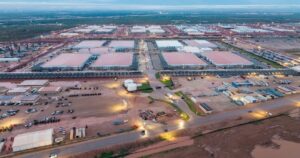
Meta and BlackRock announced a venture to develop and operate a data center campus in El Paso, Texas, with approximately $14 billion in total development costs for buildings and long-lived power, cooling, and connectivity infrastructure. Meta will contribute land and construction-in-progress assets valued at roughly $2.3 billion, while BlackRock will make a cash contribution of about $4.9 billion through the strategic venture announcement.
That structure matters because it lets Meta continue expanding AI infrastructure without owning the entire burden directly. BlackRock-managed funds will hold 80% of the venture, while Meta retains 20%, giving Meta access to capacity while shifting much of the ownership and financing burden to infrastructure investors.
This is not a retreat from AI spending. It is a more sophisticated form of capital management.
Meta still needs the compute. It still needs the data center. But the way it pays for that capacity is changing. The new model looks less like ordinary corporate capex and more like toll-road, power-plant, or pipeline finance.
The core signal is simple: AI infrastructure has become project finance.
El Paso Shows Why the Old Cloud Model Is Straining
Meta’s El Paso data center has already expanded dramatically. The company said in March that the campus would grow to 1 gigawatt and represent more than $10 billion in investment, supporting more than 300 jobs once complete through its 1-gigawatt expansion.
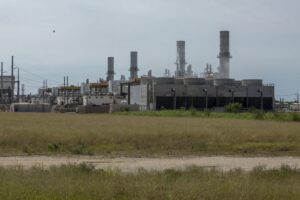
A gigawatt-scale AI campus is not just another server farm. It requires power availability, transmission planning, water strategy, cooling systems, backup generation, network connectivity, and multi-year construction execution. Those requirements turn a data center into a large infrastructure asset rather than a simple technology facility.
That scale also explains why private capital wants in. Infrastructure funds like long-lived assets with large tenants, contracted cash flows, and predictable demand. A Meta-leased AI campus can look attractive if the economics hold.
But the same scale creates public scrutiny. El Paso residents and officials will care about electricity demand, water commitments, local jobs, incentives, emissions, and whether utility investments are being shaped around private compute loads.
That connects directly to the data center land problem now showing up in multiple U.S. markets.
Debt Gives AI Scale, but It Adds Fragility
The most important financial detail is not only BlackRock’s equity stake. Reuters reported that BlackRock’s investment will include $12.5 billion in debt tied to the venture, which is designed to give Meta access to about 1 gigawatt of compute capacity through the El Paso venture terms.
Debt can accelerate infrastructure. It allows a project to move faster than it would if one company funded everything from cash flow. It also spreads risk across lenders, equity investors, and the anchor customer.
But debt changes the story. A financed data center must satisfy not only engineers and cloud planners, but also creditors. If construction costs rise, interest rates stay high, utilization disappoints, or AI revenue grows slower than expected, the economics can tighten quickly.
The industry is moving from “How much compute can we build?” to “How much compute can we finance responsibly?”
| Risk Factor | Why It Matters | Pressure Point |
|---|---|---|
| Debt load | Borrowing helps fund enormous campuses | Higher rates can squeeze economics |
| Lease dependence | Meta anchors the project’s value | Demand must stay durable |
| Power infrastructure | Gigawatt-scale sites need major energy systems | Delays can raise costs |
| Local opposition | Communities scrutinize water, jobs, and emissions | Permitting can slow expansion |
| Investor patience | AI capex must show returns | Weak monetization can hurt confidence |
The table shows why AI data center financing is now a full-stack risk. The money, the site, the grid, and the AI revenue model all have to work together.
Wall Street Is Becoming Part of the Compute Stack
BlackRock’s role shows how AI infrastructure is pulling institutional capital into the data center supply chain. Asset managers, pension funds, insurers, banks, and private-credit funds may all become more important as hyperscalers look for ways to expand without overwhelming their own cash flow.
That could be healthy if it improves capital discipline. Outside investors may demand clearer lease terms, better risk allocation, and more transparent project economics. They may also force technology companies to prove that AI demand is durable enough to support decades-long infrastructure commitments.
But it can also make the system more opaque. Special-purpose vehicles, lease structures, debt packages, and ownership splits can make it harder for outsiders to see who ultimately carries the risk.
That opacity matters because AI infrastructure is increasingly tied to public utilities and local resources. If a project depends on grid upgrades, tax incentives, or water commitments, communities deserve clear answers about financial responsibility.
The danger is private upside with public confusion.
The Next Pressure Is Investor Confidence
The bond market is already watching. Recent reporting described rising financing costs for data center debt tied to Meta-backed projects, a reminder that lenders are starting to price AI infrastructure risk more carefully through higher borrowing costs.
That is the next signal to monitor. If AI data center bonds demand higher yields, the entire buildout becomes more expensive. If financing remains available on reasonable terms, hyperscalers can keep scaling with outside capital.
Meta’s model may become a template. Other AI companies could bring in asset managers to own data centers, finance campuses, or back power infrastructure. That would make Wall Street a core enabler of AI deployment.
The risk is that too much of the boom starts depending on aggressive financial engineering before revenue catches up.
AI Compute Now Has a Capital Structure
AI data center financing will define how fast the next stage of AI infrastructure gets built. Chips and models matter, but the industry now needs financial architecture sturdy enough to carry gigawatt-scale physical assets.
Meta’s BlackRock deal makes that reality visible. AI capacity is becoming a leased, financed, debt-backed infrastructure product. That can unlock speed and scale, but it also exposes the buildout to interest rates, investor skepticism, construction risk, and local pressure.
The final question is not whether Meta wants more AI capacity. It clearly does. The question is whether AI data center financing can keep expanding without making the whole sector look less like software growth and more like a leveraged infrastructure cycle.