
Welcome to the digital frontier, where your devices are like boomtowns needing a zero-trust sheriff. Firewalls alone can’t keep out today’s threats. Now, edge security needs a mix of encryption and strategies as sharp as a snake-oil salesman’s.
Red Hat’s strategy checks every data packet like a suspicious newcomer. It’s like checking for six-shooters at the saloon door. Microsoft Edge’s updates happen fast, fixing vulnerabilities before hackers can act. This is urgent because your smart thermostat could become a security risk tomorrow.
These Hybrid Edge-Cloud Solutions are more than fancy wagons. They’re armored stagecoaches for your data. TLS encryption and certificate-based authentication are like the shotgun rider and the secret handshake. But, even the best security can fail if it doesn’t understand the threats. That’s why Edge Security Fundamentals are key to keeping your data safe.
Unique Threats Facing Edge Environments
Imagine leaving your journal chained to a park bench with a combination lock set to 1-2-3-4. That’s like the digital security for many edge devices. Cloud systems get top-notch protection, but edge devices are left vulnerable in places like factories and stores. They’re easy targets for hackers.

Physical Vulnerabilities in Distributed Systems
Edge devices are like Jason Bourne, blending in, not built for security. A Red Hat study found 63% of industrial cybersecurity breaches start with physical tampering. Why? Because:
- Temperature sensors lack self-destruct mechanisms
- Network gateways rarely have biometric locks
- GPS trackers scream “hack me” in bright neon casing
Case Study: Smart Factory Breach
Last spring, a car plant faced a big problem. Hackers used a $15 Raspberry Pi to take over a vibration sensor. This turned the whole assembly line into a digital hostage situation. The result was 72 hours of stopped production and a $2.4 million ransom demand.
The worst part? The malicious device was there for 19 days without being caught. The factory’s Edge for Remote Monitoring system only checked device integrity weekly. Red Hat’s engineers said managing 100,000 edge devices without automated patching is like trying to bathe cats – it’s a mess.
This breach shows how bad intermittent connectivity is. Security updates are as reliable as a weather forecast during a hurricane. When devices are offline for days, vulnerabilities build up. Eventually, someone will exploit them.
Best Practices for Device and Network Security
Securing edge deployments is not just about building walls. It’s about outsmarting attackers who know the blueprints. It’s like moving from checkers to three-dimensional chess. Every move is ready for threats you can’t see yet. Let’s see how modern tools make security real.
Zero-Trust: The Bouncer Your Data Deserves
Forget “trust but verify.” In edge environments, we say “never trust, always confirm.” Microsoft’s SmartScreen is a great example. It checks IDs and looks for fake smiles and stolen suits too. Here’s how to use zero-trust without annoying users:
- Micro-segment networks like a paranoid chef dividing ingredients to prevent cross-contamination
- Apply continuous authentication that’s smoother than a jazz saxophonist’s riff
- Encrypt data in transit and at rest—because even your backup drives deserve privacy
“Hybrid edge-cloud architectures aren’t just redundant—they’re the digital equivalent of having a backup generator that mixes margaritas during downtime.”
Automated Patch Management: Ansible’s Robot Army
Red Hat’s Ansible Automation makes patching easy. Imagine if your smartphone could:
- Detect vulnerabilities faster than Twitter spots a typo
- Deploy fixes before hackers finish their coffee
- Generate audit trails so clear they’d make a crime scene investigator jealous
| Manual Patching | Automated Patching |
|---|---|
| Human error: 43% of breaches | Consistency: 99.9% accuracy |
| Average 97-day delay | Real-time response |
This hybrid edge-cloud approach secures devices and creates a secure ecosystem. Security updates flow smoothly. Attackers face a moving target that’s harder to hit than a hummingbird in a hurricane.
Managing Remote Access and Authentication
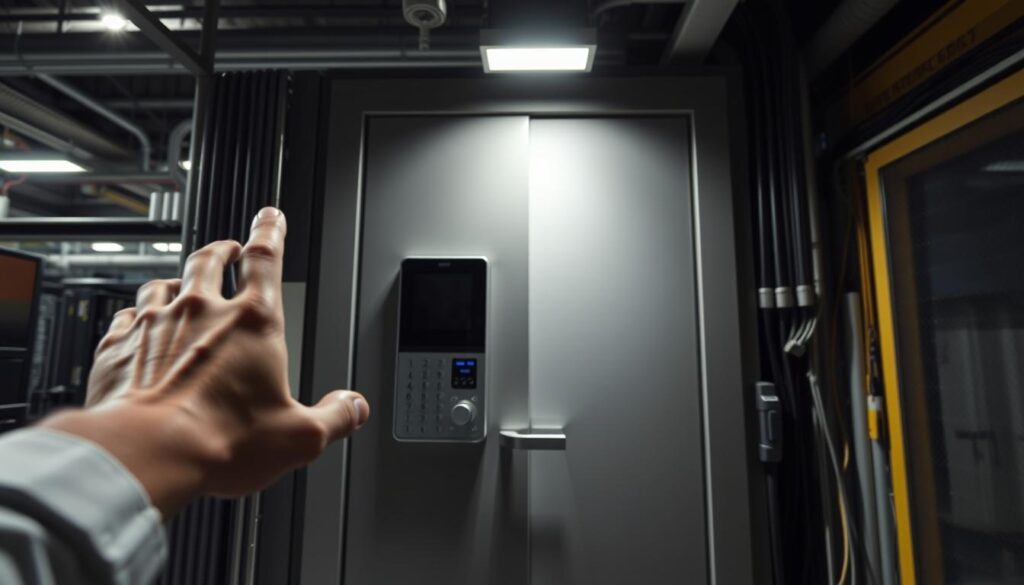
Securing edge deployments is like protecting a Mission: Impossible vault. Every crew member has a copy of the retinal scanner. Microsoft’s IE mode keeps your 2003-era software safe. But, modern industrial cybersecurity needs more than just locking doors.
Let’s talk about keys that evolve faster than hackers can duplicate them.
Multi-Factor Authentication Frameworks
Forget “password123” – in Edge for Remote Monitoring systems, MFA is advanced. It uses biometric cocktails that would impress James Bond’s Q Division:
- Voice pattern recognition that detects stress levels (perfect for catching imposters mid-lie)
- Blockchain-verified device fingerprints that change like digital chameleons
- Geofencing that triggers alarms if credentials appear in Siberia while you’re sipping coffee in Seattle
NIST’s latest guidelines read like a spy novel:
“Authentication factors should demonstrate possession, inheritance, and knowledge through dynamic cryptographic proof.”
Translation? Make hackers work harder than a Marvel hero saving the multiverse.
Role-Based Access Control
RBAC turns your security protocol into a nightclub VIP list. Bouncers check three forms of ID. Why let interns access nuclear reactor controls when you can:
- Map permissions like subway lines – engineers get uptown access, vendors stay in Brooklyn
- Implement time-bound credentials that expire faster than TikTok trends
- Use Microsoft’s IE mode as a quarantine zone for legacy systems (think digital hazmat suits)
The SolarWinds breach taught us this: industrial cybersecurity isn’t about building walls. It’s about installing smart doors that slam shut when hackers come knocking. Your Edge for Remote Monitoring setup should make unauthorized access harder than explaining blockchain to your boardroom.
Regulatory Compliance
Dealing with edge compliance is like playing chess against a GDPR bot. You’re told to forget customer data (Article 17) but edge devices hold onto it. It’s like they’re stuck in a scene from ”Eternal Sunshine of the Spotless Mind”. Let’s figure out how to avoid becoming a compliance cautionary tale.
Industry-Specific Standards: The Compliance Thunderdome
Healthcare’s HIPAA and Europe’s GDPR are like different planets. HIPAA wants data protection, while GDPR demands data deletion. Edge systems are caught in the middle, like “The Matrix’s” Neo dodging bullets:
- HIPAA’s patient data rules vs. real-time medical IoT monitoring
- GDPR’s 72-hour breach notifications vs. edge devices in dead zones
- PCI-DSS payment security vs. retail kiosks in sketchy parking lots
Red Hat Insights is like your guide here. It once found 87 unpatched MRI machines in a Texas hospital chain. One ransomware attack could make HIPAA’s headlines.
Audit Preparation Checklist: Your Anti-Fire Drill
Audits shouldn’t be like pop quizzes. This blueprint helps you feel confident:
- Device Inventory: Keep track of every sensor like it’s your Netflix password
- Encryption Maps: Show where data gets scrambled – even in transit
- Access Logs: Prove only authorized humans (not bots) touched sensitive info
- Patch Records: Document updates faster than a TikTok trend cycle
A Midwest auto manufacturer passed their NIST audit by following this checklist like ”Ocean’s 11” prep. They got zero fines and a nod of approval from regulators – the compliance version of a mic drop.
Sample Security Scenarios
Let’s test our strategies with two scenarios that are more intense than Hollywood heists. Imagine security drills like those in Christopher Nolan movies – high stakes, many attack points, and no room for mistakes. Real-world edge deployments face threats that need more precision than threading a needle during an earthquake.
Retail’s $3 Million Midnight Sale (Unplanned)
A major retailer’s edge POS systems leaked credit card data quickly. Hackers used weak authentication at 300+ stores, turning cash registers into data firehoses. Hybrid edge-cloud solutions stopped the leak in 47 seconds.
Microsoft’s Azure Sentinel caught phishing attempts behind 83% of initial breaches. Their 97% block rate is more reliable than Times Square’s fake Rolex vendors.
City Lights Go Dark (But Not for Long)
When attackers hit a Midwest energy grid’s edge sensors, streetlights went dark. Edge for remote monitoring spotted trouble 14 minutes early. Engineers fixed it through hybrid edge-cloud solutions quickly.
This smart city case study teaches us about layered defense. It shows that security isn’t just about firewalls. It’s about combining edge vigilance and cloud power like PB&J – separate parts making something greater together. What’s your plan to prevent outages when digital threats come?