AI expansion risk is becoming a city-level problem as governments welcome major AI investment while residents and regulators question the infrastructure underneath it. OpenAI’s Sydney push shows the tension clearly: the office opening and sovereign AI ambitions are attractive, but the data center footprint behind AI growth is much harder to celebrate without conditions.
Sydney is not rejecting AI. It is confronting the same infrastructure anxieties now appearing in the United States and Europe. The issue connects naturally to AI data center water use, where local utilities, emissions, and public trust decide whether digital expansion feels responsible or imposed.
AI Expansion Risk Reaches the City Level
OpenAI’s first Australian office in Sydney and its broader infrastructure plans drew strong interest from the New South Wales government. The state’s December announcement welcomed OpenAI’s investment and described data centers as critical infrastructure supporting the digital economy through a proposed Sydney AI data center.
That enthusiasm is understandable. AI companies bring prestige, investment, jobs, partnerships, and political momentum. Governments want to be seen as innovation hubs, especially when AI is being framed as a strategic economic technology.
That is the city-level AI problem: the brand is global, but the backup generators are local.
Office Announcements Are Easier Than Infrastructure Plans
Opening an office is politically simple. It signals confidence, investment, and global relevance. Building or anchoring large-scale AI infrastructure is different because it touches land, power, cooling, backup generation, and emergency planning.
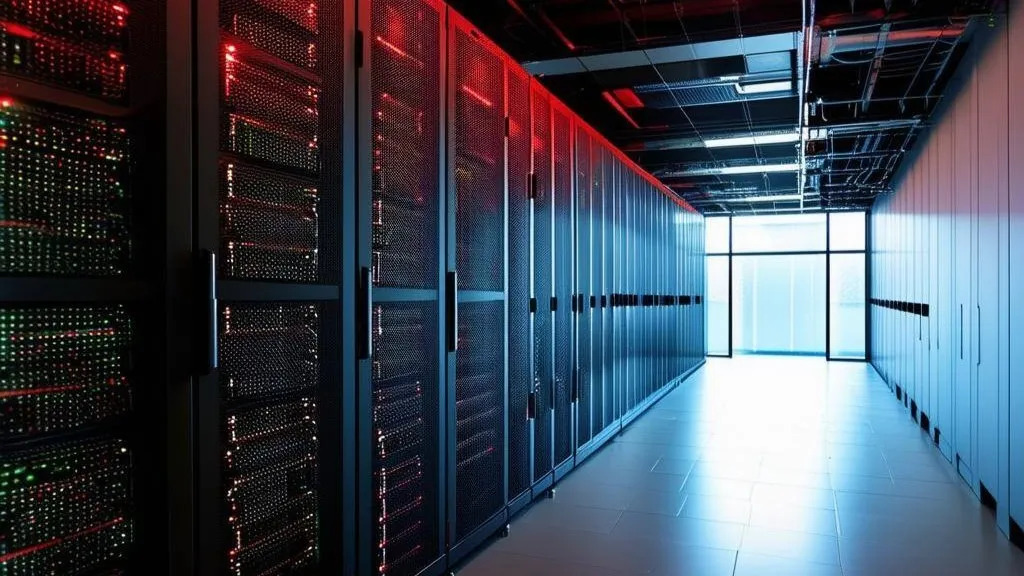
The NSW government also said OpenAI and NEXTDC planned a $7 billion data center facility in Eastern Creek, with NSW already hosting more than 90 data centers and another 20 under assessment. Those figures show that Sydney is not starting from zero. It is already a major digital infrastructure market.
That scale changes the discussion. One data center can be assessed on its own emissions and resource needs. A cluster of data centers creates cumulative impact questions. What happens during grid stress? How many generators might run at once? How much water is needed? Are facilities near homes, schools, or industrial corridors with existing pollution exposure?
The next policy test is not attracting AI investment. It is managing the accumulation of infrastructure that comes with it.
Diesel Backup Is the Hidden Public-Trust Problem
Data centers need backup power because downtime can disrupt financial systems, hospitals, government services, telecom networks, and cloud platforms. Diesel generators are widely used because they are familiar, powerful, and dependable in emergencies.
But emergency systems can still create public concern. Even if simultaneous generator use is rare, communities may want to know whether worst-case scenarios have been modeled and whether air-quality safeguards are strong enough.
Industry representatives often argue that backup generators run mainly for testing and rare outages. Critics counter that grid stress may rise as data center demand grows, making cumulative risk more important than individual facility compliance.
| AI Infrastructure Issue | Why Cities Welcome It | Why Communities Worry |
|---|---|---|
| AI offices | Jobs, investment, innovation branding | Limited visibility into wider impacts |
| Data centers | Digital capability and cloud capacity | Power, land, water, and emissions |
| Diesel backup | Reliability during outages | Local air pollution during operation |
| Grid demand | Supports digital economy growth | Higher stress during peak periods |
| Sovereign AI | Keeps capability closer to home | Requires large physical infrastructure |
The table shows why AI expansion risk is not anti-technology. It is about whether local systems can absorb global AI ambition.
Australia Wants Sovereign AI, but Rules Must Catch Up
Australia has good reasons to want more domestic AI infrastructure. Sovereign compute can support government services, financial systems, defense-adjacent workloads, healthcare research, education, and local businesses that do not want sensitive data routed unnecessarily overseas.
The problem is that sovereign AI still needs physical infrastructure. A GPU campus must be powered, cooled, secured, and approved. It must also compete for land and utility resources in cities already under pressure.
That is why NSW’s data center inquiry and broader strategy work matter. AI infrastructure cannot be governed only through investment announcements. It needs planning rules, energy requirements, emissions standards, water expectations, community consultation, and transparency around cumulative impacts.
A city that attracts AI without updating its infrastructure governance may win the announcement and lose public trust.
The best outcome is responsible sovereign compute, not unchecked expansion.
The Sydney Debate Will Not Stay in Sydney
The tension visible in NSW will travel. Other cities competing for AI investment will face similar questions. How much power can data centers use? Should they fund additional renewable energy? How should backup generation be regulated? What emissions reporting is required? How close should large data centers sit to homes and schools?
These questions will become sharper as AI companies move from software partnerships into physical campuses. Cities may begin competing not only on talent and tax incentives, but on whether they can offer credible, low-conflict infrastructure pathways.
That could become a real advantage. A city with clear data center rules, clean energy planning, and transparent community consultation may become more attractive than one that relies on hype and handles objections later.
The market will reward certainty. Communities will demand accountability. But the Guardian’s reporting on internal NSW government communications and data center concerns showed how quickly enthusiasm can collide with local unease. Environmental officials warned that simultaneous diesel-generator use by Sydney’s eight major data centers could create one-hour pollution loads several times greater than all electricity generation or motor vehicles in the state through a wider Sydney data center concern.
The Next Signal Is NSW’s Data Center Strategy
The key development to watch is how NSW formalizes its data center policy. A strong strategy would address cumulative emissions, backup generator standards, grid contribution, water use, land planning, reporting, and public consultation.
The second signal is whether AI companies themselves become more transparent. OpenAI and its infrastructure partners can reduce risk by explaining how power, emissions, resilience, and local benefits will be handled.
The third signal is whether other Australian states use NSW as a model or a warning. Victoria, South Australia, and other jurisdictions may see AI infrastructure as an economic prize, but they will also inherit the same public concerns.
AI expansion risk is no longer a remote fear about future technology. It is a practical question for cities deciding how much physical infrastructure they are willing to host for digital growth.
Sydney’s lesson is clear: governments can welcome AI, but they cannot separate AI ambition from the data centers, backup systems, power demand, and public confidence required to support it. The next successful AI hub will not just attract the company. It will prove the city can carry the infrastructure responsibly.