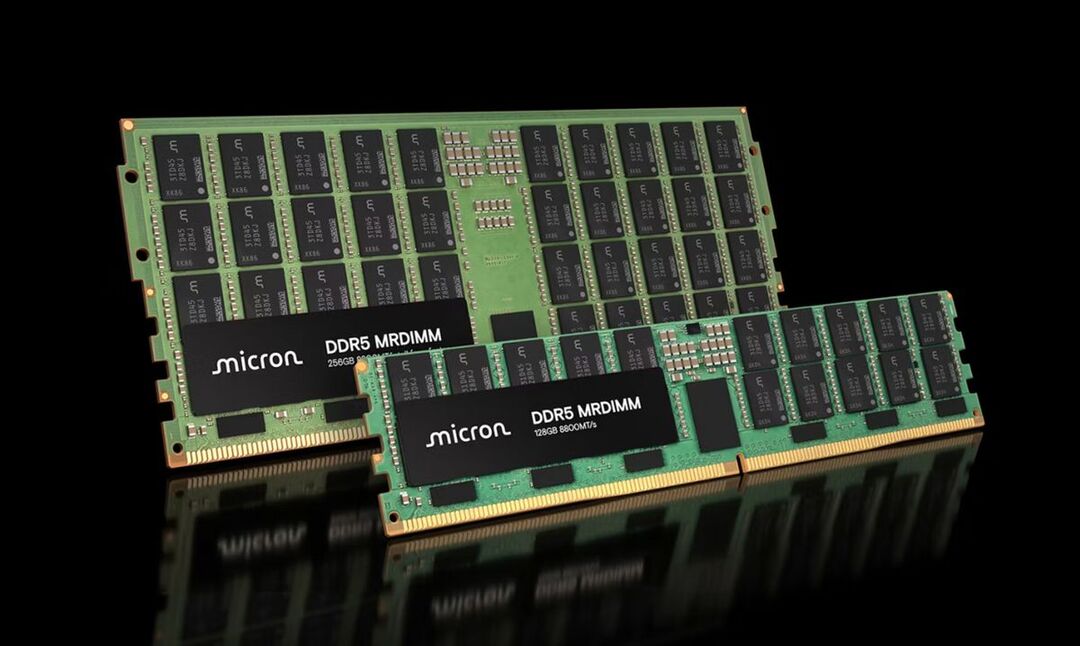
AI memory infrastructure is moving from a supporting role to the center of the AI hardware race. Micron and Anthropic’s new agreement shows that frontier AI growth is no longer just about who can buy the most GPUs; it is about who can feed those systems with enough memory, storage, and bandwidth to keep models running efficiently.
The shift matters because AI systems do not fail only when compute is unavailable. They also slow down when data cannot move fast enough across memory, storage, accelerators, and networking layers. For readers tracking AI supply chain security, memory is becoming one of the places where infrastructure control and model capability meet.
AI Memory Infrastructure Is No Longer Background Hardware
Micron announced a strategic agreement with Anthropic covering memory and storage AI architecture design, supply and demand coordination, Claude adoption across Micron, and a strategic investment in Anthropic’s Series H funding round. The company framed the agreement as a way to connect the needs of frontier AI models directly with how infrastructure is designed and supplied through next-generation AI infrastructure.
That is a major signal. AI developers have spent years chasing larger models, more GPUs, and bigger data center footprints. But models do not run on accelerators alone. They depend on high-bandwidth memory, DRAM, SSDs, and fast access to stored information.
Reuters also reported that the deal includes a supply agreement for memory and storage products, placing Micron directly inside Anthropic’s long-term infrastructure planning through a broader AI supply agreement.
The message is clear: memory is becoming strategic infrastructure, not a commodity line item buried in the server bill.
Why GPUs Cannot Solve the Whole Problem
GPUs are essential because they perform the core AI computation. But a powerful processor becomes less useful if it waits for data. AI workloads are especially sensitive to movement between compute, memory, and storage because models operate across massive parameter sets, long context windows, training data, embeddings, and inference pipelines.
That is why high-bandwidth memory has become such a critical part of AI server design. It helps reduce the gap between raw compute and usable performance. DRAM supports system responsiveness. SSDs matter because AI systems constantly retrieve, write, and organize large volumes of data.
The misunderstood point is that AI performance is not one metric. It is the product of several layers working together. A faster GPU can expose a weaker memory subsystem. A larger model can strain storage. A more popular chatbot can turn inference into a cost and bandwidth problem.
AI infrastructure buyers are starting to understand that the slowest layer defines the real system limit.
The Anthropic Deal Shows Where Model Economics Are Going
Anthropic’s Claude models are part of a larger industry push toward reasoning-heavy, high-volume AI services. Those systems need more than training capacity. They need efficient inference, predictable supply, and better token economics.
Token economics refers to the cost of serving model output at scale. If memory and storage systems improve throughput or reduce energy waste, the business case for AI services can improve even when model demand rises.
That is why Micron and Anthropic are not only talking about product supply. They are also looking at how memory and storage subsystems perform across workloads and interact across the full infrastructure stack.
That is the right level of analysis. AI hardware is no longer purchased as isolated components. It is increasingly engineered around specific workloads, data paths, latency targets, power limits, and cost per useful output.
Where the New Bottlenecks Appear
| Infrastructure Layer | Why It Matters for AI | Main Pressure Point |
|---|---|---|
| High-bandwidth memory | Feeds accelerators during training and inference | Supply, cost, and bandwidth demand |
| DRAM | Supports active system operations | Capacity planning and performance balance |
| SSDs | Stores and retrieves large AI datasets | Endurance, latency, and throughput |
| Networking | Moves data across clusters | Congestion and synchronization |
| Software optimization | Controls workload efficiency | Poor utilization can waste expensive hardware |
This table explains why AI memory infrastructure is becoming a bigger editorial story. The bottleneck is not one part. It is the relationship between parts.
Hardware Suppliers Are Gaining More Leverage
The Micron-Anthropic agreement also shows how supplier leverage is changing. Cloud companies and model developers need dependable access to scarce hardware. Memory makers that can support AI workloads may gain stronger bargaining power as demand rises.
That creates a different AI economy. The public sees model brands, chat interfaces, and new product launches. Underneath that, infrastructure suppliers are becoming more important because they control the physical layers that make those services possible.
This does not mean memory firms are immune to semiconductor cycles. Memory has always been a volatile market. But AI demand may change the shape of that cycle by increasing demand for higher-value products and longer-term supply arrangements.
The practical risk for AI labs is dependency. If memory supply tightens, costs rise, or performance fails to scale, model deployment becomes harder even when GPU access improves.
The Next Test Is Efficiency, Not Just Capacity
The next signal to watch is whether AI companies treat memory and storage as engineering partners rather than procurement categories. The winners will not simply buy more components. They will design systems that make better use of every watt, chip, and data path.
That means tighter collaboration between model teams, hardware vendors, cloud operators, and data center architects. It also means more attention to workload-specific design instead of generic server expansion.
AI memory infrastructure is becoming the hidden battleground because it sits directly between model ambition and real-world deployment cost. The industry can keep building bigger AI systems, but the next major advantage may belong to companies that move data with less waste, less delay, and fewer supply shocks.
FAQ’s
What is AI memory infrastructure?
AI memory infrastructure refers to the HBM, DRAM, SSDs, and supporting systems that help AI models store, retrieve, and move data efficiently during training and inference.
Why does memory matter for AI models?
AI models need fast access to huge volumes of data. If memory or storage cannot keep up, expensive GPUs may sit underused, reducing performance and increasing operating costs.
Does this mean GPUs are less important?
No. GPUs remain central to AI computing. The point is that GPUs need strong memory and storage systems around them to deliver full performance at scale.