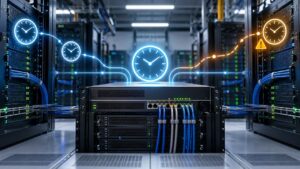
AI Supply Chain Security has become one of the most consequential issues in artificial intelligence because the race is no longer decided only by models, talent, or clever software. Norway’s decision to join the U.S.-led Pax Silica initiative signals a sharper reality: the countries that secure chips, energy, cloud capacity, critical minerals, and data infrastructure will shape the next phase of AI power.
Why AI Supply Chain Security Is Now A Strategic Test
For much of the public conversation, artificial intelligence has been treated as a contest of models. Which company has the most capable chatbot? Which lab can release the strongest reasoning system? Which application can turn AI into revenue fastest? Those questions still matter, but they sit on top of something more basic: infrastructure.
AI does not float above the physical world. It depends on advanced semiconductors, server racks, cooling systems, electrical grids, fiber networks, data centers, specialized manufacturing, logistics, export licenses, and geopolitical trust. When those pieces are stable, AI looks like software. When they are contested, AI becomes industrial policy.
That is why Norway’s move matters. It adds a resource-rich, energy-aware, strategically positioned European country to a U.S.-led effort focused on trusted AI technology supply chains. For readers tracking AI Supply Chain Security, the signal is difficult to miss: governments are treating AI infrastructure as a national capability, not a background procurement issue.
I read this as a turning point in how serious countries think about the AI race. Model performance still wins headlines, but supply chains increasingly determine who can train, deploy, govern, and scale those models under pressure. The glamorous layer is still software. The decisive layer may be capacity.
The AI Race Is No Longer Just About Models
The simplest way to misunderstand AI is to focus only on the interface. A chatbot feels weightless because it arrives as text on a screen. A coding assistant looks like a productivity tool. An enterprise AI system may feel like another cloud subscription. Yet behind every prompt is a chain of physical and political dependencies.
That chain begins with semiconductor design and fabrication. It extends into advanced packaging, memory supply, networking equipment, power delivery, water availability, data center construction, cybersecurity, and cross-border trade. It also includes rules about who can buy what, where technology can be shipped, and which suppliers are considered reliable.
This is why the term “supply chain” understates the issue. We are not discussing ordinary inventory management. We are discussing the foundation of AI sovereignty. A country that cannot access compute at scale cannot easily compete in frontier model development. A company that cannot secure hardware cannot guarantee product roadmaps. A cloud provider that cannot expand power and data center capacity cannot meet demand, however strong its software may be.
The AI race therefore has two tracks. The visible track is capability: larger context windows, better reasoning, faster inference, stronger multimodal systems. The hidden track is control over the inputs that make those capabilities possible. The second track is becoming harder to ignore.
Why Norway’s Role Deserves Attention
Norway may not be the first country people associate with AI hardware, but that is precisely why its participation is interesting. The AI supply chain is broader than chip fabrication alone. It includes energy resources, critical minerals, maritime routes, financial capacity, industrial policy, and trusted relationships among allied governments.
Norway brings several strategic attributes into the conversation. It has deep energy expertise, a strong public-sector planning culture, high institutional credibility, and a geography that matters in a more contested global technology environment. It also sits within a European context where questions about digital sovereignty, data infrastructure, and dependence on foreign technology are becoming more urgent.
That combination makes Norway useful to a supply-chain alliance even if it is not trying to become the next Taiwan Semiconductor Manufacturing Company. The future of AI infrastructure will require more than fabrication plants. It will require dependable energy, resilient logistics, stable regulation, capital discipline, and countries willing to align around trusted technology systems.
Pax Silica appears designed around that broader reality. The phrase itself suggests a technology order built around silicon, but silicon is only the center of a wider system. The strategic aim is not merely to buy more chips. It is to make the AI technology stack less vulnerable to coercion, shortage, disruption, and geopolitical surprise. That goal carries obvious urgency.
The New Geography Of Compute Power
AI compute is becoming geographic in a way that software companies did not always expect. For years, the cloud encouraged businesses to think of computing as abstract, elastic, and globally available. Need more compute? Rent more. Need storage? Expand the contract. Need deployment? Add a region.
AI has strained that assumption. Advanced model training and large-scale inference require concentrated physical assets. The most capable chips are scarce. Data centers need huge energy commitments. Grid connections take time. Cooling and land availability matter. Export restrictions reshape availability. Political trust influences supplier selection. Suddenly, compute has a map.
That map is being redrawn around alliances. The United States wants trusted partners across semiconductors, critical minerals, data centers, and advanced manufacturing. China is pushing domestic alternatives and reducing dependence on restricted foreign hardware. Europe is trying to balance innovation, regulation, sovereignty, and transatlantic alignment. The Gulf states are investing heavily in energy-backed AI infrastructure. Asian manufacturing powers remain essential to the hardware chain.
Norway’s entry into this conversation is one piece of a larger pattern: countries are realizing that AI power will not be distributed evenly. It will cluster where energy, capital, chips, data centers, talent, and policy alignment come together. That clustering creates advantage.
For executives, this means AI strategy can no longer live only inside product teams or innovation labs. It belongs in boardrooms, government affairs offices, procurement departments, and risk committees. Compute access is becoming a strategic resource.
Chips Are Only One Part Of The Stack
The AI hardware debate often collapses into a single question: who has the best accelerator? That is understandable. Advanced GPUs and AI chips are the most visible bottleneck. They determine training throughput, inference economics, and technical ambition. But focusing only on chips creates a narrow picture.
A chip without packaging, memory, networking, power, cooling, software support, and deployment capacity is not a solution. AI systems depend on integration. A strong accelerator can underperform if the surrounding system is weak. A less powerful chip can become commercially useful if it is available, well-supported, and deployed inside a coherent architecture.
That is why supply-chain strategy matters. Countries and companies are no longer asking only whether they can buy chips. They are asking whether they can secure the entire chain required to use them productively. That includes upstream materials, manufacturing equipment, export permissions, logistics, cloud access, data center operations, and cybersecurity governance.
This is where public policy and private-sector execution meet. Governments can encourage alliances, incentives, and export frameworks. Companies must turn those frameworks into operational resilience. Neither side can solve the problem alone.
The result is a more mature understanding of AI infrastructure. Chips are crucial, but they are not the whole story. The real competitive unit is the system.
Why Energy Is Becoming An AI Constraint
The deeper I look at AI infrastructure, the more energy looks like the underappreciated constraint. Large data centers require reliable power, and AI workloads can be especially demanding. Training frontier models is energy-intensive, but inference at scale may become just as consequential because successful AI products run constantly for millions of users.
This changes the politics of electricity. Grid capacity, renewable generation, transmission planning, backup power, and cooling efficiency all become part of AI competitiveness. A country with abundant clean energy may have an advantage if it can connect that energy to data center demand in a credible way. A country with strained grids may struggle even if it has capital and ambition.
Norway’s energy profile makes its role especially relevant. The point is not that every AI workload will move to Norway. The point is that energy-rich countries are becoming more strategically important in the AI era. Compute is not only about chips. It is about the ability to power those chips reliably and affordably.
That creates a difficult trade-off. AI infrastructure can drive economic growth, but it can also place pressure on communities, grids, climate commitments, and industrial users competing for the same energy. Policymakers will need to decide where AI demand fits inside national energy priorities. Companies will need to prove that their infrastructure plans are credible, efficient, and politically sustainable.
Supply Chains Are Becoming Security Architecture
The phrase “trusted supply chain” can sound bland until something breaks. A blocked export license, a port disruption, a cyberattack, a shortage of advanced packaging capacity, a power constraint, or a sudden diplomatic shift can expose how fragile technological ambition really is.
That is why AI supply chains are now part of security architecture. The goal is not only efficiency. It is continuity. Governments want assurance that critical AI capabilities can survive geopolitical pressure. Companies want assurance that their products will not be derailed by hardware scarcity or regulatory shocks.
This security logic is visible across the AI stack. Semiconductors raise obvious concerns because advanced chips determine capability. Cloud infrastructure matters because AI services often depend on hyperscale platforms. Data centers matter because they concentrate compute. Energy matters because outages and shortages translate directly into service limits. Cybersecurity matters because AI systems can become both targets and amplifiers of attack.
Enterprise leaders should treat this as a practical warning. AI adoption is not only a software procurement decision. It requires vendor due diligence, infrastructure mapping, concentration-risk analysis, contractual safeguards, and contingency planning. Teams that already think seriously about enterprise AI risk management will be better prepared for this shift because the risk is moving from experimental pilots into core operations.
The companies that ignore the supply-chain layer may find themselves dependent on systems they do not fully understand and cannot easily replace. That is not innovation. It is exposure.
The Geopolitical Logic Behind Pax Silica
Pax Silica represents a wider attempt to organize technology supply chains around trusted blocs. The idea reflects a hard lesson from recent years: globalized technology networks can be efficient and fragile at the same time. Efficiency lowers cost. Fragility raises strategic risk.
The initiative’s importance lies in its scope. AI supply-chain policy is not limited to chip restrictions or export controls. It increasingly includes critical minerals, advanced manufacturing, data infrastructure, and partner alignment. A useful way to understand AI supply chain cooperation is as an effort to make the technology stack more predictable among countries that share strategic interests.
That does not mean the model is simple. Alliances involve trade-offs. Countries have different industrial strengths, political priorities, energy systems, and commercial incentives. Some want manufacturing investment. Others want access to advanced chips. Others want data center growth, mineral development, or security guarantees. The challenge is turning shared anxiety into durable coordination.
There is also a risk of overpromising. Supply chains cannot be rebuilt by slogans. Semiconductor ecosystems take years to develop. Mining projects face permitting, environmental, and community constraints. Data centers require energy and local support. Skilled labor is limited. Trusted partnerships help, but they do not erase physical bottlenecks.
Still, the direction is clear. AI supply chains are moving from a market-efficiency framework to a strategic-alignment framework. That is a major shift.
What Businesses Should Understand
For businesses, the most immediate lesson is that AI dependency has to be mapped. Too many organizations are adopting AI tools without understanding the infrastructure beneath them. They know the vendor name, the subscription price, and perhaps the model family. They may not know where compute capacity comes from, what dependencies matter, or how supply disruptions could affect service quality.
That level of opacity is becoming less acceptable. If AI is used for customer service, software development, compliance, analytics, security operations, or decision support, infrastructure reliability matters. If a vendor depends on constrained chips or a single cloud provider, that matters. If costs could rise because inference demand surges, that matters. If geopolitical controls could limit future access, that matters.
The answer is not to avoid AI. The answer is to bring discipline into adoption. Companies should ask vendors harder questions about availability, redundancy, data center regions, model portability, pricing exposure, and continuity plans. They should also avoid building critical workflows around systems they cannot evaluate or exit.
AI can produce real value, but the value is stronger when the infrastructure assumptions are visible. That visibility creates confidence.
The Opportunity For Smaller Countries
One of the most interesting implications of AI supply-chain politics is that smaller countries may gain influence if they hold specific assets. Not every country needs to build frontier models. Not every country needs to design chips. Strategic relevance can come from energy, minerals, location, manufacturing niches, regulatory credibility, or trusted digital infrastructure.
Norway fits that pattern. So do other countries with specialized roles in the technology stack. A nation with abundant clean energy may attract data center investment. A nation with critical mineral resources may matter upstream. A nation with advanced manufacturing expertise may support packaging or equipment. A nation with strong cybersecurity institutions may become a trusted host for sensitive infrastructure.
This creates opportunity, but not automatic success. Countries must decide what kind of AI economy they want. Data centers can bring investment, but they also consume land, water, and energy. Mineral development can support strategic supply chains, but it raises environmental and social questions. Manufacturing incentives can attract industry, but they require long-term public commitment.
The countries that do best will be those that match ambition with judgment. AI infrastructure policy should not become a race to approve every project. It should become a disciplined effort to build strategic capacity while protecting public interests.
The Risks Of A Fragmented AI World
Supply-chain security can strengthen resilience, but it can also deepen fragmentation. If AI infrastructure divides into rival blocs, companies may face incompatible standards, duplicated costs, restricted markets, and more complex compliance obligations. Developers may need to optimize for different hardware ecosystems. Cloud providers may build region-specific offerings. Governments may demand tighter control over data and compute flows.
Some fragmentation is already baked into the system. Export controls, national-security reviews, data localization rules, and industrial subsidies all push in that direction. The question is how far it goes.
A fragmented AI world could reduce dependence on fragile global networks, but it could also slow collaboration and increase cost. It may make infrastructure more secure in one sense and less efficient in another. That is the central tension behind AI supply-chain politics.
For companies, the prudent response is flexibility. Architectures should avoid unnecessary lock-in. Procurement teams should understand regional exposure. Legal and compliance teams should track changing rules. Technical teams should think about portability before crisis forces the issue. Strategy should assume that the AI stack will become more political, not less.
What To Watch Next
The next phase of AI supply-chain competition will be measured less by speeches and more by buildout. Watch where data centers are approved. Watch where grid connections become available. Watch which countries secure critical mineral partnerships. Watch whether chip supply expands fast enough to meet AI demand. Watch how export controls evolve. Watch whether trusted alliances translate into real infrastructure investment.
I would also watch the language companies use. When executives talk less about model demos and more about compute contracts, power access, inference cost, and deployment regions, the market is revealing its priorities. The winners will not simply be those with the most exciting AI products. They will be those with the strongest supply position behind those products.
That is why Norway’s move should not be treated as a minor diplomatic update. It is part of a larger repositioning of AI as a physical, strategic, and geopolitical system. The center of competition is widening.
The New Reality Behind The AI Boom
AI Supply Chain Security matters because artificial intelligence has become too important to depend on fragile assumptions. The next phase of the AI race will be shaped by models, but it will be constrained by chips, energy, data centers, critical minerals, cloud capacity, and political trust. Norway’s move into Pax Silica is one more sign that governments are organizing around that reality.
The opportunity is significant. Countries that build credible AI infrastructure can attract investment, strengthen strategic autonomy, and support domestic innovation. Companies that understand their supply-chain exposure can adopt AI with more confidence and less operational risk. Investors that look beyond model hype can identify where durable value is likely to form.
The risk is equally serious. A fragmented supply-chain order could raise costs, complicate deployment, and turn AI infrastructure into another arena of geopolitical competition. That is why the smart conversation is not only about who has the best model today. It is about who can sustain the systems that make AI useful tomorrow. AI Supply Chain Security is becoming the real foundation of AI power, and the countries that recognize it early will have a meaningful edge.