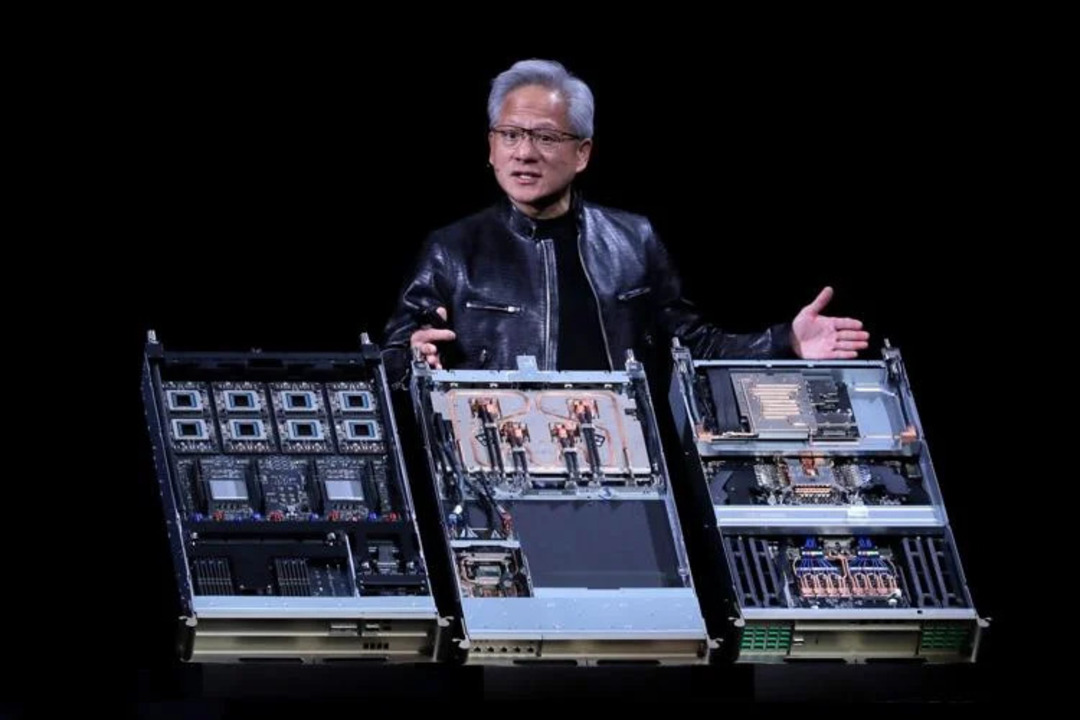
The AI PC hardware shift is not just about making laptops feel smarter. Nvidia’s RTX Spark push turns the personal computer into a serious inference machine, challenging the assumption that advanced AI must live almost entirely inside distant data centers.
That matters because the next phase of AI will not be decided only by bigger server clusters. For enterprises already thinking about data center AI and warehousing with Nvidia technology, the arrival of local AI hardware raises a harder question: which workloads should stay in the cloud, and which ones now belong directly on the device?
The Cloud No Longer Owns the AI Experience
For the past two years, the AI boom has been framed as a data center arms race. More GPUs, more power, more cooling, more land, more hyperscale capacity. That story is still true, but it is no longer complete.
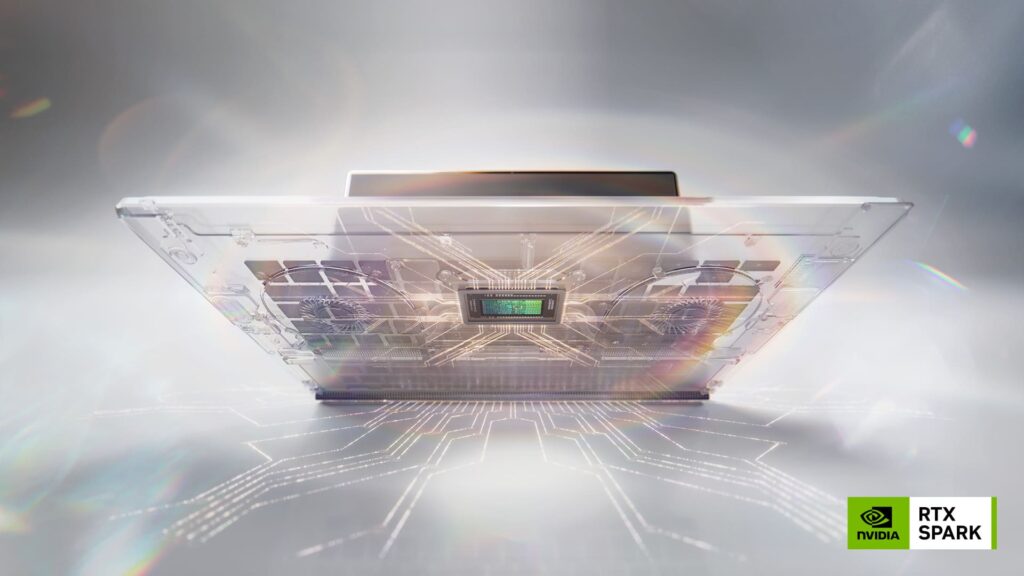
Nvidia’s RTX Spark platform points toward a different architecture, one where advanced AI agents can run directly on Windows laptops and desktops from major PC makers including Dell, HP, Lenovo, Asus, and MSI. The company is not merely adding another laptop chip. It is trying to move meaningful AI inference closer to the user.
That changes the center of gravity. A cloud model can be powerful, but it is also remote, bandwidth-dependent, metered, and governed by external infrastructure. A local model can react faster, operate with more control over sensitive files, and keep some workloads away from constant server round trips.
The PC has spent years looking like a client device attached to larger platforms. RTX Spark suggests Nvidia wants the PC to become a compact AI workstation again, not just a screen attached to someone else’s compute estate. Local inference matters because it changes where decisions are made.
Why the AI PC Hardware Shift Is Really About Control
The strongest argument for local AI is not novelty. It is control.
When AI agents begin working across files, apps, browsers, messages, calendars, codebases, images, and private business documents, placement becomes a security and governance issue. Sending every request to the cloud may be acceptable for casual prompts. It becomes more complicated when the assistant is handling internal records, customer data, unreleased design files, or regulated workflows.
That is where the AI PC hardware shift starts to look less like a consumer upgrade and more like an enterprise architecture decision. If local hardware can run capable models, companies gain another deployment option between thin-client cloud dependence and full private data center buildout.
Nvidia’s own RTX Spark announcement positions the chip around personal AI agents, creators, developers, and gamers, with local performance claims that would have sounded unrealistic on mainstream laptops not long ago. The headline is the silicon. The larger story is that AI is being pulled into the operating environment itself.
That shift makes the endpoint more important. If the laptop can run more of the agent, the laptop becomes part of the AI stack. Security teams, IT departments, developers, and hardware buyers will have to treat it that way. The endpoint becomes infrastructure, not just a managed device.
Data Centers Still Matter, But Their Role Starts Changing
This does not mean AI data centers are becoming irrelevant. The opposite is true. Frontier training, large-scale inference, enterprise model hosting, and heavy multimodal workloads will still depend on massive server infrastructure.
But the division of labor may become more intelligent.
Cloud AI is excellent for scale, centralization, and access to the largest models. Local AI is better suited for low-latency interactions, private context, offline work, smaller repetitive tasks, and cases where cost predictability matters. The most realistic future is not cloud versus PC. It is cloud plus PC, with each workload placed where it makes the most operational sense.
A useful comparison looks like this:
| AI Workload Location | Best Fit | Main Advantage | Main Risk |
|---|---|---|---|
| Cloud data center | Large models, heavy inference, shared enterprise services | Scale and centralized management | Higher latency, recurring cost, data exposure concerns |
| Local AI PC | Personal agents, private files, offline workflows, fast app actions | Speed, privacy, user-side control | Device fragmentation and hardware refresh pressure |
| Hybrid setup | Enterprise agents using both local and cloud resources | Flexible workload placement | More complex governance and IT policy |
| Private data center | Sensitive enterprise AI, custom models, regulated workloads | Ownership and compliance control | Capital cost and operational complexity |
The table shows why Nvidia’s move matters. The company is not replacing the AI data center. It is changing what the data center has to carry.
If common agent tasks move onto the device, cloud capacity can be reserved for heavier work. If local hardware fails to meet expectations, enterprises will keep leaning on centralized infrastructure. Either way, the decision becomes architectural rather than cosmetic.
Microsoft’s Windows Strategy Makes This Bigger Than a Chip Launch
RTX Spark also depends on something Nvidia cannot build alone: a software layer that makes local AI useful to normal users and developers.
That is why Microsoft matters. Windows is still the operating system that shapes a huge portion of business computing. If Microsoft can make local AI development easier through tools such as Microsoft Foundry on Windows, the AI PC becomes more than a premium hardware category. It becomes a target platform.
The risk is that “AI PC” becomes another label slapped on expensive devices without enough daily value. That has already been a concern around earlier AI PC messaging. Buyers do not need vague promises. They need faster workflows, better privacy, lower latency, useful agents, and software that takes advantage of the silicon.
The opportunity is just as clear. If Windows developers can build AI features that run locally across CPUs, GPUs, and NPUs, the PC market gets a new reason to refresh. A faster spreadsheet is not enough to move the industry. A machine that can privately summarize project files, inspect media, assist coding, automate repetitive work, and keep sensitive context local is a more serious proposition.
That is the pressure point. Nvidia can supply the hardware, but software will decide whether buyers feel the difference.
The Security Tradeoff Moves From Server Room to Laptop Bag
Local AI improves some risks and creates others.
On the positive side, fewer cloud round trips can reduce exposure for sensitive prompts, documents, and media. Local processing may also help users in offline or restricted environments where cloud access is unreliable or undesirable. For legal, engineering, healthcare-adjacent, finance, defense, and creative workflows, that can be meaningful.
But local AI also expands the attack surface. A laptop running more capable agents may store more context, handle more privileged tasks, and interact more deeply with apps and files. That means endpoint protection, identity controls, model update policies, logging, and user permissions become more important.
A weakly managed AI PC could become a very capable mistake machine. It might summarize the wrong document, expose private context to the wrong app, or automate a workflow the user did not fully understand. The hardware may be impressive, but governance still has to catch up.
This is why privacy is workload placement. The question is not whether local AI is always safer than cloud AI. The question is which data, which model, which user, which device, and which policy belong together.
The Next Signals Are Software, Pricing, and Real Battery Life
The first wave of RTX Spark devices will be judged less by keynote claims than by daily usefulness. Buyers should watch three signals closely.
The first is software adoption. If major creative, productivity, development, and security tools build real local AI features around this class of hardware, the AI PC category becomes credible. If support is scattered, the hardware will feel ahead of the market.
The second is pricing. A powerful AI laptop that costs too much becomes a niche workstation. A broader device lineup from mainstream brands could pull local AI into standard buying cycles.
The third is battery life and thermal behavior. Local AI cannot feel like a lab demo that drains the machine, spins up fans, and slows everything else down. The promise only works if agents can operate without turning mobile PCs into miniature space heaters.
That is where Nvidia’s strategy will either land or wobble. Performance needs restraint because the PC is not a data center rack. It has a battery, a keyboard, a lap, and a user who expects everything to work without drama.
The AI PC hardware shift is important because it forces a cleaner conversation about where AI should run. Data centers will still carry the heaviest work, but the personal computer is no longer just waiting for answers from the cloud. If Nvidia and Microsoft can make local agents useful, secure, and efficient, the next AI battleground may be sitting on the desk long before it reaches the next hyperscale campus.