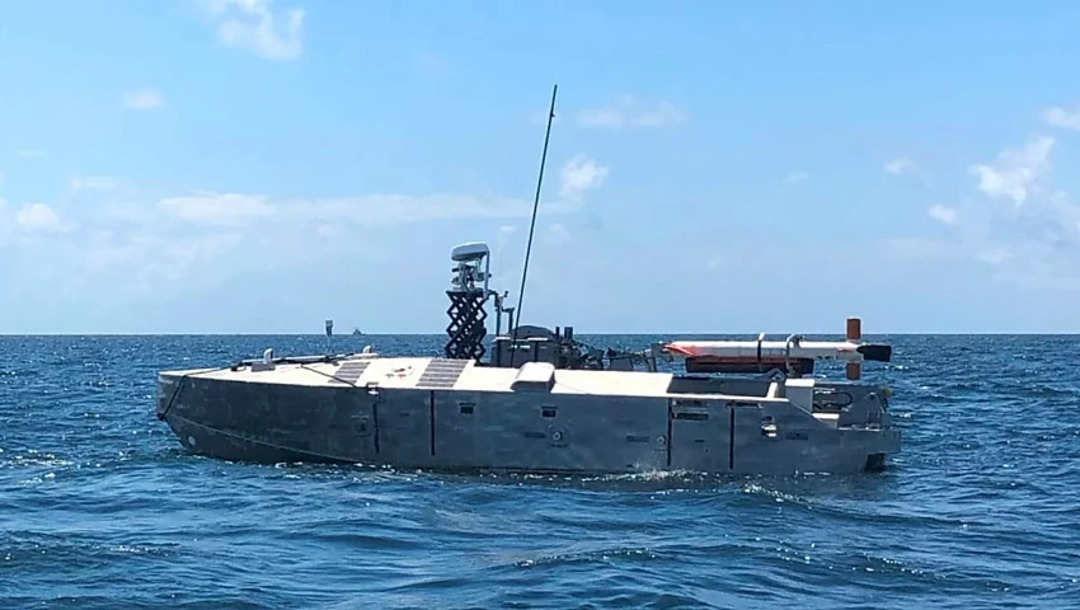
Artificial intelligence in defense is no longer defined by who has the largest model or the most dramatic procurement announcement. Defense AI Maritime Security has become a more revealing test: whether AI can help sailors detect mines, protect shipping lanes, and make better decisions in waters where a single mistake can carry strategic consequences.
Why Defense AI Maritime Security Matters Now
I have become less interested in defense AI as a contest of model size and more interested in where the technology is being forced to prove itself. The maritime domain is one of those places. It is vast, contested, physically unforgiving, and politically sensitive. It leaves little room for abstract claims about transformation.
Mine detection in the Strait of Hormuz is a particularly sharp example. The strait is not just another body of water on a map. It is a narrow maritime chokepoint through which global energy markets, regional military posture, commercial shipping, and geopolitical pressure all converge. When naval forces look for ways to detect mines more quickly or monitor maritime threats with greater precision, they are not experimenting with AI for novelty. They are trying to reduce the cost of uncertainty.
That distinction matters. Much of the public conversation around military AI has been absorbed by large language models, classified cloud contracts, and the question of which technology companies are willing to work with defense agencies. Those questions are serious, but they can obscure a more operational shift. AI is beginning to move into workflows where judgment, sensor interpretation, pattern recognition, and response timing are part of daily mission execution.
In that environment, AI is not a chatbot in uniform. It is a decision-support layer pressed against the realities of water, weather, sonar noise, adversarial behavior, commercial traffic, and incomplete intelligence. The stakes are not theoretical. They are measured in vessels protected, mines found, escalation avoided, and sailors kept alive.
The Shift From Big Models To Operational Workflows
The defense technology story has been dominated by “big model” competition because it is easy to understand and easy to market. Bigger models feel like obvious progress. More parameters, more compute, more data, more capability. That narrative works well in the commercial AI market, where the product demonstration is often the story.
Military operations do not work that cleanly.
A naval commander does not need a model to sound impressive in a demo. A commander needs useful outputs under pressure, in messy conditions, with clear limits. The question is not whether AI can generate a fluent answer. The question is whether it can help separate signal from noise when the environment is hostile and the consequences are severe.
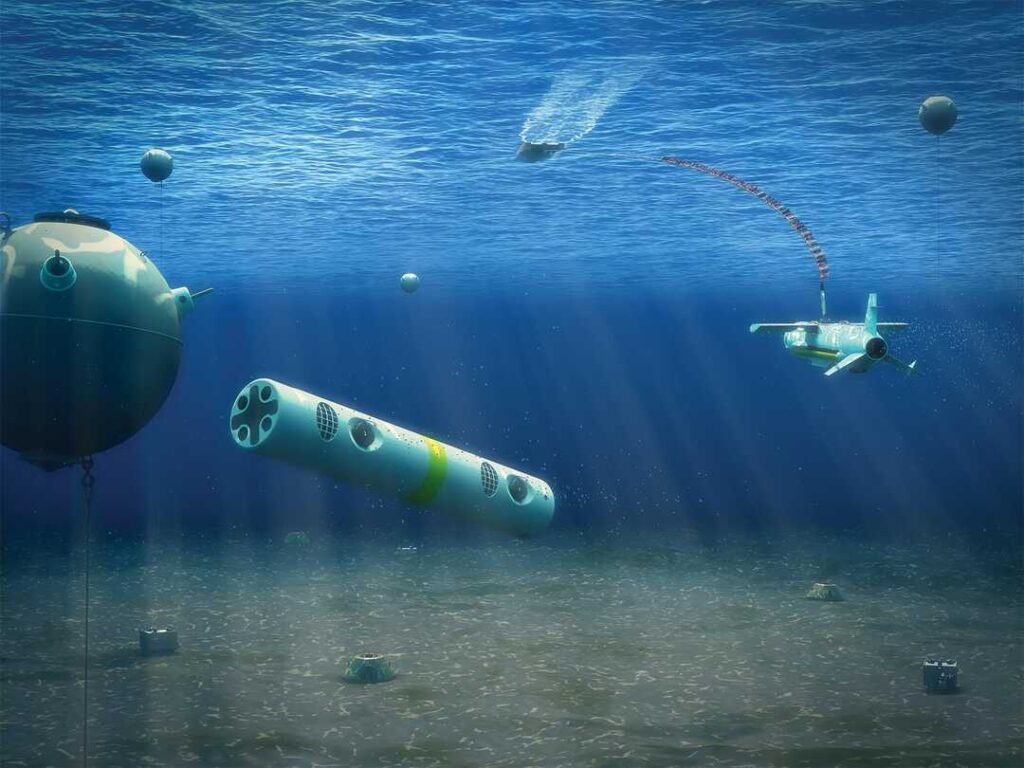
Mine detection is a powerful case because it forces AI into a different kind of intelligence problem. The system may need to analyze sonar returns, identify anomalies, compare patterns, map seabed changes, fuse data from autonomous systems, and flag probable threats for human review. None of that resembles the casual AI use cases that dominate business conversations.
This is why I see maritime AI as a more meaningful test than another headline about model access. It asks whether AI can become embedded in the chain of perception and action without pretending to replace human command. The value is not magic. The value is clarity.
That does not make the technology simple. It makes it harder to fake.
Mine Detection Is A Hard AI Problem
Mine warfare is often underestimated because it lacks the cinematic visibility of aircraft carriers, missiles, and fighter jets. Yet naval mines have always been strategically asymmetric. They are relatively inexpensive, difficult to locate, and capable of slowing or threatening much larger forces. Their power lies not only in destruction but in hesitation.
A suspected minefield can delay commercial vessels, force naval rerouting, raise insurance costs, disrupt energy flows, and create political pressure before a single explosion occurs. The presence of mines can transform water into contested terrain.
For AI, this is a demanding operational setting. The ocean is noisy. Sensor data is imperfect. Undersea environments change. Objects on the seabed can resemble threats. Threats can resemble debris. Adversaries can exploit ambiguity because ambiguity itself is a weapon.
In practical terms, AI can assist by improving detection speed, prioritizing suspicious objects, reducing the cognitive burden on operators, and helping teams allocate scarce assets more intelligently. It may help determine where to send unmanned underwater vehicles, which sonar contacts deserve closer inspection, and how to build a more coherent threat picture from fragmented inputs.
But mine detection also exposes the limits of AI. A false negative can leave a vessel exposed. A false positive can waste time, divert resources, or raise tension unnecessarily. The ideal system is not one that produces confident answers at all costs. It is one that communicates uncertainty well enough for trained humans to act with discipline.
That is an important editorial point because confidence is often mistaken for capability. In defense, a system that knows when it does not know may be more valuable than one that always produces an answer.
The Strait Of Hormuz Changes The Meaning Of Automation
The Strait of Hormuz is a place where tactical and strategic realities collapse into each other. A small encounter can become a regional signal. A defensive action can be interpreted as escalation. A maritime disruption can move markets far beyond the waterway itself.
That context changes how AI should be understood.
When AI supports maritime security in such an environment, the technology is not simply improving efficiency. It is entering a space where timing, attribution, proportionality, and restraint matter. Faster detection is useful, but speed without judgment can be dangerous. Better surveillance is useful, but surveillance without governance can become politically corrosive. Automation is useful, but automation without accountability is a liability.
This is where I think the defense AI conversation needs more maturity. It is not enough to ask whether AI can detect more threats. We have to ask how its outputs are validated, who reviews them, how uncertainty is displayed, how escalation thresholds are protected, and whether operators are trained to challenge machine recommendations rather than defer to them.
A responsible doctrine for Defense AI Maritime Security has to treat AI as part of a command environment, not as an isolated technical asset. The sea does not care whether a model is impressive. It only rewards systems that function under pressure.
AI As A Sensor Fusion Layer
One of the most important roles for defense AI at sea may be sensor fusion. Modern naval operations generate information from surface vessels, aircraft, satellites, unmanned underwater vehicles, sonar systems, radar, electronic signals, and open maritime traffic patterns. The problem is not a lack of data. The problem is converting scattered data into a usable operational picture.
That is where AI can be genuinely valuable.
A human team can interpret complex information, but it can also be overwhelmed by volume, repetition, fatigue, and ambiguity. AI can help triage inputs and identify patterns that deserve attention. It can compare current observations against historical baselines. It can detect anomalies that might otherwise disappear inside routine maritime clutter.
In mine detection, this matters because threats rarely announce themselves. A mine may be a shape, a shadow, a seabed irregularity, a change in traffic behavior, or a pattern that becomes meaningful only when placed beside other signals. AI can help build that picture faster.
Still, sensor fusion is not the same as truth. It is a structured interpretation of uncertain inputs. This is why the human role remains central. The better model is not full automation but disciplined teaming: machines process and prioritize; humans interrogate, contextualize, and decide.
The best defense AI systems will not flatter commanders with artificial certainty. They will sharpen the questions that commanders and operators should be asking.
The Human Operator Is Still The Center Of The System
There is a temptation, especially in technology circles, to treat the human operator as the bottleneck. In some narrow respects, that is true. Humans get tired. Humans miss patterns. Humans bring cognitive bias. Humans can be slow.
But in military operations, humans also bring legal responsibility, ethical reasoning, contextual awareness, and an understanding of political consequence. Those are not decorative features. They are the foundation of legitimate command.
In maritime security, this is especially important because the operating environment is full of dual-use ambiguity. Commercial ships, fishing vessels, military craft, autonomous systems, and civilian infrastructure may occupy the same contested waters. A system that identifies possible threats without context can create more risk than it removes.
The role of AI should be to extend human perception, not displace human responsibility. That requires interface design, training, doctrine, and institutional discipline. Operators need to understand how a system reaches its assessments, where it performs well, where it fails, and when its recommendations should be discounted.
The real issue is trust. Not blind trust. Calibrated trust.
That kind of trust cannot be built through procurement language alone. It has to be earned through repeated performance in realistic conditions, transparent testing, adversarial evaluation, and clear accountability when systems fail.
The Risk Of Treating AI Like A Procurement Category
One of the recurring mistakes in defense modernization is treating technology as a category to be acquired rather than a capability to be integrated. AI is especially vulnerable to this error because it arrives with such broad promise.
Buying AI does not automatically produce operational advantage. Neither does signing contracts with famous companies. Advantage comes when the technology fits the mission, survives operational stress, improves human decision-making, and can be maintained securely over time.
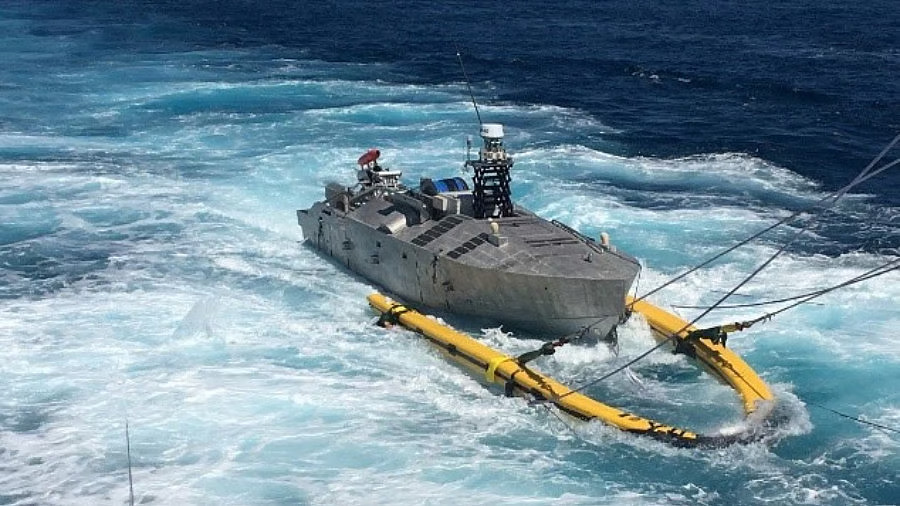
Mine detection illustrates the difference. A useful AI system for maritime mine warfare must work with naval sensors, existing command structures, unmanned platforms, communication constraints, and the realities of deployment. It must be tested against environmental variation and adversarial deception. It must be updated without creating uncontrolled vulnerabilities. It must be explainable enough for operators to use and humble enough to expose uncertainty.
That is not a branding exercise. It is systems engineering, operational design, and command culture.
There is also a danger in assuming that AI’s commercial momentum will automatically translate into defense superiority. Commercial AI often optimizes for user engagement, productivity, language fluency, and rapid iteration. Defense systems must optimize for reliability, security, auditability, resilience, and mission relevance. Those requirements can conflict.
The companies that succeed in defense AI will not merely bring powerful models. They will learn the discipline of constrained environments.
Maritime AI And The New Geography Of Deterrence
AI’s role in mine detection also touches a larger strategic issue: deterrence. At sea, deterrence depends partly on the ability to see, understand, and respond. If naval forces can detect mines faster, map risks more accurately, and protect lanes with greater confidence, they reduce the coercive value of hidden threats.
That does not eliminate danger. It changes the calculation.
An adversary considering the use or threat of mines may be less confident if AI-enabled systems improve detection and clearance timelines. Commercial actors may feel more secure if maritime security forces can maintain traffic with fewer delays. Regional partners may gain confidence from visible defensive capability.
Yet deterrence can cut both ways. If AI makes military forces more confident, it may also make them more willing to operate in contested areas. If the technology is misunderstood, it may generate suspicion. If adversaries believe AI-enabled surveillance gives one side an unfair or escalatory advantage, they may respond with deception, cyber operations, or faster crisis behavior.
This is the trade-off at the heart of defense innovation. Capability can stabilize, but it can also unsettle.
The key is not simply having better tools. It is knowing how to signal their purpose. Mine detection and maritime security are defensive missions by nature, but in a tense region, even defensive systems can be interpreted through a strategic lens. That places a premium on doctrine, communication, and operational restraint.
The Ethics Are Practical, Not Abstract
Ethical debates around military AI often become trapped in extremes. One side imagines autonomous machines making life-and-death decisions without meaningful human control. The other side treats AI as just another tool, morally neutral until used.
Neither framing is sufficient for maritime AI.
In mine detection, the ethical questions are practical. How much confidence is required before a system flags a threat? What happens when the AI disagrees with a human analyst? How are errors recorded and studied? Can operators understand enough about the system to challenge it? Are there safeguards against mission creep, where a tool built for mine detection gradually becomes part of broader surveillance without proper review?
The larger risk is drift.
Technologies rarely remain confined to their original use case once they prove useful. A system designed to detect underwater threats may later be adapted to track vessels, map behavior, identify patterns of life, or support targeting workflows. Some of that expansion may be legitimate. Some of it may require stricter oversight.
This is why governance cannot be added after deployment as a public-relations gesture. It must be built into the operational life of the system. Audit trails, human review, performance monitoring, escalation rules, and clear use limitations are not bureaucratic friction. They are part of what makes military AI usable in democratic institutions.
The Cybersecurity Problem Beneath The AI Problem
Any AI system used in maritime security also becomes part of the cyber battlespace. That point deserves more attention.
AI models depend on data, networks, sensors, software pipelines, and update mechanisms. Each layer creates potential vulnerability. An adversary may try to spoof sensors, poison data, manipulate inputs, disrupt communications, or infer how a system classifies threats. In mine detection, even small manipulations can matter if they cause operators to miss a threat or waste resources chasing false ones.
Security therefore has to be treated as operational performance, not a separate technical checklist. A mine-detection AI system that works beautifully in testing but can be deceived in the field is not a mature capability. It is a liability wrapped in promise.
This is one reason naval AI will likely move differently from consumer AI. It cannot rely on constant connectivity, casual experimentation, or opaque updates. It has to work under contested conditions. It has to degrade safely. It has to preserve human control when communications are disrupted or sensor inputs become suspect.
The strongest systems will be those designed for resilience from the beginning.
What Success Should Look Like
The success of AI in maritime defense should not be measured by whether it produces dramatic announcements. It should be measured by whether it improves mission outcomes in observable, disciplined ways.
For mine detection and maritime security, that means faster identification of credible threats, fewer missed hazards, better allocation of naval assets, clearer communication of uncertainty, and improved coordination across human and unmanned systems. It also means fewer unnecessary escalations, fewer wasted deployments, and better protection for commercial and military vessels.
I would look for several signs that the technology is maturing.
First, AI systems should be evaluated in realistic maritime conditions, not just controlled demonstrations. Second, operators should be trained not only to use the technology but to understand its failure modes. Third, commanders should receive outputs that communicate uncertainty clearly rather than burying it behind a single confidence score. Fourth, governance should travel with the system from development to deployment.
The test is not whether AI can impress a procurement board. The test is whether it becomes boringly reliable in the hands of professionals who have no patience for hype.
That is the paradox of serious defense technology. The more important it becomes, the less theatrical it should look.
Why This Is Bigger Than The Navy
Although mine detection is a naval mission, the lesson extends across the defense enterprise. AI’s future in national security will be shaped less by broad promises than by specific operational use cases: logistics, maintenance, intelligence analysis, cyber defense, surveillance review, planning support, and autonomous platform coordination.
Each mission will expose different strengths and weaknesses. Each will demand its own governance model. Each will test whether AI can be integrated without eroding accountability.
The maritime case is valuable because it is so concrete. It strips away the abstraction. A mine is either found or it is not. A vessel is protected or it is not. A recommendation helps or it distracts. Operators either trust the system appropriately or they do not.
That kind of clarity is useful in a field too often dominated by vague language. Defense AI should be judged by performance, not aura.
This also changes how the public should understand military AI. The most consequential deployments may not look like science fiction. They may look like faster analysis of sonar data, better routing around danger, improved maintenance of unmanned vehicles, or sharper anomaly detection in crowded waters. Quiet capabilities can have strategic effects.
The Next Phase Of Defense AI
The next phase of military AI will not be won by the side that talks most loudly about transformation. It will be shaped by organizations that can combine technical capability with operational discipline. That means procurement reform, realistic testing, secure infrastructure, human-centered design, and doctrine that keeps responsibility visible.
The Navy’s movement toward AI-supported mine detection and maritime security is a sign of where the field is going. Defense AI is leaving the conference stage and entering the watch floor, the operations center, the unmanned vehicle mission plan, and the contested waterway.
That move should make us both more serious and more cautious. Serious, because AI can help reduce uncertainty in environments where uncertainty is dangerous. Cautious, because the same systems that improve perception can also create new dependencies, vulnerabilities, and governance burdens.
The opportunity is real. So is the risk.
Defense AI Maritime Security matters because it forces the conversation back to what military technology is ultimately for: protecting people, preserving freedom of movement, supporting lawful command, and managing danger without surrendering judgment to the machine. The future of AI in defense will not be defined by the biggest model alone. It will be defined by whether the technology can perform responsibly when the water is crowded, the signal is faint, and the cost of being wrong is high.