

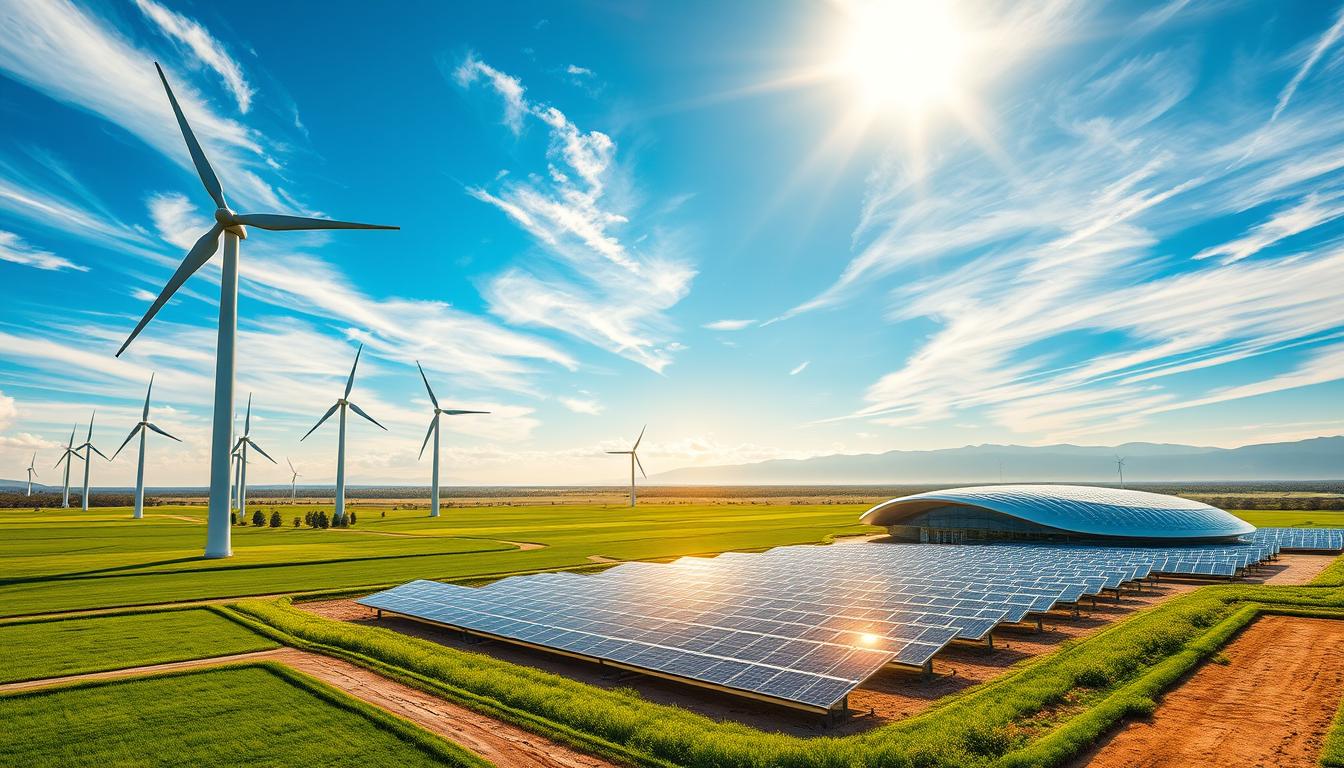
Remember when power came from a few big plants like royal decrees? Those days are gone. Renewables have come, making every rooftop and field a power source.
This isn’t just switching from coal to sunshine. It’s a big change in how we get energy. Solar panels and wind turbines work like a network, similar to how TikTok changed TV.
At the grid’s edge, smart sensors with AI make quick decisions. They watch over things like voltage and humidity, working faster than old systems.
Last year, global solar capacity reached 1,200 GW, up 22%. Offshore wind is set to grow four times by 2030. It’s not just tech progress. It’s a new era in energy, changing our view of power.
Condition & Output Monitoring
Traditional energy monitoring is dull, but solar edge computing makes it exciting. It’s like watching a high-stakes action movie where every panel speaks. Your solar array becomes like Jason Bourne, noticing threats and adapting quickly.
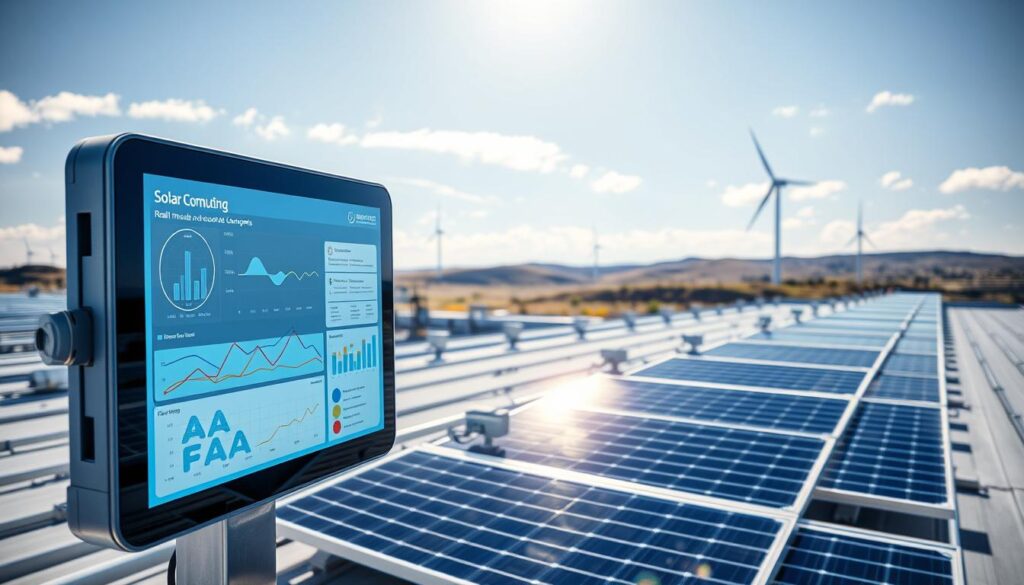
This isn’t old-school energy monitoring. We’re talking about AI that spots equipment stress fast. These systems adjust voltage in microseconds, faster than blinking.
The magic is in the autonomous decisions. When a cloud comes, your system doesn’t freak out. It calmly switches to battery power without needing permission.
This is like an immune system for your energy setup. Faulty nodes are caught and isolated quickly. We’re moving from fixing things after they break to predicting failures.
Recent research on AI in energy management shows big growth. The sector is expected to hit $12 billion in revenues by 2028. That’s a 24% growth rate, impressive for any industry.
Solar edge computing makes panels smart. Each panel is a node in a brain that optimizes performance. It’s not just monitoring; it’s a grid-level consciousness.
The beauty is in the micro-decisions. Energy flows are balanced in a snap. This tech doesn’t just watch your energy; it manages it with precision.
This marks a big change in renewable energy. We move from centralized control to distributed intelligence. Instead of checking energy periodically, we get continuous optimization. The future of energy monitoring is about orchestrating perfection.
Integrating Distributed Sites
Imagine trying to conduct an orchestra where every musician plays in a different time zone. That’s what we’re doing with renewable energy integration. Our musicians are wind turbines, solar panels, and storage systems across the landscape. The wind energy edge server acts as our digital conductor, ensuring harmony.

This isn’t just about connecting devices. It’s about creating intelligent networks that think and adapt. The NearbyOne platform shows this with its edge-native automation. It’s like a musical score guiding each instrument.
The real magic is in hardware/software decoupling. It’s like updating your phone’s operating system without touching the hardware. This virtual approach means no need for physical rewiring at remote wind farms.
Unified orchestration manages everything from a few substations to thousands of devices. Wind farms especially benefit from this intelligence. Those massive turbines become smart nodes that adjust based on real-time conditions.
The numbers tell a compelling story. The smart grid market reached $43.1 billion in 2023 and is projected to hit $88.7 billion by 2030. We’re seeing the power of distributed intelligence change how we manage energy infrastructure.
Consider Enel Group’s deployment of 40 million smart meters. This massive IoT integration shows how edge computing enables local energy optimization at scale. The system doesn’t just collect data – it makes intelligent decisions in real-time.
| Integration Challenge | Traditional Approach | Edge Computing Solution |
|---|---|---|
| Hardware Updates | Physical rewiring required | Virtual software deployment |
| Data Processing | Centralized cloud computing | Local edge server analysis |
| Response Time | Seconds to minutes | Milliseconds |
| Scalability | Limited by infrastructure | Virtually unlimited |
The beauty of this system lies in its scalability. Whether managing ten turbines or ten thousand, the architecture remains consistent. The wind energy edge server provides the computational muscle right where it’s needed – at the source.
This isn’t just technical innovation – it’s a fundamental shift in how we think about energy distribution. We’re moving from centralized control to distributed intelligence, creating networks that optimize themselves like a hive mind with advanced degrees in efficiency.
Real Examples
Spain’s Andasol Solar Power Station is a great example of edge renewables in action. It has 150MW of power and stores thermal energy for electricity after dark. This is like a solar system that keeps working even when the sun isn’t out.
In the UK, the Dogger Bank Wind Farm is even bigger. It will power 6 million homes by 2025, which is like lighting up London twice. Each turbine works like a server, making the most of the wind in real time.
California’s Moss Landing project is all about storing energy with 400MWh Tesla Megapacks. Saudi Arabia’s NEOM green hydrogen plant is looking to the future. These projects show that smart, distributed systems are the way forward.
Italy’s Enel Group has smart meters in 40 million homes, making energy distribution smarter. As edge computing changes the energy game, we’re moving from big grids to smart networks.
The future is already here, spread out in wind farms, solar panels, and batteries getting smarter every minute.



