

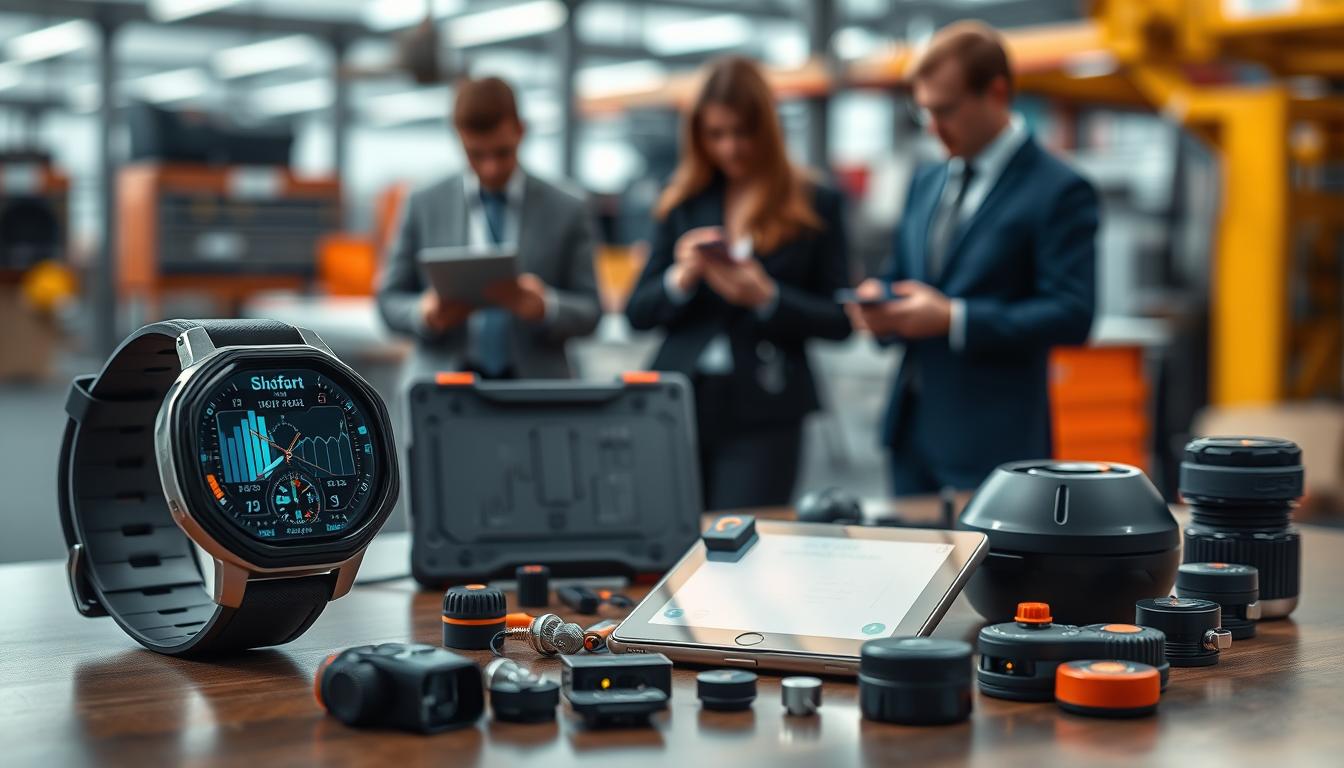
Forget about smartwatches that just count steps. The real excitement is on the factory floor. Here, workers wear gear that turns them into data superheroes. These aren’t just gadgets – they’re lifesaving companions that blend human smarts with machine power.
Imagine helmets that track your health like Fitbits on steroids, or scanners that stop IKEA-style mistakes. This tech creates the connected worker world. Every beep and buzz has a purpose.
Pharmaceuticals see 30% faster responses to incidents. Real-time inventory systems make Amazon look slow. It’s not science fiction; it’s today’s manufacturing where safety meets efficiency through smart design.
These devices offer something key: edge computing safety alerts that act fast. No need to wait for data to reach a server. The safety comes right to you, in real-time.
Live Procedure Guidance
Remember those tense heist movie scenes where the tech expert whispers instructions through an earpiece? That’s what modern connected worker systems do, but without the illegal stuff. They bring real-time help that would impress even Mission: Impossible’s tech team.
Companies using these systems see a 25% boost in efficiency. How? They don’t have to wait for help when machines break down or processes slow. It’s like having a whole engineering team in your pocket, ready to help with complex problems.
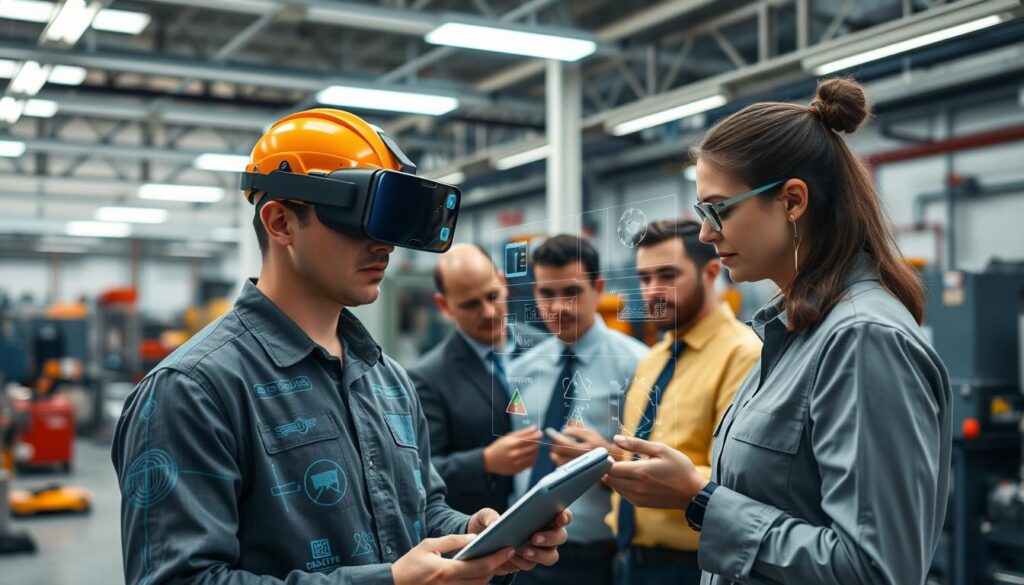
These systems make the factory floor work better together. Workers learn from each other and share solutions. It’s like a big team effort, where everyone helps each other out.
The key is edge computing safety alerts that send important info right when you need it. Quality alerts pop up on phones at the start of shifts. Maintenance needs are flagged right away. And when parts are scarce, everyone knows before it slows production.
This isn’t about replacing people with tech. It’s about making people better with tech. Workers make fewer mistakes, solve problems faster, and feel supported. It’s a big win for everyone.
It’s like making expertise available to everyone. Newbies get the same knowledge as veterans. Day and night shifts get the same help. It’s fair and it’s overdue.
Safety Compliance
Remember those mandatory safety videos that made OSHA regulations feel like watching paint dry? Welcome to the revolution where compliance transforms from bureaucratic box-ticking into something that actually saves lives. We’re talking about systems that don’t just record accidents but prevent them – like having a sixth sense for danger.
Modern connected worker platforms are the industrial equivalent of putting seatbelts and airbags in every workstation. They use edge computing safety alerts to detect hazards before humans even notice them. Imagine sensors that catch a gas leak while it’s still measurable in parts per million, not percentages.
The magic happens through three key functions:
- Real-time PPE monitoring that actually knows if your hard hat is properly fastened
- Instant hazard reporting that turns near-misses into data points instead of close calls
- Predictive analytics that spots patterns humans would miss until it’s too late
Companies using these systems see incident rates drop faster than a hot potato. We’re talking 40% reductions in safety breaches – numbers that would make any compliance officer do a happy dance. It’s not just about avoiding fines anymore; it’s about creating environments where workers genuinely feel protected.
The cultural shift is profound. Safety stops being that annoying manager waving clipboards and becomes an invisible guardian angel. Systems like those implemented by TELUS for worker safety demonstrate how edge computing creates responsive protection networks rather than reactive rulebooks.
Think of it as the difference between having a fire extinguisher and having sprinklers that activate before the fire even starts. The technology exists today to make workplaces not just compliant, but genuinely safe. And honestly, that’s a regulatory requirement we can all get behind.
Real-World Rollouts
Ever wonder what happens when theory meets the factory floor? Let me tell you about an automotive plant. They found their quality control system was the problem. One faulty carrier caused 95% of test failures – like one bad review ruining a restaurant’s reputation.
LNS Research says 80% of leaders see value in connected worker platforms. But it’s more than just numbers. Digital solutions bring order to chaotic paper-based systems.
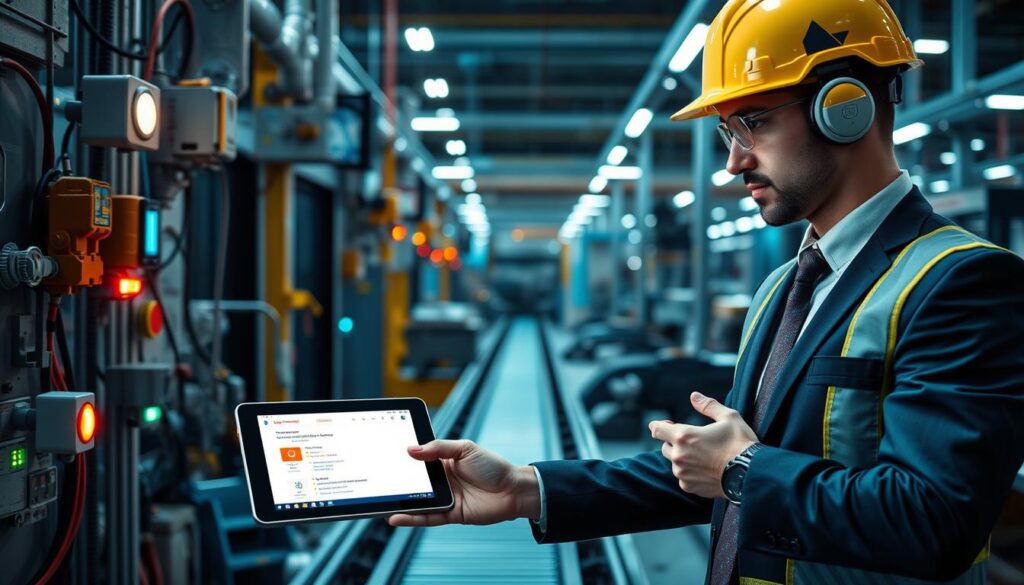
- Pharmaceutical plants achieving 30% faster incident response
- Oil and gas operations seeing 25% improved task completion
- Manufacturing facilities reducing downtime by 20%
The secret isn’t just throwing technology at problems. It’s about using it wisely. Edge computing safety alerts become useful when used right.
Successful rollouts know technology alone isn’t enough. It’s combining smart sensors with human skills that brings results. The connected worker isn’t about replacing people. It’s about giving them better data.
It’s like the difference between giving someone a toolbox and the exact tool they need. One creates clutter. The other empowers.
Data Privacy in Workforce
We’re balancing a digital tightrope. We want to connect every worker and sensor, but are we creating a surveillance state? I’ve been looking into how we can balance safety monitoring with privacy. The key is understanding a crucial point.
Data protection isn’t about building high walls. It’s about setting smart permissions. Hexagon’s Security Suite shows this, cutting security breaches by 40% for a tech firm. It does this with smart design that protects without being too restrictive.
The magic is in edge computing safety alerts that know the difference between a real emergency and a happy moment. A raised voice might just be excitement over the new coffee machine, not a crisis.
For today’s connected worker, trust is the top security feature. No encryption can replace it. The systems that succeed make digital spaces feel like collaborative areas with clear boundaries.
Getting it right means smart security that watches wisely. It’s the difference between a security camera and a caring colleague who knows when to look away.



