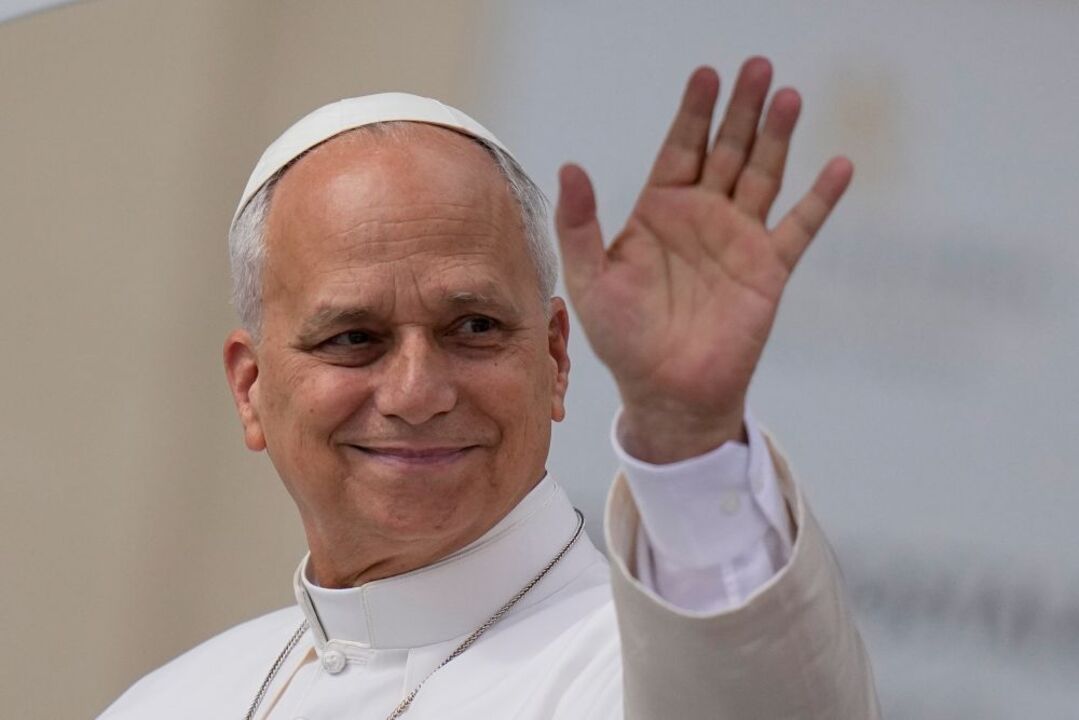
The Vatican’s entrance into the artificial intelligence debate is not a narrow religious story; it is a signal that AI has become a social power question. Vatican AI ethics matters right now because the next fight over artificial intelligence will not be limited to faster models, bigger valuations, or smarter workplace tools. It will be about whether institutions can defend human dignity before automation becomes too deeply embedded to question.
Why Vatican AI Ethics Matters Now
Pope Leo XIV’s creation of an artificial intelligence study group gives the Vatican a more formal place in one of the most consequential debates of the decade. The recent AP News coverage of the Vatican AI study group captured the core of the story: the Church is preparing to treat AI not as a gadget trend, but as a moral, labor, peace, and human dignity issue.
That distinction matters. The tech industry usually frames AI through capability: what the model can do, how quickly it can do it, and how many workflows it can absorb. The Vatican’s framing starts somewhere else. It asks what should remain human, who is protected when systems scale, and whether people can challenge decisions shaped by machines they do not understand.
This is why the story has broader relevance even for readers outside Catholic life. Once AI affects courts, schools, jobs, elections, media, and warfare, the public needs more than product demos. It needs a serious language for limits, accountability, and human dignity test that cannot be reduced to efficiency.
The Vatican Is Challenging The Product-First AI Narrative
Silicon Valley tends to move with a simple rhythm: build, launch, improve, scale. That rhythm has produced extraordinary tools, but it also encourages a dangerous assumption that adoption should happen first and ethical reflection can follow later. The Vatican is pushing against that sequence.
A study group is not the same as regulation. It cannot force companies to redesign products or governments to rewrite rules. Its power is different. It can shape the public vocabulary around AI and create pressure for leaders to explain not only what they are building, but why it should be trusted.
The Vatican has already laid groundwork through its official Vatican guidance on AI and human intelligence, which treats artificial intelligence as a tool that must remain subordinate to the full meaning of human intelligence. That is a direct challenge to the idea that machine performance alone should define progress.
The deeper issue is not whether AI is useful. It clearly is. The question is whether usefulness becomes the excuse for weakening consent, attention, privacy, work, and truth.
Where The AI Ethics Battle Is Moving
The Vatican’s AI concern fits into several overlapping debates that are already unfolding in public life.
| Area Of Concern | Why It Matters |
|---|---|
| Human dignity | AI systems can treat people as profiles, predictions, or outputs rather than whole persons. |
| Labor and work | Automation can improve productivity while weakening career paths, bargaining power, and entry-level opportunity. |
| Truth and misinformation | Synthetic text, images, audio, and video can make public trust harder to protect. |
| Peace and security | AI can intensify surveillance, propaganda, cyber conflict, and military decision-making. |
| Law and justice | Courts and legal systems may face AI-generated filings, false claims, and access-to-justice trade-offs. |
The table shows why the Vatican’s intervention is bigger than a statement about technology. It is really a statement about systems. AI is becoming a layer inside institutions that already struggle with transparency. When that layer becomes invisible, fast, and persuasive, the risk is not only technical failure. It is a public trust problem.
Labor May Become The Hardest Question
AI’s effect on work is where moral language becomes practical. Companies may call AI an assistant, a co-pilot, or a productivity layer. In some cases, that is accurate. But workers are not wrong to notice that the same technology is often sold to management as a way to do more with fewer people.
That creates a serious tension. If AI helps employees remove tedious tasks, improve research, or make better decisions, the benefits are real. If AI is used mainly to reduce headcount, flatten wages, or eliminate the junior roles that train the next generation, the social cost is also real.
This is the labor pressure point Silicon Valley cannot avoid. Work is not only a paycheck. It is a route into skill, responsibility, stability, and participation. A society that becomes more efficient while making human development less secure has not solved the labor problem. It has hidden it beneath productivity numbers.
The Legal System Shows The Stakes
The legal system offers a useful preview of what happens when AI reaches people faster than institutions can adapt. AI tools can help ordinary users understand documents, organize claims, and approach complicated systems with more confidence. That is promising, especially where legal access is expensive or intimidating.
But the risks are just as visible. AI can generate false citations, overstate confidence, misunderstand context, or encourage people to file claims without recognizing procedural limits. That is why the debate around AI legal tools and courtroom readiness belongs inside the wider ethics conversation. The same tool that expands access can also create confusion if courts, users, and platforms do not understand their responsibilities.
This is the institutional readiness gap at the heart of AI adoption. The technology moves quickly. Institutions move slowly. People caught between the two often carry the consequences.
Why Truth And Peace Belong In The Same Conversation
Misinformation and conflict may look like separate AI issues, but they are connected by speed and scale. Synthetic media can weaken public trust. Automated persuasion can inflame division. AI-assisted cyber tools can pressure governments and companies. Military uses can shift decisions toward systems built for rapid detection and response.
The moral concern is not that every AI tool is dangerous. The concern is that powerful tools can normalize shortcuts around judgment. When leaders prioritize speed, they may treat reflection as a weakness. When platforms prioritize engagement, they may treat confusion as profitable. When governments prioritize advantage, they may treat restraint as optional.
That is where the Vatican’s voice is uncomfortable but useful. It reminds the AI debate that moral language matters, especially when technical language becomes too narrow to capture the human cost.
What We Should Watch Next
The next question is how specific the Vatican becomes. Broad warnings about AI ethics are easy to agree with and easy to ignore. The stronger intervention will come if the Church draws clear lines around labor, warfare, misinformation, surveillance, education, and human relationships.
Readers should also watch how the tech industry responds. If companies treat the Vatican’s concern as symbolic, they may miss the larger public mood. People are not only asking whether AI works. They are asking who controls it, who benefits from it, and what happens when it harms someone.
Vatican AI ethics matters because it forces the conversation out of the product launch cycle and into the human consequences of technological power. AI will keep advancing, but the more important question is whether institutions can keep judgment, dignity, truth, and peace at the center. The Vatican has stepped into that argument at the right moment, and Silicon Valley should understand why the audience is bigger than it looks.