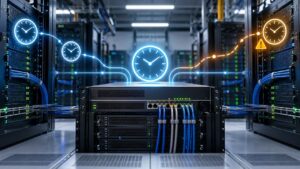
An AI cybersecurity product is no longer just a lab idea or a vendor pitch. SoftBank’s new OpenAI-powered patching service shows how quickly defensive AI is moving into the enterprise stack, especially where critical infrastructure, software flaws, and machine-speed attacks are starting to collide.
The deeper story is not that AI can help patch vulnerabilities. It is that companies are beginning to treat AI as a security operations layer. The same pressure behind AI hacking tools is now pushing major technology firms to build defensive products that can find, prioritize, and help fix weaknesses before attackers turn automation against them.
AI Cybersecurity Product Launches Are Changing the Patching Debate
Patching has always been one of cybersecurity’s least glamorous problems. It is slow, repetitive, politically difficult inside large organizations, and often delayed by fear of breaking important systems.
AI changes the pressure around that old problem. If attackers can use advanced models to discover vulnerabilities faster, defenders cannot rely on human-speed triage forever. They need better visibility, faster prioritization, and clearer remediation workflows.
SoftBank’s new cybersecurity product is important because it treats patching as a managed service rather than a one-time software update. That framing matters. Enterprises do not only need alerts. They need help moving from vulnerability assessment to planning and remediation.
This is where patching becomes strategy instead of maintenance.
SoftBank Is Targeting the Enterprise Weak Spot
Large companies rarely struggle because they do not know vulnerabilities exist. They struggle because vulnerabilities compete with uptime, budget, legacy systems, department ownership, and unclear risk ranking.
A traditional scanner can produce a long list of issues. The hard part is deciding what needs immediate attention, what can wait, what depends on a vendor, and what may disrupt operations if patched too quickly.
SoftBank’s official Patching as a Service announcement describes a solution built around vulnerability assessments, remediation, planning, and implementation advisory. That is the right part of the workflow to attack because patching failure is often organizational, not just technical.
An AI system can help by grouping related flaws, identifying likely exposure, suggesting remediation paths, and supporting teams that are overwhelmed by volume. But the product will still depend on accurate asset inventory, disciplined change management, and human approval where systems are sensitive.
Critical Infrastructure Raises the Stakes
The Japan angle matters because critical infrastructure is not a normal enterprise environment. Airports, power systems, transportation networks, telecoms, finance, and public services cannot patch recklessly. They also cannot leave known weaknesses open indefinitely.
That is the core tension. Critical systems need speed and caution at the same time.
AI-supported patching could help narrow that gap by giving security teams better evidence before they act. The goal is not to let a model blindly change production infrastructure. The useful version is more controlled: assess the weakness, understand the affected system, recommend the fix, validate the plan, and guide implementation.
The risk is overconfidence. AI should accelerate judgment, not replace operational responsibility. A patching assistant that misunderstands a dependency can create downtime. A remediation plan that ignores local system context can create new risk while trying to close an old one.
For infrastructure operators, the question is not whether AI can help. It is whether the control process around the AI is mature enough.
The Security Value Depends on the Workflow
The strongest AI cybersecurity product will not simply generate patches. It will improve the workflow around patching.
| Security Layer | What AI Can Help With | What Humans Still Need to Control |
|---|---|---|
| Asset visibility | Map affected systems and software | Confirm business criticality |
| Vulnerability triage | Rank exposure and urgency | Set risk tolerance |
| Patch planning | Suggest remediation paths | Approve change windows |
| Testing | Flag likely dependency issues | Validate production impact |
| Documentation | Summarize actions and evidence | Own compliance records |
The table shows why defensive AI is more useful as a security operations layer than as a magic patch button.
The best enterprise deployment will keep humans in the loop for high-impact systems. AI can reduce noise, shorten analysis time, and surface patterns. Humans still need to decide whether the fix is safe, when it should be deployed, and how rollback will work if something breaks.
The Underestimated Risk Is Trusting the Model Too Quickly
SoftBank’s move points to a larger market shift. Security vendors will increasingly package frontier models into products that promise faster detection, remediation, and response.
That will create real value. It will also create a new trust problem.
If an AI cybersecurity product recommends a patch, teams need to know why. If it prioritizes one vulnerability over another, security leaders need evidence. If it generates remediation steps, engineers need a way to validate them before execution.
A black-box model may be impressive during a demonstration. Inside a regulated enterprise, it becomes a governance problem.
This is where explainability becomes operational. The output must be reviewable. The decision path must be logged. The authority of the system must be limited. Otherwise, companies may trade slow patching for fast uncertainty.
The Next Signal Is Whether AI Defense Becomes Standard Infrastructure
SoftBank’s product is a signal that AI defense is moving from experimental tooling into enterprise packaging. The next phase will be defined by adoption, integration, and trust.
Watch whether large infrastructure operators accept AI-supported vulnerability assessment as part of normal security operations. Watch whether these systems integrate with ticketing, asset management, endpoint tools, cloud platforms, and compliance reporting. Watch whether vendors can prove that AI reduces patching delays without creating new operational failures.
The bigger shift is that cybersecurity is becoming an AI competition on both sides. Attackers may use models to find weaknesses faster. Defenders will use models to close them faster. Enterprises caught between those forces will need products that improve speed without sacrificing control.
SoftBank’s AI cybersecurity product matters because it turns one of security’s oldest problems into a new test for enterprise AI. Patching has never been just about installing updates. It is about knowing what matters, acting before exposure becomes compromise, and keeping critical systems stable while the threat environment gets faster. AI can help, but only if companies treat it as governed security infrastructure rather than a shortcut.
FAQ’s
What is SoftBank’s OpenAI cybersecurity product?
SoftBank launched a Patching as a Service cybersecurity product powered by OpenAI models. It is designed to support vulnerability assessment, remediation planning, and implementation advisory for Japanese enterprises.
Why does AI matter for patching?
Use up and down arrow keys to resize the meta box pane.
AI can help security teams prioritize vulnerabilities, understand exposure, and speed up remediation planning. That matters as attackers use automation and advanced models to discover and exploit weaknesses faster.
Is AI patching safe for critical infrastructure?
It can help, but it needs strict controls. Critical infrastructure should use AI for assessment and guidance while keeping human approval, testing, change management, and rollback planning in place.