

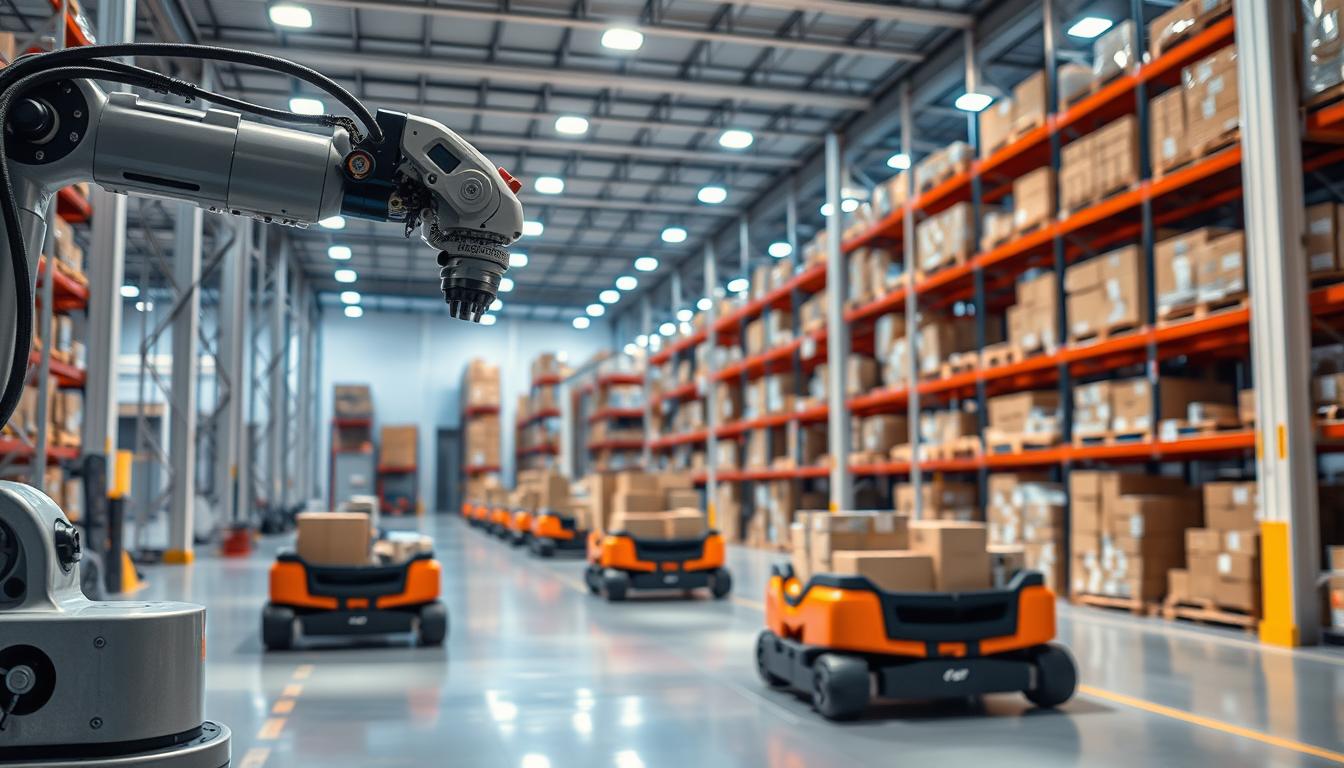
Imagine a storage facility where everything runs smoothly. Metal arms move with grace and algorithms predict needs before we even think of them.
I’ve seen places still using old ways. They seem to be using stone tablets to do math compared to today’s tech.
When robotics and fast data processing come together, magic happens. Decisions are made instantly, almost like they’re happening in a snap. In the world of logistics, time is very precious.
This isn’t just a dream; it’s what businesses need to stay ahead. Smart facilities use connected systems for smooth operations. They track things in real-time, making it the standard, not the exception.
These systems learn from every action. They make routes better and make old methods seem outdated.
The numbers show the benefits: faster fulfillment, high accuracy, and operations that run smoothly. This tech edge is what sets leaders apart from those who will soon be forgotten.
Workflow Optimization
Do you remember those Rube Goldberg machines from Saturday morning cartoons? They were amazing, with a rolling ball triggering a domino, which pulled a string, and then poured cereal. Today’s logistics without edge robotics is just as complex and slow.
Now, smart warehouses automate everything from supplier to customer. They make sure products move smoothly and fast, with real-time updates for better logistics. It’s like going from a bike to a hyperloop.

I’ve seen edge robotics make huge changes. It turned three-hour tasks into 20-minute wonders. Error rates fell by 95%, and things moved twice as fast. These systems don’t just speed up – they also work smarter.
They use real-time data to avoid problems before they start. It’s like having a chess master control your operation while others play checkers.
The best operations use visual systems to track important metrics. It’s not just for show; it helps make smart decisions.
| Traditional Workflow | Edge-Optimized Workflow | Improvement Impact |
|---|---|---|
| Manual routing decisions | AI-powered real-time optimization | 67% faster decision making |
| Reactive problem solving | Predictive bottleneck prevention | 89% fewer delays |
| Periodic metric reviews | Continuous SQCDP monitoring | 45% cost reduction |
| Static storage paths | Dynamic product flow optimization | 3x inventory turnover |
Companies using edge robotics are leading the way. They’re not just keeping up; they’re setting new standards for logistics. The data shows edge robotics make workflow better, not worse.
It’s like the difference between a symphony with everyone playing the same notes versus one where everyone improvises. The result? Pure operational poetry.
Real-Time Picking & Sorting
Modern warehouse edge automation is like watching a Broadway show. It’s fast and accurate, processing 2,000 items per hour with almost perfect precision.
It’s a dance of technologies working together. IoT sensors keep an eye on everything. Robotic arms move with incredible precision. They don’t just find items; they understand them, prioritize them, and adjust quickly.
- Order fulfillment accuracy rates exceed 99.9%
- Processing speeds are 3-4 times faster than manual methods
- Real-time inventory tracking prevents stockouts
- Annual cost savings range from 30-40%
This technology is like the difference between scribes and Gutenberg’s press. Both get the job done, but one is a game-changer.
These systems handle thousands of items every hour with almost no mistakes. The data shows that using warehouse edge automation makes operations much more efficient.
Data flows through the system instantly. This lets it make quick changes to how it picks, sorts, and organizes items. It’s not just automation; it’s smart, moving intelligence.
Downtime Prevention
Imagine if the best maintenance in your warehouse came from a smart system, not a person. This system predicts failures before they occur. We’ve always seen equipment breakdowns as normal, like bad weather. But, this thinking is as old as using carrier pigeons for delivery.
IoT-powered predictive maintenance is a huge leap forward. It doesn’t wait for things to break. It checks performance data in real-time, spotting issues humans might miss. It’s like having a medical AI that finds problems before symptoms show.
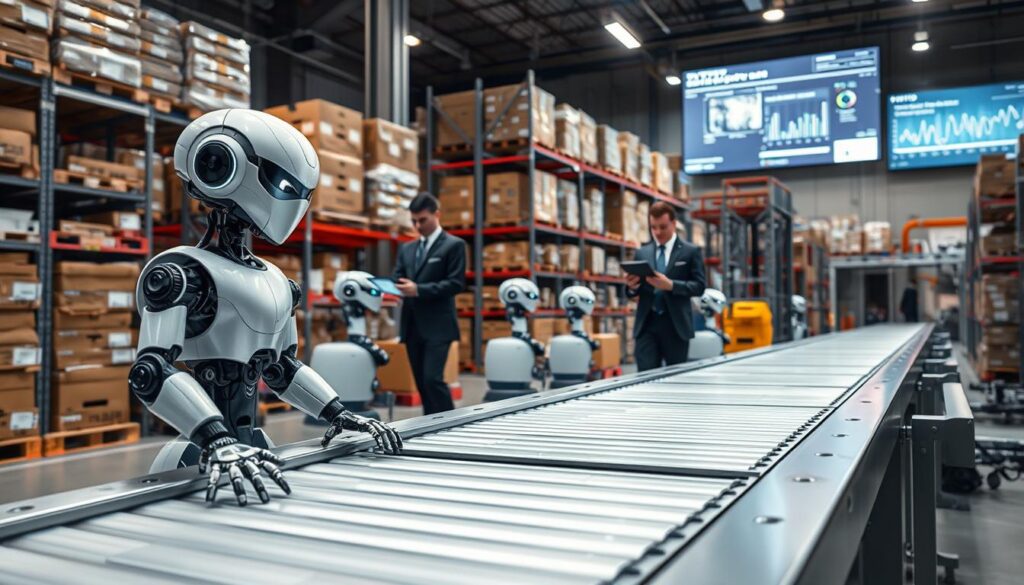
Edge computing is key here. It processes data right where it’s needed, without delay. If a robotic arm acts off, the system alerts you right away. This isn’t just fixing things; it’s keeping them healthy.
Think about the money saved. Downtime costs manufacturers billions each year. With predictive maintenance, repairs happen when it’s quiet. Stopping production during busy times is like doing surgery during a marathon.
Real numbers show the impact. Companies using these systems use their assets almost perfectly. They avoid breakdowns and boost productivity. The savings are clear when you compare halted production to planned maintenance.
Smart warehousing also cuts labor costs. Intelligent systems do the work, not teams of technicians. This saves money, especially in tough times.
Government programs offer help to adopt these technologies. They offer tax breaks or grants for companies using advanced solutions. It’s like getting paid to prepare for the future.
For those ready to reduce downtime, the future is clear. The tech is here, and the benefits are proven. The only question is when companies will stop accepting downtime as normal.
Logistics robotics edge systems are more than new tech. They change how we think about maintenance and productivity. Companies using these systems will lead the industry soon.
Warehouse Case Successes
The proof is in the profit margins. Real-world operations with warehouse edge automation are hitting what used to be just dreams. Big names like Maersk and DB Schenker are leading the way, changing the game on efficiency.
Think about these numbers: 70% faster order processing with almost perfect accuracy. Energy use drops by 40% while they move more stuff. These aren’t just dreams; they’re the new standard for companies using logistics robotics edge solutions.
The success stories are like thriller novels. Companies that faced recent challenges didn’t just make it through; they excelled, thanks to their smart systems. Retail, manufacturing, and logistics are finding that smart warehouses don’t just save time and money. They give companies a competitive edge that sets them apart.
This isn’t about replacing people—it’s about making them better. The gap between early adopters and others is huge. It’s the difference between doing well and just getting by in today’s business world.



