

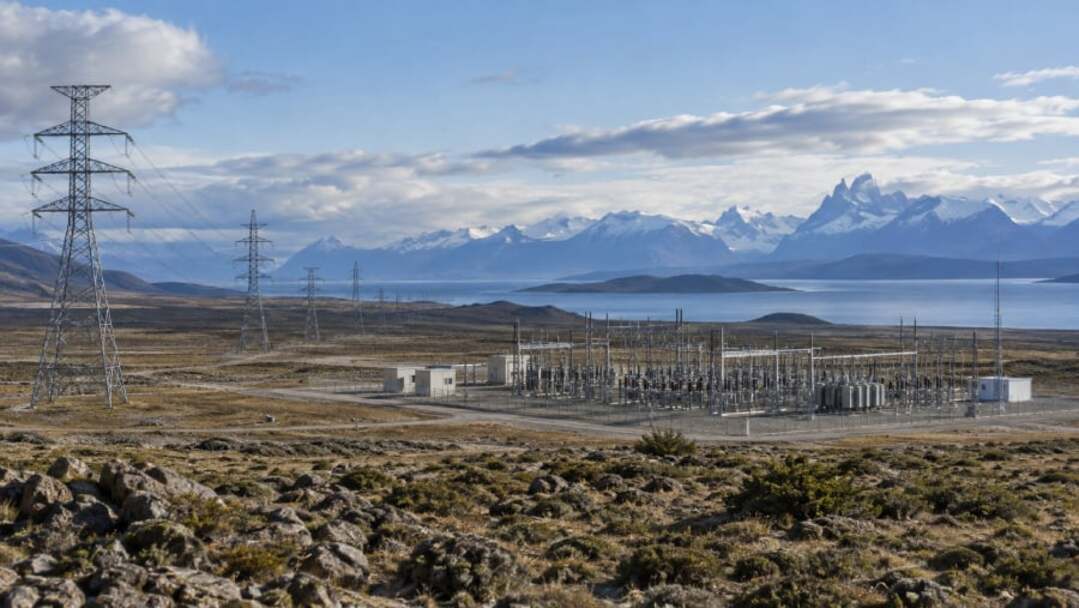
Patagonia AI data centers are becoming a serious signal in the global compute race. The AI industry is no longer only searching for better chips or bigger grids; it is searching for geographies where cold air, open land, power resources, fiber routes, and investment rules can all line up before the next wave of demand arrives.
That is what makes Argentina’s southern region more than a curiosity. As U.S. and European markets run into data center land constraints, Patagonia offers something AI infrastructure developers increasingly value: a physical landscape that may be easier to scale than the crowded hubs already fighting over electricity, water, zoning, and local approval.
Patagonia AI Data Centers Are a Geography Bet
Argentina’s Patagonia is drawing attention from data center investors because it combines several traits that are increasingly scarce in mature markets. The region offers cool temperatures, wide stretches of land, renewable energy potential, shale gas resources, and a political effort to attract large infrastructure projects.
That combination matters because AI data centers are no longer judged only by server capacity. They are judged by whether the site can support high-density racks, long-term power needs, expansion phases, cooling efficiency, and reliable connectivity.
Reuters described the region as a growing target for technology companies and investors looking for mega data center sites, with interest driven by cold climate, energy options, and available land through the latest Patagonia data center push.
The important point is not that Patagonia suddenly solves every infrastructure problem. It does not. The point is that AI developers are widening the map.
The new search is geography as infrastructure.
OpenAI’s Argentina Plan Raised the Stakes
The biggest attention-grabber is the planned OpenAI-linked project with Sur Energy. The companies signed a letter of intent to explore a large-scale data center project in Argentina capable of reaching up to 500MW of capacity, with investment of up to $25 billion at full scale under the country’s RIGI framework.
That is a major number for any region. For Latin America, it is a statement that AI infrastructure may no longer be concentrated only in Northern Virginia, Texas, Arizona, Ireland, Singapore, or other familiar data center corridors.
Sur Energy framed the project as Stargate Argentina, designed to support next-generation AI computing and clean-energy-powered infrastructure through a planned 500MW AI campus.
The word “planned” matters. A letter of intent is not the same as a fully completed facility, and large data center projects can change as financing, power, permitting, and customer demand evolve.
But the signal is still meaningful. A frontier AI company looking at Argentina tells the market that compute geography is becoming strategic.
For countries outside the traditional data center elite, that creates an opening.
Cold Air Helps, but Power Decides the Winner
Patagonia’s climate is attractive because cooler temperatures can reduce the burden on mechanical cooling systems. In data centers, heat removal is not a side issue. It affects operating cost, rack density, uptime risk, and the feasibility of high-performance AI clusters.
Cold weather alone is not enough. A data center still needs power at scale, stable delivery, transmission access, backup strategy, and reliable operations. That is where Patagonia’s mix of renewable energy and shale gas becomes central to the pitch.
Renewables can support cleaner branding and lower emissions exposure. Gas can support firm power and reliability. Together, they create a possible energy story that sounds more flexible than markets where the grid is already congested.
But that combination also raises a harder question: what kind of AI infrastructure does Argentina want to host? A clean-energy-powered AI campus is different from a gas-heavy compute zone. The former supports the sustainability narrative. The latter may solve reliability but invite climate and local environmental scrutiny.
The advantage is power optionality. The risk is that optionality becomes ambiguity.
Fiber Is the Quiet Constraint
A data center is not useful if it is isolated. AI workloads need high-capacity fiber, low-latency links, international redundancy, and secure connections to customers, clouds, and research networks.
That is why Argentina’s connectivity push matters. ENACOM participated in the Chubut Hub Digital 2030 initiative in July, highlighting plans for a second submarine cable landing point on the Chubut coast. The goal is to increase international communications capacity, redundancy, and security through a strategic submarine cable landing.
That is not a minor detail. Without international connectivity, Patagonia’s cold air and energy resources lose much of their value for AI workloads.
Data center developers often talk about land and power first because those are the visible constraints. But fiber determines whether a remote site can actually behave like part of the global AI infrastructure network.
Patagonia needs all three: power, cooling advantage, and connectivity.
Patagonia’s Pitch Looks Different From Crowded Markets
The case for Patagonia becomes clearer when compared with established AI data center hubs.
| Location Factor | Mature Data Center Hubs | Patagonia’s Potential Pitch |
|---|---|---|
| Land availability | Tight, expensive, politically contested | Large tracts with room for expansion |
| Climate | Often requires intensive cooling | Cooler air may support efficiency |
| Power access | Grid queues and local opposition are rising | Renewable and gas resources create options |
| Connectivity | Strong but congested in major hubs | Needs more international redundancy |
| Regulation | More developed but often slower | Investment incentives may attract large projects |
| Community risk | Backlash is already organized | Still emerging, but likely to grow |
The comparison shows why Patagonia is attractive but not guaranteed. The region offers what overloaded markets lack, yet it still must prove the pieces can be assembled into bankable, operational data center capacity.
That is the difference between a promising frontier and a real infrastructure hub.
The Real Test Is Execution, Not Hype
Patagonia’s opportunity comes with serious pressure points. The first is financing. A multibillion-dollar AI campus requires long-term capital, anchor customers, power agreements, equipment procurement, and confidence that demand will still be there when each phase comes online.
The second is political stability. Argentina is using investment incentives to attract large projects, but AI infrastructure investors need predictable rules over many years. Data centers do not pay back in a single news cycle.
The third is community acceptance. Open land can look empty on a map, but large AI campuses still affect water planning, local labor markets, roads, transmission corridors, land values, and environmental expectations.
The fourth is execution capacity. Building a modern AI data center is not the same as announcing one. Developers need transformers, switchgear, cooling systems, fiber, security, skilled contractors, and operations teams that can support high-density GPU environments.
The fifth is customer concentration. A major AI tenant can make a project credible, but overreliance on one anchor customer can create risk if strategy, funding, or workload demand changes.
The strongest version of Patagonia’s AI data center future will not be built on one announcement. It will be built on repeated proof: financed phases, delivered power, live fiber, signed customers, and credible operations.
Patagonia AI data centers matter because they show how the AI infrastructure race is expanding beyond the usual map. The industry is chasing places where geography itself can become a competitive advantage cooler climate, cheaper land, energy supply, and room to grow.
Argentina now has a chance to turn that interest into a serious regional compute strategy. But the hard part begins after the headline. AI campuses succeed only when the physical stack works: power, cooling, land, fiber, permitting, capital, and trust. Patagonia may become the next AI data center frontier, but only if its geography can be converted into reliable infrastructure.



