Notepad++, one of the world’s most popular open-source text editors, recently issued an urgent security advisory after discovering a sophisticated cyberattack on its update infrastructure. Project maintainers disclosed that attackers had managed to reroute update traffic to malicious servers, in a campaign believed by experts to be state-backed. This incident highlights not only the ever-evolving threats facing software supply chains, but also the importance of strong update security for widely-used developer tools.
Timeline of the Attack: Months of Silent Intrusion
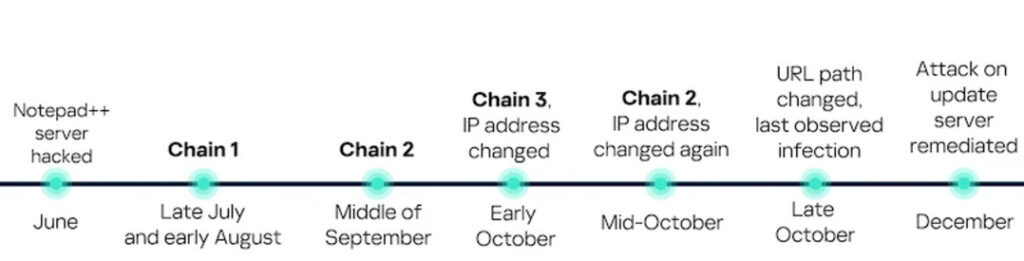
According to Notepad++’s official update, the attack surfaced in June 2025 when threat actors exploited a shared hosting provider’s infrastructure. The attackers’ access allowed them to intercept and redirect WinGUp updater traffic, the automatic update mechanism built into Notepad++.
Although direct control of the hosting server was recovered by September 2, 2025, attackers retained credentials for internal services until December. This enabled them to maintain a foothold and intermittently hijack some update requests through early December 2025. The project’s lead developer, Don Ho, made clear that this was an “infrastructure-level compromise” and not a breach of Notepad++’s source code or its public repositories.
Technical Details: How Attackers Exploited the Update System
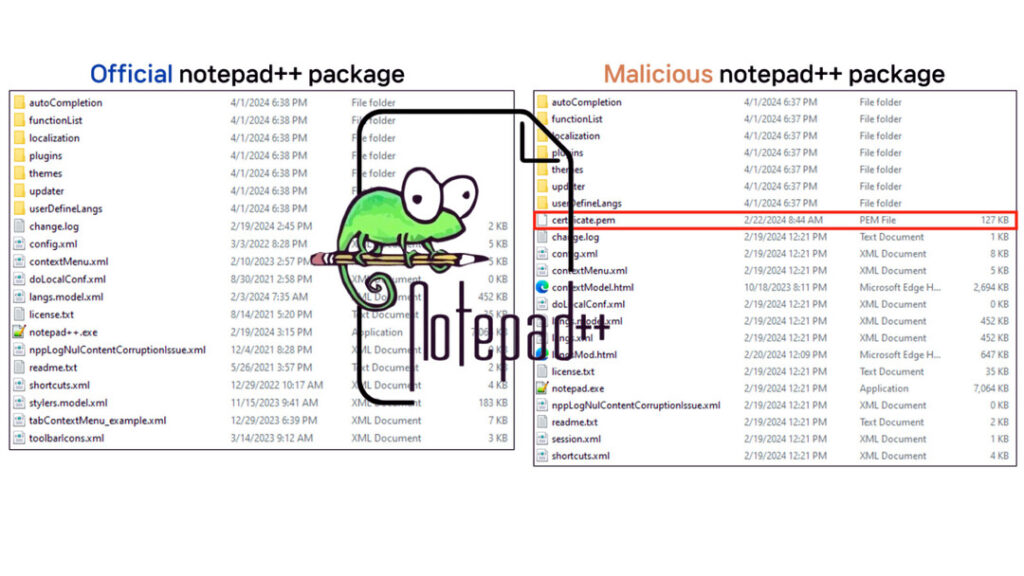
The incident specifically targeted the delivery of updates, rather than tampering with Notepad++’s application source code. Attackers intercepted requests meant for the Notepad++ update server and served altered update manifests and, in some cases, malicious binaries, to clients running older versions of the WinGUp auto-updater.
- These older installers lacked modern security measures such as robust certificate checks and manifest validation.
- On-path attackers (sometimes called “man-in-the-middle” attackers) were able to craft plausible update responses, convincing outdated Notepad++ clients to download and install poisoned executables.
Security analysts and the development community have underscored that supply-chain attacks of this nature are growing in frequency, especially against software tools widely used by developers, researchers, and IT professionals. As covered by The Record , state-backed actors often target trusted infrastructure to maximize spread and impact.
Impact: Who Was At Risk?
The compromise affected a “narrow subset” of users—specifically, those running older, unpatched versions of Notepad++ with vulnerable update mechanisms. According to Notepad++ maintainers, most modern installations were less susceptible due to improved verification controls added in recent updates. However, even a limited-scale attack can have severe consequences, as infected updates may deliver backdoors, credential stealers, or other advanced persistent threats to sensitive environments.
Crucially, there was no evidence that Notepad++’s source code or downloadable installer from the official site was backdoored. The attack focused solely on the update traffic pathway, exploiting trust in the automatic update process.
The Response: Patch, Investigate, and Restore Trust
On February 2, 2026, Notepad++ issued a patched release and a detailed advisory recommending that all users immediately upgrade to the latest version, which includes:
- Enhanced validation of update manifests
- Improved certificate pinning
- Notification for potentially redirected update traffic
Don Ho and the Notepad++ team urge users to avoid using outdated updaters and to verify the authenticity of downloads directly from the official Notepad++ website.
Ongoing Investigation and Forensic Efforts
The development team, working in conjunction with outside security experts, continues to investigate “the exact mechanism through which this was realized,” as details of credential compromise and update manipulation remain under review. This type of persistent, infrastructure-level attack requires rigorous forensic analysis to ensure all malicious footholds are removed.
Broader Supply Chain Security Concerns
This Notepad++ incident is the latest example of a larger trend: attackers targeting update channels and deployment infrastructure instead of the application codebase itself. As noted by Krebs on Security , supply-chain intrusions are highly effective for distributing malware, as they exploit the natural trust users place in automatic updates and official software channels.
For developers and IT administrators, the incident serves as a reminder to stay current with patches not just for core applications, but for updaters and support utilities as well. It underscores the importance of secure coding practices, strong infrastructure segmentation, and monitoring access credentials for possible abuse.
How Notepad++ Users Can Protect Themselves
If you use Notepad++—at home, at work, or in a development environment—follow these recommendations:
- Update to the latest release immediately using the official Notepad++ website.
- Avoid using third-party update channels or repositories.
- Audit your current installation: If you updated or installed Notepad++ between June 2025 and December 2025, consider reinstalling from a clean, official download.
- Monitor for suspicious system behavior: Scan for malware if you believe your system may have received tampered files.
A Sobering Reminder for Open-Source Ecosystems
The targeting of Notepad++’s update system by what appears to be a state-backed actor is a stark reminder of the evolving risks facing software supply chains. While the swift response from project maintainers and the open-source community has mitigated the attack, it emphasizes the shared responsibility to maintain security hygiene and to trust only official update sources. As attacks grow more sophisticated, vigilance and transparency within software communities remain the first line of defense.