

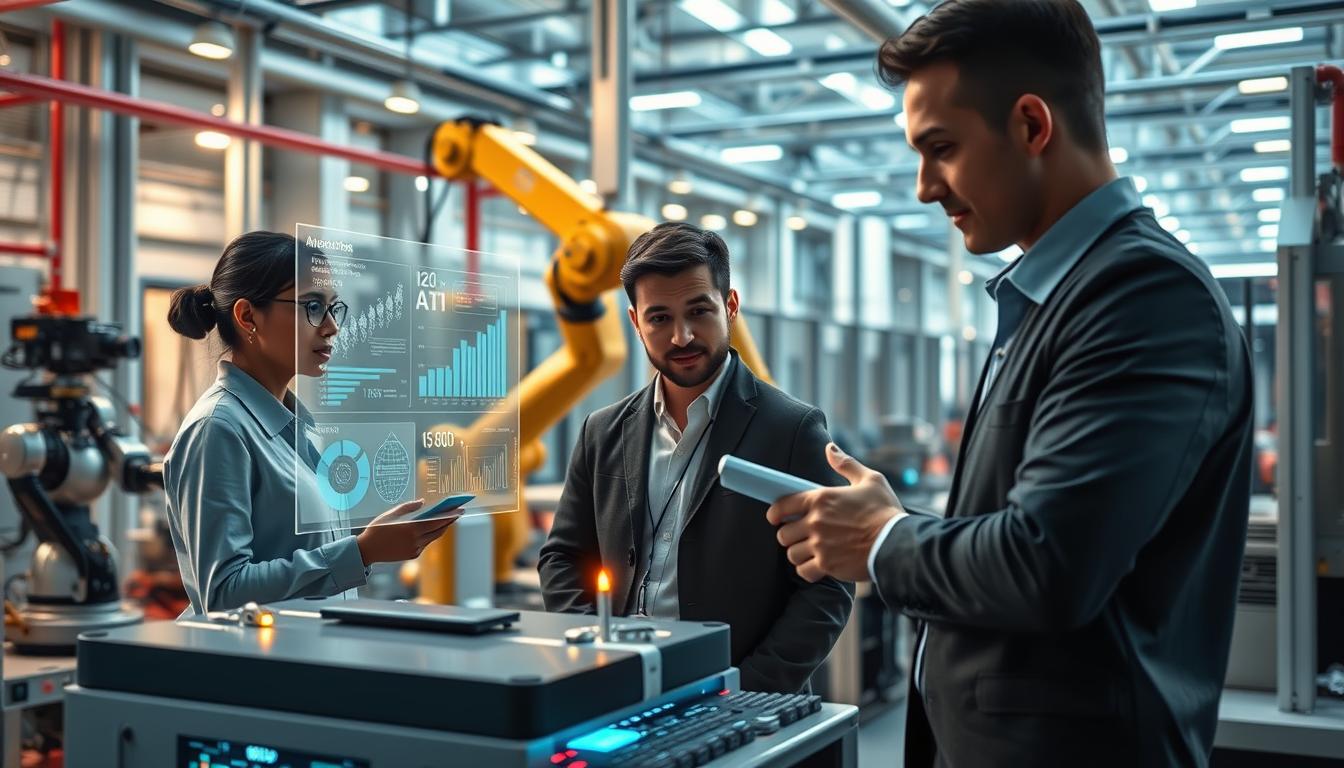
Remember when AI was only in huge cloud data centers? Those days are over, like dial-up internet. Now, AI is moving to devices that process information right where it’s needed.
This shift is like moving from a big mainframe to a system where intelligence is spread out. It’s a big change. Now, AI can make quick decisions without waiting for the cloud.
This change is real and happening now in places like factories, hospitals, and cities. The edge AI industry shows that big changes can come from small things, driving real innovation where it counts.
Local processing means faster action, better privacy, and big energy savings. Why rely on the cloud when you can have AI nearby?
Quality, Defect, and Safety Vision
Imagine your factory floor as a digital detective that never sleeps. It analyzes patterns and predicts outcomes. This is what smart factory AI brings today. We’re moving from simple automation to prescient manufacturing.
Now, facilities use sensors to monitor thermal signatures and acoustic vibrations. These sensors catch anomalies that humans might miss. Edge AI processes this data locally, spotting issues weeks before they become major problems.
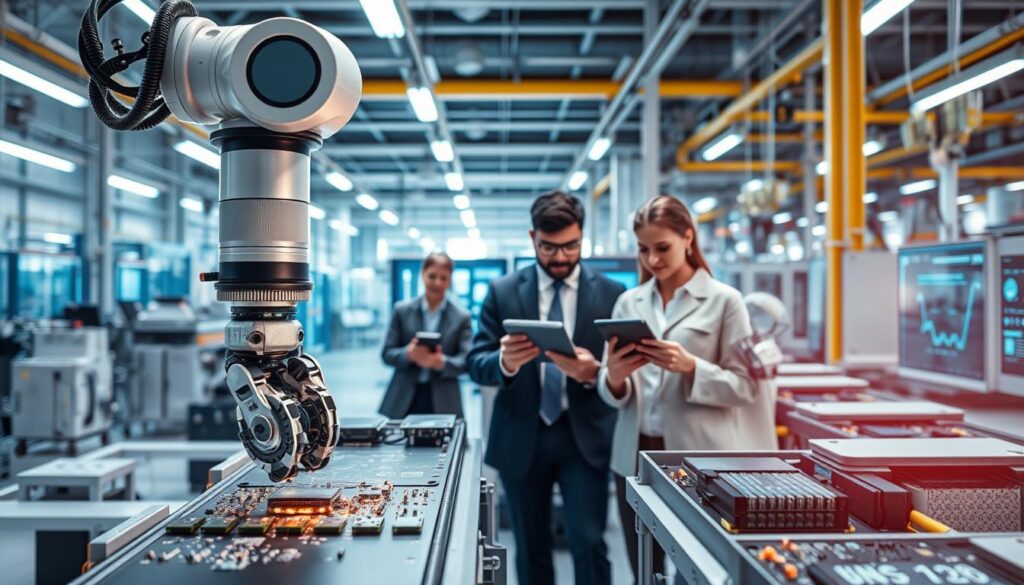
Production lines can now self-diagnose wear patterns. Vision systems spot microscopic defects at incredible speeds. Energy management adapts in real-time. It’s like having a team of expert mechanics and quality inspectors working 24/7 without breaks.
The real game-changer is all this intelligence operates locally. Sensitive production data stays within the facility. This addresses security concerns and latency issues. Local processing enables real-time responses that cloud systems can’t match.
Here’s how smart factory AI changes traditional manufacturing challenges:
| Traditional Approach | Smart Factory AI Solution | Impact |
|---|---|---|
| Scheduled maintenance | Predictive maintenance | 60% fewer breakdowns |
| Manual quality checks | Automated vision systems | 99.5% defect detection |
| Reactive safety protocols | Preemptive hazard detection | 85% fewer incidents |
| Fixed energy consumption | Dynamic power optimization | 30% energy savings |
These systems don’t just prevent problems—they learn and improve continuously. Each anomaly detected makes the system smarter. It’s manufacturing evolution in real-time, thanks to Arm-based edge devices providing the power.
The result? Factories that anticipate rather than react. Production lines that optimize themselves. Quality control that happens at the speed of light. This isn’t just incremental improvement—it’s a fundamental reimagining of what manufacturing can be.
Edge AI Hardware Choices
Choosing edge AI hardware is like picking a team for a special mission. Each part must work well under pressure and save resources. These devices need to be as powerful as a data center but as energy-efficient as a solar calculator.
It’s all about the perfect dance between hardware and software. This makes AI work smoothly and efficiently, making even tough engineers happy.
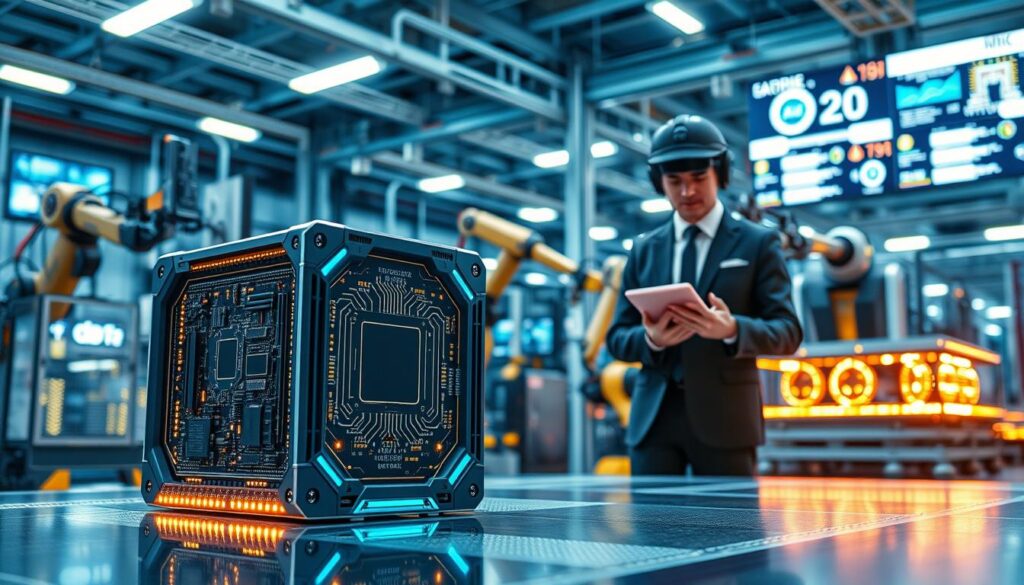
- Specialized NPUs that work on neural networks with great precision
- Efficient processors like Arm Cortex-A that perform well without using too much power
- Optimized toolchains that make development easier and faster
Arm’s work in this area shows how serious it is. Their Armv9 Edge AI platform is more than just a chip. It’s a carefully designed system for edge computing tasks. It’s like building a high-performance engine that can also park itself.
The real innovation is in using small parts of big models efficiently. It’s not about using lots of power. It’s about smart design that saves energy. For those interested in edge AI hardware selection, the details matter a lot.
Ethos-U NPUs and Cortex processors are the future of edge computing. They handle AI tasks while using very little power. This is a big change in how we use intelligence at the edge.
The future is about devices that are smart but don’t use a lot of energy. To get there, we need to choose hardware that understands this balance. In edge AI, being efficient is everything.
Vendor Successes
Let’s talk about the real winners in the edge AI industry—the companies turning silicon into solutions. They use smart factory AI to predict equipment failures before they happen. Retailers use AI at the edge to prevent theft and personalize shopping experiences. Healthcare providers analyze medical images locally, keeping sensitive data secure.
These successes share a common thread. They see edge computing as a partnership, not a replacement for the cloud. NVIDIA’s edge platforms work well with AWS cloud services. Intel’s OpenVINO toolkit optimizes models for tight spaces. Google’s Coral devices bring machine learning to the smallest endpoints.
The future looks even brighter. We’re moving toward tiny generative AI models that create content locally. Hybrid architectures will blend edge and cloud more seamlessly. Trust frameworks will ensure AI behaves as intended across all deployments.
The vendors leading this charge aren’t just selling technology—they’re delivering a new paradigm of responsive, private, intelligent computing that actually works in the real world.



