


Imagine trying to conduct an orchestra from another room. You hear the music but miss every subtle nuance. That’s how traditional power grid monitoring feels in 2024. We’re not just watching dials spin anymore; we’re building a digital nervous system for modern civilization.
Enter edge computing—the game-changer that puts the conductor right there with the musicians. This isn’t about replacing cloud systems; it’s about giving them a local brain. Think of it as having expert diagnosticians living inside your substations, constantly whispering insights about grid vitals.
The smart grid edge technology detects transformer failures before they become neighborhood blackouts. It catches voltage fluctuations mid-oscillation and balances load faster than Wall Street traders spot market shifts. All without waiting for distant servers to ponder your megawatt data.
This shift from reactive to proactive monitoring isn’t just smart—it’s essential for full-scale monitoring programs that actually prevent crises. Because when the power goes out, nobody cares about your cloud architecture—they just want their lights back on.
Water Treatment Diagnostics
Imagine your water treatment plant running like a Formula 1 pit crew. Instead of changing tires, it prevents health crises. Traditional monitoring is like checking oil every thousand miles. Edge computing makes it real-time, impressing NASA engineers.
Sensors in the system check pH levels and microbial content. They analyze data locally, catching contamination fast. This isn’t just monitoring; it’s like having a water crystal ball.
Remote diagnostics shine in this setup. Systems predict filter failures and adjust chemical doses. It’s like having a water expert in your pipes, always adjusting.
| Traditional Approach | Edge Computing Solution | Impact Difference |
|---|---|---|
| Weekly lab samples | Millisecond monitoring | 1,209,600x faster |
| Cloud-dependent | Local processing | Works offline |
| Reactive fixes | Predictive prevention | Stops problems preemptively |
This shows how critical infrastructure can change from reactive to predictive. The system warns about and even predicts problems. It keeps working, even without the internet.
Water keeps flowing. So should protection.
Meter Data in Real-Time
Remember when smart meters were going to change everything? Instead, they’re like old flip phones that only tell you yesterday’s news. Most meters now report data in batches, like newspapers. It’s like getting your financial statements quarterly instead of in real-time.
Real-time meter data processing turns these devices into smart grid players. I’ve set up systems where meters do more than just count. They analyze patterns, find oddities, and even join demand response programs on their own. This happens through remote diagnostics at the smart grid edge, where data is processed right away.
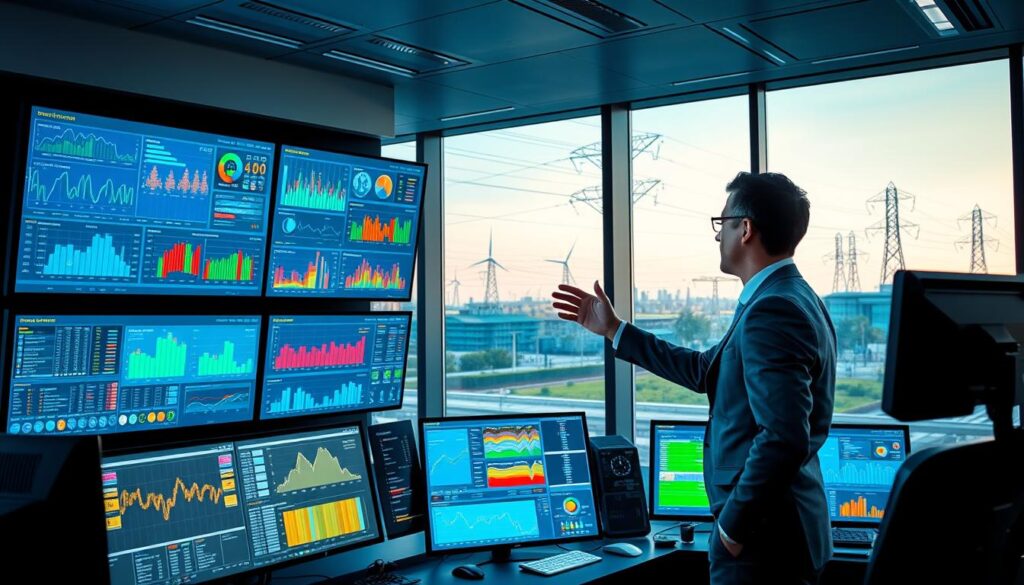
Why process data at the edge? Waiting for cloud analysis is like having a 10-second delay in a conversation. It’s frustrating and useless for making quick decisions. These edge environments process data instantly, offering three key benefits:
- Leak detection within minutes instead of monthly bill shock
- Power quality monitoring before sensitive electronics get damaged
- Bandwidth reduction by transmitting only meaningful insights, not raw data
The bandwidth savings are huge. Instead of sending constant raw data, these smart meters only send exceptions and insights. This reduces network load by a lot. It’s like having a financial analyst, quality assurance expert, and security guard built into every meter.
Edge data management makes meters truly smart. They can spot water leaks in minutes, not wait for the monthly bill. They can also find power quality issues before they harm your expensive electronics. This isn’t just a small improvement—it’s a big difference.
The future of utilities isn’t about faster data to the cloud. It’s about smarter processing at the edge. Decisions should happen fast, not slow because of network delays.
Field Service Improvements
Remember when field technicians had to guess what was wrong with equipment? Those days are over. Edge computing has changed field service from a guessing game to precise work.
Companies have cut truck rolls by 70% with remote diagnostics utilities. This isn’t just saving money; it’s also reducing environmental impact a lot.
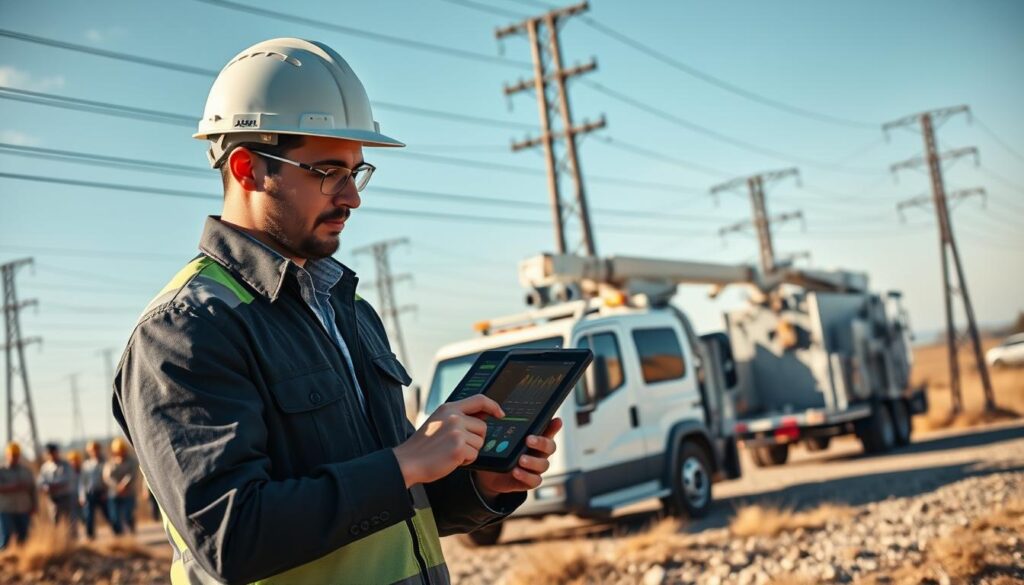
Devices now know what’s wrong and fix themselves. Sensors adjust and communication modules reconnect. It’s like having many doctors working together.
When humans need to step in, they’re ready. They know the problem and have the right tools. No more guessing on-site.
The change is big. Field technicians are now system optimizers, not just repair people. They focus on preventing problems, not just fixing them.
Here are some benefits of modern field service management:
| Traditional Approach | Edge-Enabled Solution | Impact Improvement |
|---|---|---|
| Reactive repairs | Predictive maintenance | 70% fewer emergencies |
| Multiple site visits | Remote resolution | 60% cost reduction |
| Generic toolkits | Precision parts | 90% first-time fix rate |
| Manual diagnostics | Automated alerts | 85% faster MTTR |
This isn’t just fixing problems; it’s preventing them. The best solution is the one that never happens.
Modern systems manage devices easily at scale. They turn big problems into small alerts. No one misses those 3 AM calls about simple fixes.
The real win? Technicians now focus on improving systems, not just fixing them. It’s like moving from old medicine to modern surgery.
Want to see this change in action? Check out state-of-the-art field service management and how it works.
Regulation Considerations
Trying to navigate smart grid edge computing regulations is like teaching your grandparents TikTok. The rules were made for a different time. When data processing happens at the edge, it’s hard for regulators to know where to apply the rules.
Remote diagnostics bring up tricky questions about where data is processed. Is data from a water treatment plant treated differently than the same data in the cloud? Edge systems can actually make things simpler by keeping data local, avoiding the need to send it over networks.
Security is both a blessing and a curse. You’re protecting many endpoints instead of a few big systems. But, each possible breach only affects local operations, not the whole network. The old security frameworks don’t fit well with the new distributed systems.
The challenges in regulating smart grid edge computing are similar to those in healthcare AI. Governance frameworks struggle to keep up. Smart utilities work with regulators to create rules that ensure security without slowing down the smart grid edge. Your remote diagnostics need regulations that understand distributed intelligence.



