Imagine Tom Cruise’s Minority Report team trying to stop crimes with 1990s dial-up. That’s what traditional cloud computing is like today. It’s slow and misses chances.
Edge computing is like a high-fashion Armani suit at a flannel-shirt convention. It’s fast and stylish.
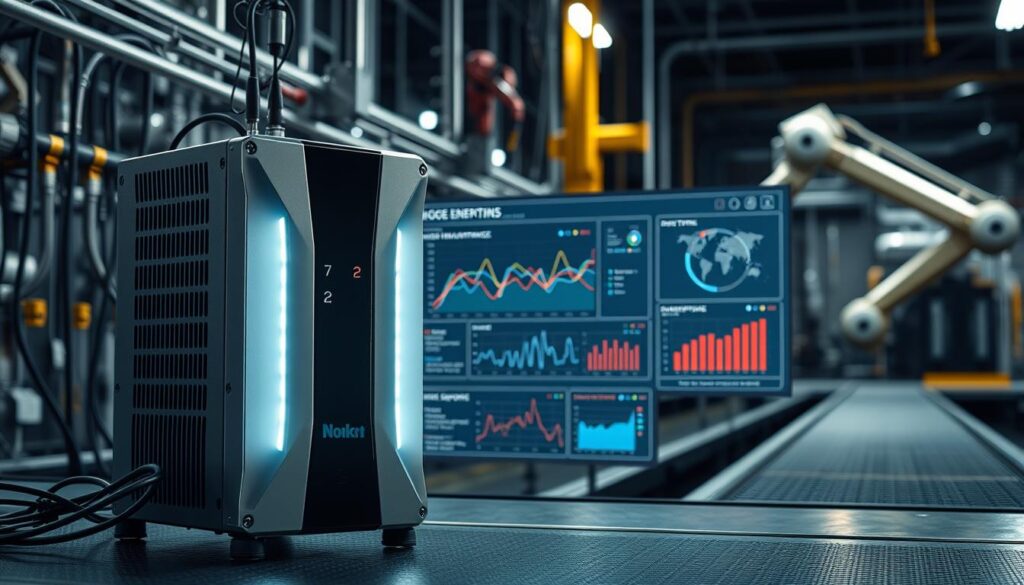
Ruggedized edge servers are like industrial nervous systems. They process data right where it’s created. DataBank’s autonomous vehicles, for example, now respond in under 30ms. That’s incredibly fast.
This isn’t just about speed. It’s about avoiding big problems. It’s the difference between smooth traffic and a huge accident.
Edge hardware makes things happen quickly. It’s like shouting across fire escapes in Brooklyn. It’s fast and local.
Why wait for cloud roundtrips? Every millisecond counts. It affects profits and safety.
The energy sector is already using edge analytics. One Texas operator cut downtime by 40%. Their rigs can now diagnose problems quickly.
It’s not magic. It’s just physics. Computing closer to action makes reactions faster. Welcome to fast decision-making.
Closed-Loop Automation in Industry
Imagine industrial systems that adjust quickly, like a barista fixing a latte mistake fast. Closed-loop automation is changing how factories and energy grids work. It’s like magic, making decisions fast without needing to send data far away.
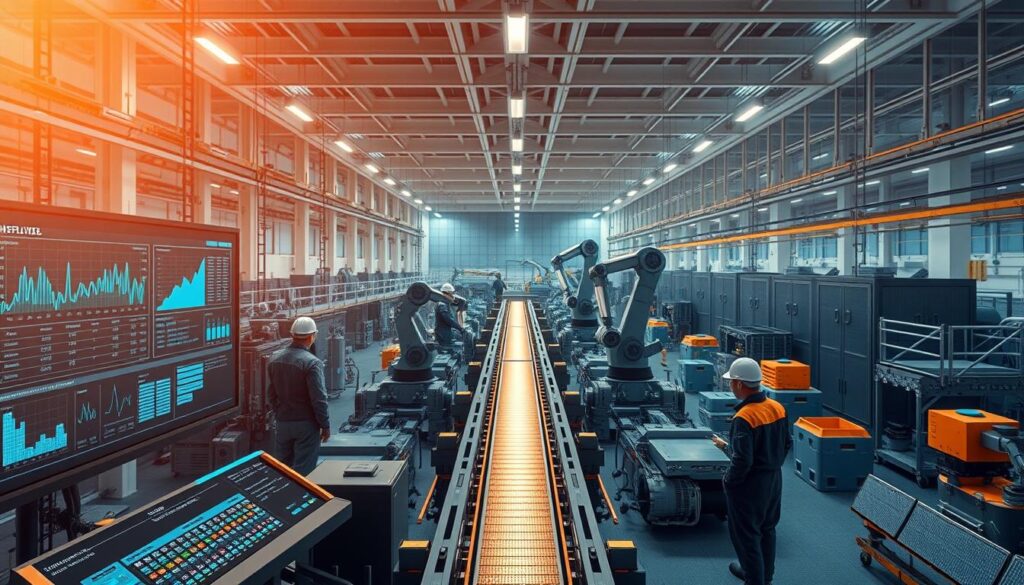
John Deere’s edge-enabled harvesters are a great example. They check crop yields in real-time and adjust settings fast. Automated warehouses can also change routes quickly, thanks to sensors.
The energy sector is also using this tech. Smart grids can:
- Detect voltage changes in 2.8 milliseconds
- Reroute power before problems happen
- Optimize themselves like a Netflix algorithm
“Edge computing turns ‘wait-and-see’ into ‘fix-it-now’ – the operational equivalent of having a fire extinguisher that puts out flames before the match strikes.”
These systems don’t just prevent problems. They’re getting smarter with machine learning. An oil rig’s sensors can predict issues before they happen. Soon, they might even schedule maintenance with drones.
Logistics networks are also getting smarter. One supplier cut downtime by 37% with edge devices. They analyze equipment temperatures and order parts before they fail.
This isn’t just automation. It’s like having a crystal ball for machines. Wind farms adjust blades based on weather. Pharmaceutical lines control humidity levels during production. It’s like giving machines their own Yoda to guide them.
Industrial AI & Machine Learning at the Edge
Training industrial AI systems is like raising a TikTok-generation teenager – you don’t want every life lesson broadcasted to the cloud. Edge devices become street-smart problem solvers, making quick decisions while the cloud offers guidance. Siemens’ engineers split cognitive tasks: edge nodes handle real-time data, while cloud resources analyze patterns.
When Edge Meets Cloud: The Dynamic Duo of Industry 4.0
Hybrid architectures work like Batman and Robin – edge does the gritty frontline work while cloud strategizes from the Batcave. In automotive manufacturing, this means:
| Processing Type | Latency | Data Volume | Use Case |
|---|---|---|---|
| Edge (Local) | <5ms | Raw sensor streams | Instant vibration analysis |
| Cloud (Central) | 200-500ms | Aggregated metadata | Predictive quality trends |
| Hybrid | 10-50ms | Filtered insights | Real-time calibration |
This tag-team approach reduces cloud costs by 62% while maintaining sub-10ms response times for critical processes. But here’s the rub – how do you secure data that’s constantly jumping between physical and digital realms?
Security in Distributed Systems: The Digital Speakeasy
Modern edge security resembles Prohibition-era bars – data gets “distilled” locally before authorized snippets travel encrypted backroads to the cloud. Healthcare manufacturers (Source 1) learned this hard way when patient monitoring systems became hacker targets. Their solution? A three-layered defense:
- Local AES-256 encryption (Source 2) – think digital moonshine jugs
- Blockchain-style audit trails – Al Capone’s ledger meets cybersecurity
- Zero-trust architecture – not even the CEO gets a free pass
Pharmaceutical giant Merck now processes 83% of sensitive formula data at edge nodes, only sending anonymized metadata to central servers. The result? 40% fewer attack vectors and compliance costs slashed by $2.8M annually. As one CISO quipped: “Our data doesn’t do walkabouts anymore – it’s got ankle monitors.”
Preventive Maintenance and Incident Response
Remember when car mechanics used to literally listen to engines? Today, edge systems have a similar ability. Schneider Electric’s vibration sensors can predict bearing failures 83 hours before they happen. That’s not just maintenance; it’s like having a superpower.
Take this wind turbine example from Source 1: Edge analytics cut unplanned downtime by 62%. This was done through real-time vibration pattern analysis.
“It’s like catching a stress fracture in a marathon runner’s tibia – during warmup stretches“
Modern automation does what humans can’t:
- Responds in milliseconds to temperature spikes in manufacturing lines
- Self-diagnoses conveyor belts and schedules maintenance
- Predicts when lubrication is needed, outsmarting wear patterns
Source 3’s data is impressive: Anomaly detection at 99.7% accuracy in automotive plants. This means catching three defective parts per thousand before they become warranty claims. That’s a huge return on investment.
Edge for Remote Monitoring doesn’t just prevent disasters; it changes how maintenance teams work. Instead of rushing to fix things, they plan ahead with real-time analytics. It’s the difference between fighting fires and preventing them.
These systems get better with time. Every vibration and hum is used to train machine learning models. This means they become smarter at predicting failures with each cycle. It’s like gaining industrial wisdom that grows over time.
Use Case: Smart Factories
Tesla’s Fremont factory is more than a car assembly line. It’s a data-driven ballet with 4,000 sensors per line. These sensors make decisions faster than ChatGPT writes a poem. It’s a mix of precision and speed, thanks to edge computing.
Automated guided vehicles (AGVs) adjust their paths quickly. This happens even when someone moves a coffee mug in the wrong place. It’s a perfect example of how smart factories work.
Let’s look at the edge hardware essentials that make this possible. Tesla uses high-tech cameras for weld inspections. These cameras work with real-time analytics platforms to catch tiny flaws early.
BMW also uses advanced sensors for quality control. Their vibration sensors are as precise as a Swiss watchmaker. This shows how important edge computing is in manufacturing.
These industry-specific applications do more than just check for defects. They change how manufacturing works:
| Edge Component | Function | Impact |
|---|---|---|
| AI Vision Systems | Real-time weld analysis | 0.01% defect rate at Tesla |
| AGV Navigation Nodes | Dynamic path optimization | 15% faster material handling |
| Predictive Maintenance Sensors | Vibration pattern tracking | BMW: 40% fewer unplanned downtimes |
The key is real-time analytics. It doesn’t wait for cloud data. Edge nodes can fix issues before data even reaches AWS. It’s like having a mechanic inside your car’s engine.
AGVs also learn from their environment. They adapt to changes, like when someone moves a coffee mug. This shows how smart factories evolve and improve.
Measuring Business Impact
Figuring out edge ROI is like solving a mystery. FedEx, for example, used AI at edge nodes to cut cloud data costs by 58%. This saved a lot of money, making everyone happy.
But the real win was in making delivery times more accurate. Their new system turned guesses into precise predictions. This made a huge difference for FedEx.
Hybrid edge-cloud solutions are smart because they save money and time. They cut down on costs, like energy, by 43%. This is a big deal for any business.
FedEx paid back for their new system in just 11 months. That’s faster than most companies can get approval for new software. It’s like saying your IT setup can pay for itself in no time.
AI is the secret to making more money. It uses sensor data at the edge to prevent problems. Siemens saw a 31% drop in downtime thanks to AI.
Measuring edge ROI is not just about numbers. It’s about how well your system works. It’s like checking your heart’s health.
So, how’s your system doing? Is it like a gym membership that’s not used? The numbers will tell you the truth.