

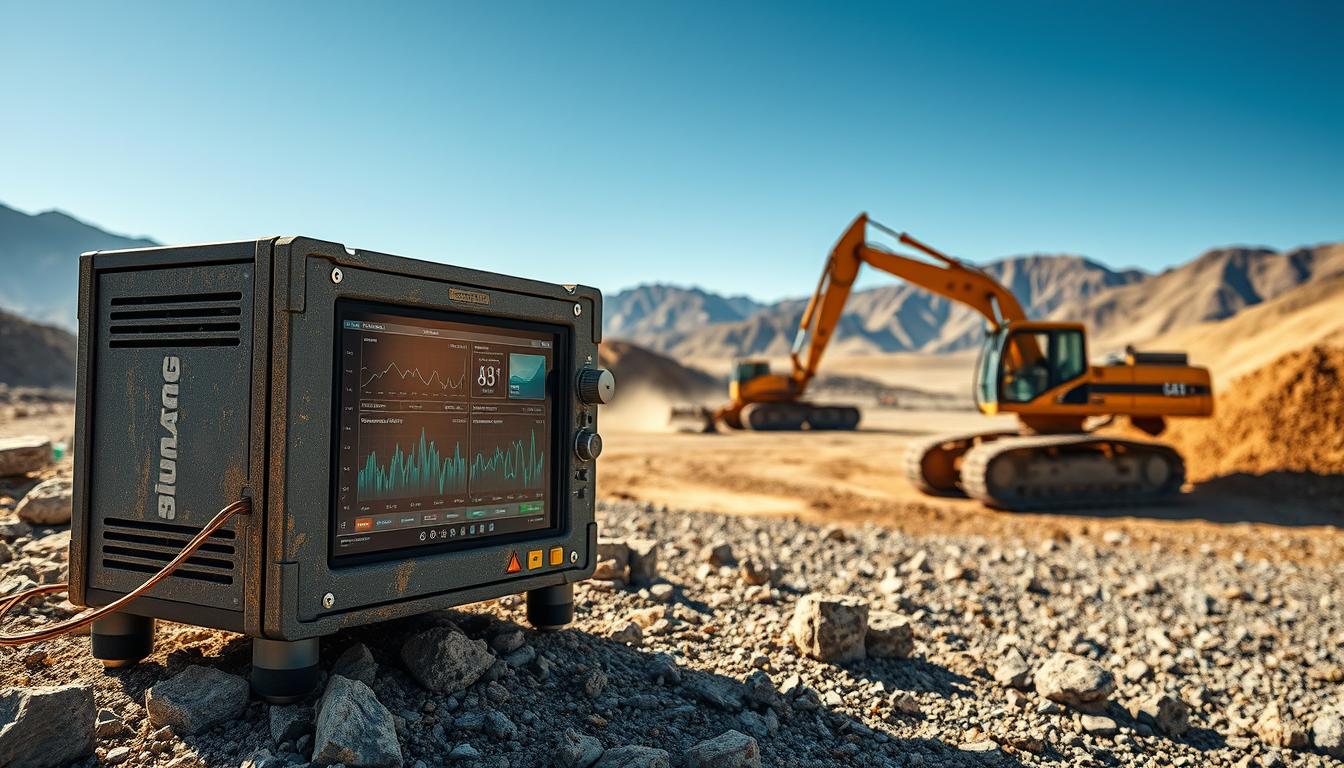
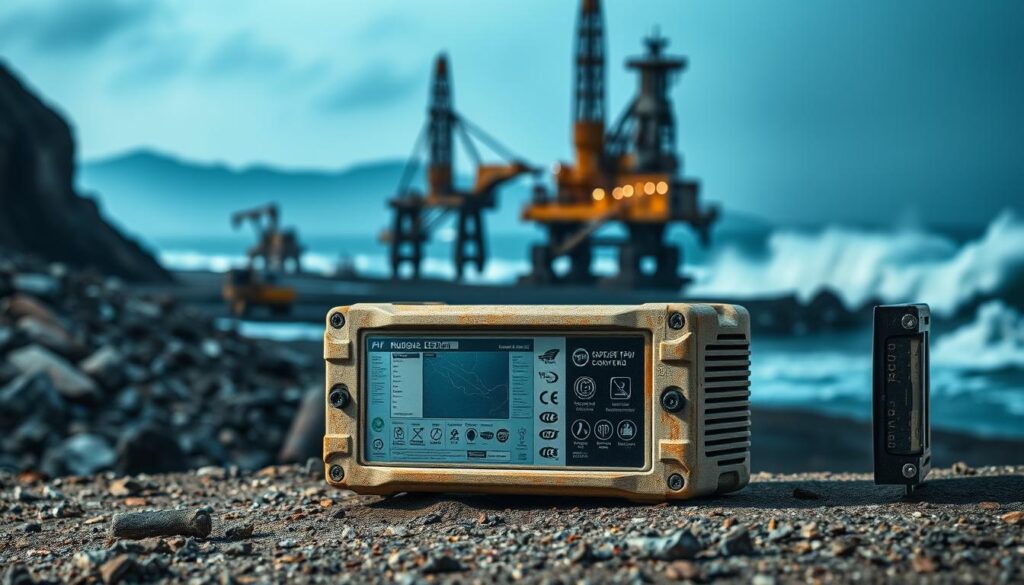
Forget what you think about server rooms. They’re not just places with comfy carpets and coffee. Imagine an offshore oil rig where salt spray damages metal and failure is a disaster.
Rugged edge computing is for the real pros. It’s not just about putting hardware in a tough case. It’s about making tech that can handle extreme conditions.
These systems handle huge data loads while facing harsh environments. In smart oil fields, they process 1-2 terabytes daily. Missing a deadline by seconds can be deadly.
This isn’t just theory. It’s about tech facing the storm. Check out this analysis of harsh computing environments to see how it works.
Environmental Challenges
Imagine your smartphone trying to survive in conditions that would make Bear Grylls nervous. That’s the daily reality for edge in harsh environments where technology faces nature’s ultimate stress test.
These systems operate where connectivity is as slow as dial-up internet on its worst day. We’re talking satellite links so slow that sending a day’s data could take nearly two weeks. You could literally watch the entire Lord of the Rings trilogy extended edition while waiting for a single dataset to upload.
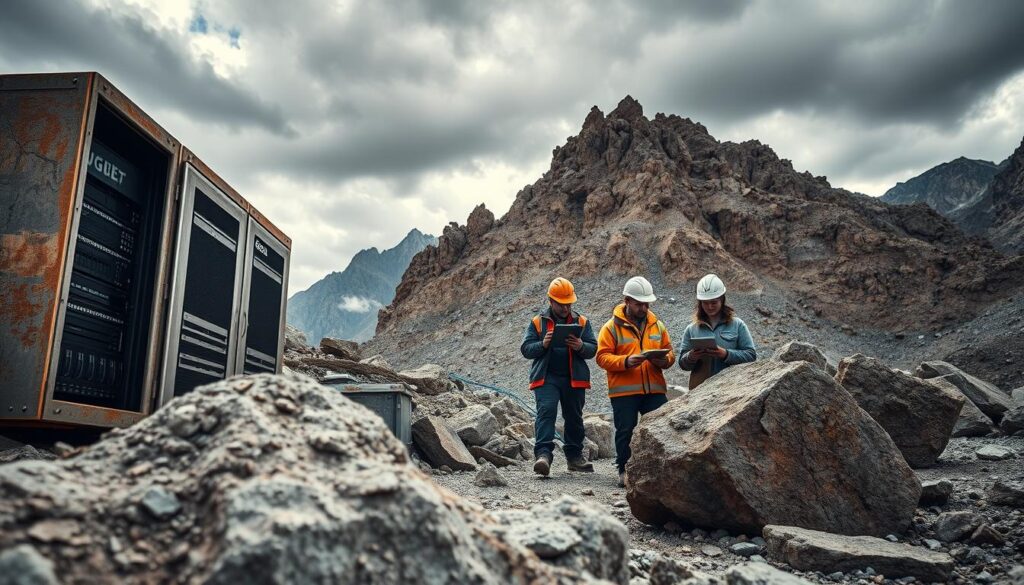
- Saltwater corrosion that devours components like a hungry Pac-Man
- Temperature swings that would make a meteorologist’s head spin
- Extreme pressure that crushes conventional electronics
- Toxic gas monitoring requiring detection within 5 seconds
Nearly half of oil and gas professionals cite data management as their biggest headache. Why? Because when you’re monitoring remote offshore locations, cloud computing becomes about as useful as a solar-powered flashlight during a polar night.
This isn’t just about convenience – it’s about survival. Real-time processing isn’t a luxury when detecting hydrogen sulfide leaks. Waiting for cloud processing could mean the difference between safety and catastrophe.
The brutal truth? These environments demand specialized rugged edge computing solutions that can handle nature’s worst while delivering critical data processing on-site.
Forget “rough conditions.” We’re talking about environments where standard electronics would last about as long as an ice cube in the desert. The edge in harsh environments isn’t just surviving – it’s thriving where others would simply perish.
Mining/Oil/Gas/Marine Examples
Ever wonder what makes sci-fi different from real-world work? Let’s explore the toughest workplaces where tough edge server systems are like digital special forces. These aren’t your typical office servers that enjoy cool air.
In mines, these systems work deep underground where sunlight is rare. They check ore quality and equipment health in extreme conditions. Most electronics would melt down fast in such places.
Oil and gas fields face even more extreme challenges. Imagine offshore platforms where tough edge server units manage pressure while waves crash and salt spray coats everything. They prevent environmental disasters without getting much credit.
Smart oil fields use many sensors to monitor gas density and pipeline temperature. These systems work locally when satellite connections fail. This happens more often than you think in the ocean.
Marine applications push the limits even further. Underwater monitoring systems face less connectivity than a teenager’s phone in West Texas. They collect vital data while fighting extreme pressure that would crush normal equipment.
Cement production is the ultimate test. EagleBurgmann’s sealing systems work in kilns over 1,000°C – almost as hot as lava. These conditions make normal server failures seem like small issues.
| Industry | Challenge | Edge Solution | Outcome |
|---|---|---|---|
| Mining | Underground connectivity loss | Local data processing | Real-time equipment monitoring |
| Oil & Gas | Corrosive salt environment | Sealed server enclosures | Continuous pressure management |
| Marine | Extreme pressure depth | Pressure-resistant hardware | Underwater data collection |
| Cement Production | 1000°C+ temperatures | Heat-shielded systems | Process optimization |
These examples show that when failure isn’t an option, tough edge server technology is key. They’re not just computers – they’re digital survivalists.
Compliance & Durability
Welcome to the world of rugged edge computing. Here, paperwork and survival go hand in hand. Compliance is key to success, not just a hassle.
It’s like a tough test of strength. Only the toughest systems make it through harsh conditions. These conditions are so tough, they’d break down regular electronics.
In the oil and gas sector, there’s a big challenge. Companies need to cut down on carbon emissions while keeping production up. Rugged edge computing helps by processing data locally, saving energy.
But there’s more to it than just the environment. The real challenge is:
- Safety systems that meet strict standards for dangerous places
- Durability that ensures equipment works even in extreme conditions
- Reliability when help is far away
This isn’t your usual tech support situation. There are no quick fixes when failure could be disastrous. The rugged hardware must perform flawlessly in harsh conditions.
Standards for hazardous environments are like a survival guide for electronics. They cover everything from temperature to explosion-proofing. Meeting these standards is a must for working in remote or dangerous areas.
Modern rugged edge systems turn compliance into a plus. They offer real-time monitoring that meets regulations and boosts safety and efficiency. It’s like having a team of experts in one tough package.
In conclusion, durability and compliance are not just rules. They are the base of successful edge operations. They show who’s serious in industries where failure is not an option.
Lessons Learned
Throwing computers into fire teaches us harsh truths. Cloud-only systems fail in tough environments. Edge computing shows big wins in real-time tasks that cloud systems can’t handle.
Integration is key in these projects. We’re combining new tech with old systems that have lasted decades. Leaders in oil and gas now focus on tech that connects IT and OT, making things work in real life.
Durability is essential, not just a feature. The extreme conditions at the edge teach us about resilience. If servers can survive harsh environments, they can handle your office’s AC failure.
After fifteen years at the edge, we’ve learned a lot. Standardization, simplicity, and remote monitoring are crucial. They help infrastructure work 24/7, even when help is far away.



