Data center energy use has moved from a facility-management issue to a policy test for electricity systems, water planning, emissions accounting and AI infrastructure buildout. The shift is not only about higher server counts. It is also about concentrated load growth, local grid constraints, cooling demand and the difficulty of matching 24-hour compute operations with clean power claims.
The available evidence points to rapid growth, but it also shows uncertainty. The Associated Press reported that global data centers consumed about 448 terawatt-hours of electricity in 2025, more than all but ten countries, and that the footprint is projected to double by 2029 as AI use expands AP data center analysis. Those figures are large enough to affect policy design, but they should not be read as a single uniform trend. A training cluster, a cloud region, a colocation hall and a telecom edge site can have very different power profiles.
Why Data Center Energy Is Now A Policy Constraint
Data Center Energy Forecasts Carry Wide Ranges
The U.S. Department of Energy’s 2025 update estimated that data centers could require 649 TWh of electricity by 2030 and account for about 11.8% of total U.S. electricity use, with a possible range from 9.5% to 15.3% depending on equipment type, utilization and growth assumptions DOE 2025 update. That range matters. It means policy built around a single forecast could overbuild in some regions and underprepare in others.
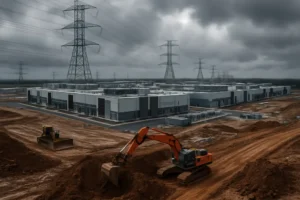
For sustainability policy, data center energy is difficult because demand can arrive in large blocks. A single campus may request power at a scale that local distribution and transmission systems were not designed to absorb quickly. Utilities then face a planning problem: if capacity is built too slowly, interconnection queues lengthen and reliability margins tighten; if capacity is built too aggressively, customers may pay for assets that do not match actual demand.
The AI Load Is Not A Single Technology Problem
AI is a major driver in current planning discussions, but policy should avoid treating all AI facilities alike. High-density accelerator clusters increase rack power, cooling requirements and backup-power design demands. Inference services may be geographically distributed and tied closely to network latency, which links sustainability rules to connectivity planning. Cloud platforms serving enterprise workloads may have steadier utilization patterns than short, intense training runs.
This variation is why reporting rules are becoming more attractive to regulators. Without consistent facility-level data, governments cannot distinguish between efficient growth, inefficient expansion and projects that shift emissions across borders through electricity procurement contracts. Public debate often treats clean energy certificates as a proxy for low-impact computing, yet the more useful question is whether the facility’s load aligns with real grid conditions, hourly generation and local constraints.
What Sustainability Rules Can Measure
Reporting Needs More Than Annual Electricity Totals
Annual electricity consumption is a starting point, not a full sustainability measure. A policy framework that records only yearly megawatt-hours misses when power is used, how the facility is cooled, whether water is consumed in stressed regions and whether waste heat is actually reused. Metrics such as power usage effectiveness, water usage effectiveness, renewable electricity consumption and heat reuse can provide a more technical view of operational impact.
Even these metrics have limits. Power usage effectiveness can improve while total energy consumption rises, because the facility may be larger or more heavily used. Water metrics can look favorable in one climate and problematic in another. Waste heat reuse depends on nearby heat demand and district energy infrastructure, not only on server-room design. Sustainability policy therefore needs both efficiency indicators and absolute resource-use reporting.
- Electricity consumption should be reported with enough time resolution to show peak-load behavior.
- Cooling and water data should distinguish between withdrawal, consumption and local scarcity risk.
- Renewable procurement claims should identify whether matching is annual, regional or closer to hourly operation.
- Waste heat claims should separate theoretical availability from delivered useful heat.
For broader coverage of technology that intersects with AI hardware and regional connectivity, readers can explore Abacus News. It offers insights into how compute demand is increasingly tied to semiconductor supply, network placement, and power availability.
Grid, Water, And Emissions Tradeoffs
Efficiency Does Not Automatically Cut Emissions
Efficiency standards can reduce waste, but they do not guarantee lower emissions if total demand rises faster than efficiency gains. A facility with modern cooling and high server utilization can still increase fossil generation if it comes online in a constrained grid region without enough low-carbon supply. The policy implication is clear: efficiency rules, clean energy procurement, transmission planning and demand flexibility need to be assessed together.
There is also a timing issue. Grid infrastructure often takes longer to permit and build than modular data center capacity. If sustainability policy focuses only on corporate energy targets, it may miss the physical sequence of interconnection studies, substation upgrades, transformer procurement, transmission work and backup-generation permitting. These are not abstract administrative details. They determine whether a project draws from available clean supply, delays other customers or increases reliance on local fossil generation during peak periods.
Water Policy Is Becoming Part Of Compute Policy
Water use is more visible as AI facilities adopt higher-density hardware. Some cooling designs reduce direct water consumption but increase electricity demand; others reduce power needs but depend more on evaporative cooling. Which option is preferable depends on the local grid mix, climate, water stress and facility operating profile.
This is where sustainability policy needs regional specificity. A standard that works in a cool, water-abundant area may be a poor fit for a hot, water-stressed region. Regulators may need to evaluate data center siting through both energy and water lenses, especially when a single campus concentrates load and cooling demand. A useful policy test is whether the reporting framework can expose tradeoffs rather than allowing one favorable metric to obscure another.
The same logic applies to emissions. A facility can claim renewable procurement while still affecting grid operations if its demand is not temporally aligned with clean generation. That does not make procurement meaningless, but it does mean annual matching is a limited indicator. For deeper policy analysis on this issue, see this related discussion of clean energy policies for data center emissions.
Data Center Energy And Sustainability Policy
Where Data Center Energy Policy Can Be Practical
The practical path is not a blanket restriction on digital infrastructure. Data centers support cloud computing, telecom networks, AI services, financial systems, research workloads and public-sector operations. Policy that ignores those functions risks shifting demand elsewhere without reducing resource use. The better approach is to set clearer conditions for growth: transparent reporting, grid-aware interconnection, credible clean power accounting, water-risk disclosure and enforceable efficiency expectations.
Some jurisdictions have already used moratoriums or restrictions where grid or land-use pressure is acute, while others have favored incentives and reporting mandates. The evidence does not support a single universal model. Dense markets with strained grids may need stricter sequencing of new load. Regions with available clean generation and transmission headroom may focus on performance standards and demand flexibility. In both cases, policymakers need data that is comparable across facilities and hard to reinterpret through marketing language.
Data center energy policy should also account for maintenance and operational reliability. Backup systems, batteries, switchgear, cooling loops and power-distribution equipment all have lifecycle impacts. A facility that looks efficient at commissioning can perform differently after hardware refreshes, higher utilization or deferred maintenance. Periodic reporting and verification are therefore more useful than one-time design claims.
The main implication for sustainability policy is that data centers are becoming power-system actors, not just electricity customers. Their growth affects generation planning, transmission needs, water systems and local emissions profiles. Evidence-based rules should reward measurable efficiency and cleaner operation while staying cautious about forecasts, marketing claims and technology assumptions that may not hold across regions or workloads.