Executive Order 14421 made Bulk-Power Security a declared national emergency issue rather than only a procurement concern. President Donald J. Trump signed the order on August 26, 2026, and it was published in the Federal Register on August 31, 2026, as 91 FR 55995, according to the Federal Register document. The order is narrow in one respect and broad in another: it focuses on bulk-power system equipment, but it covers many categories of electrical and control assets that sit deep inside grid operations.
The order should not be read as a blanket ban on every foreign-produced device. Its effect depends on determinations by the Secretary of Energy, the equipment’s connection to a Covered Foreign Entity, and whether the risk is judged undue or unacceptable. That conditional structure matters for utilities, generators, equipment vendors, data center power planners, and public agencies that depend on high-voltage reliability.
Why Bulk-Power Security Became An Emergency
The Bulk-Power Security Finding
The order relies on the International Emergency Economic Powers Act and the National Emergencies Act. It cites an “unusual and extraordinary foreign threat” linked to foreign-produced bulk-power system electric equipment, including digital backdoors, malicious remote access, cybersecurity risks, and supply chain vulnerabilities. The Department of Energy’s public description states that the order responds to risks affecting the U.S. bulk-power system and its dependence on reliable electricity for advanced manufacturing, data centers, artificial intelligence, and defense production, as described by DOE’s EO 14421 page.
That framing connects grid equipment security with the growth of large electrical loads. Data centers and AI facilities do not operate as isolated computing assets; they rely on transmission, generation, substations, protection systems, inverters, and control networks. A compromise or disruption in those layers can affect availability before a server, storage array, or application stack becomes relevant.
What The Order Covers
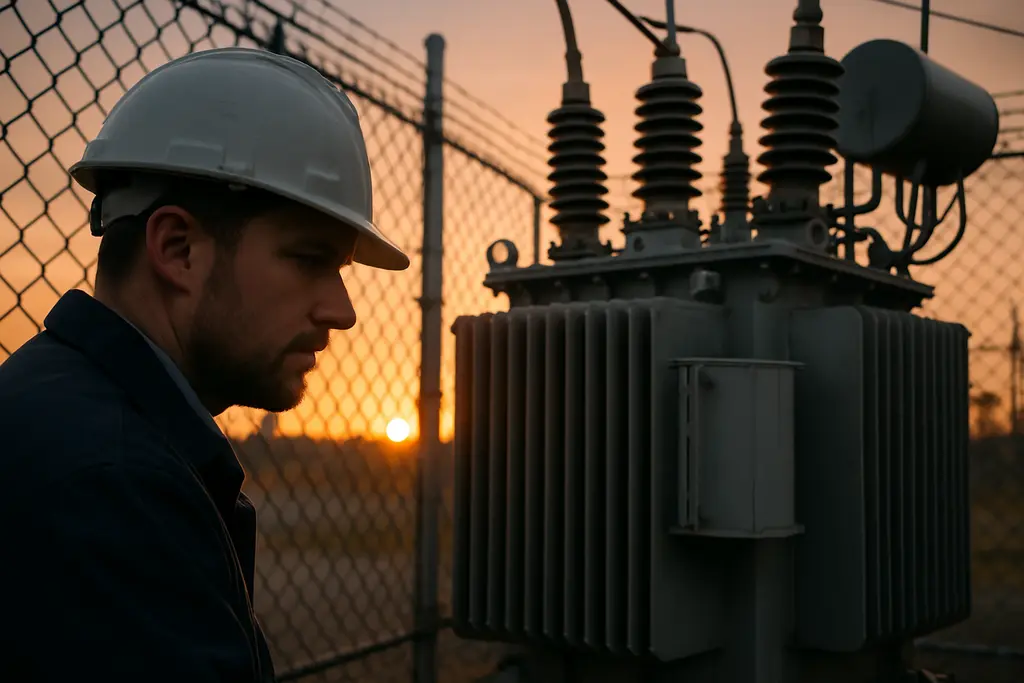
The equipment list is wide. The order covers reactors, capacitors, substation transformers, utility-scale and grid-connected inverters, battery energy storage systems, uninterruptible power supplies, high-voltage circuit breakers, generation turbines, and industrial control systems such as remote terminal units, programmable logic controllers, intelligent electronic devices, protective relaying, metering, voltage regulators, and safety instrumented systems.
The scope is still limited to the bulk-power system. The definition includes facilities and control systems for the interconnected transmission network and generation facilities needed for reliability. It also includes transmission lines rated 69 kilovolts or higher. Local distribution is excluded. That boundary reduces the order’s reach, but it does not make implementation simple because many utilities operate assets and control systems across transmission, generation, and adjacent operational environments.
What Changed For Equipment Transactions
New Transactions After August 26, 2026
For new transactions initiated after August 26, 2026, the order prohibits acquisitions, importations, transfers, and installations of covered foreign-produced bulk-power system electric equipment if the Secretary of Energy determines that the item is linked to a Covered Foreign Entity and poses an undue or unacceptable national-security risk. This is a risk-triggered restriction, not a simple country label applied without review.
For Bulk-Power Security teams, that means procurement reviews need to connect technical asset data with supplier ownership, country-of-origin information, firmware and software update paths, remote support arrangements, and maintenance dependencies. A purchase order alone will not answer those questions. The operational risk sits in the combination of hardware, embedded software, remote administration, support contracts, and replacement feasibility.
Installed Equipment Is Treated Differently
The order treats equipment installed before August 26, 2026, differently from new transactions. DOE may impose conditions on continued use, operation, maintenance, servicing, or updating. It may also require inventory, isolation, monitoring, securing, disconnection, replacement, or removal. Those are significant powers, but the order directs DOE to consider reliability, safety, the availability of secure replacements, and continuity of essential service.
This qualification is technically important. Removing a transformer, inverter, relay system, or control component can create reliability risk if a validated replacement is unavailable. In some cases, isolation and monitoring may be a more realistic interim control than rapid removal. The order leaves room for that kind of engineering judgment, although the details depend on DOE implementation.
Procurement, Operations, And Evidence Gaps
Deadlines Matter More Than Headlines
As of October 20, 2026, the main implementation deadlines were still ahead. DOE is required to issue rules or regulations as needed within 120 days of August 26, 2026, which points to December 24, 2026. DOE must submit recommended revisions to the Federal Acquisition Regulation within 180 days, which points to February 22, 2027. The FAR Council then has 90 days to consider those revisions, placing that review around May 23, 2027.
Those dates are more useful than broad claims about the order’s impact. Until implementing rules are issued, affected organizations can identify exposure, but many compliance details remain unsettled. For related control-planning context, the same-site analysis of EO 14421 control planning addresses how installed-equipment reviews can be structured without assuming facts that the rulemaking has not yet provided.
Asset Records Are A Control, Not Paperwork
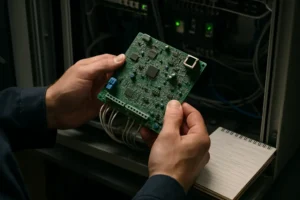
EO 14421 makes asset knowledge a security dependency. A utility or generator cannot evaluate covered equipment if it lacks accurate records for model, location, supplier, firmware, update channel, remote access method, maintenance provider, and grid function. That is not a clerical issue; it affects whether a risk determination can be translated into an operational response.
Record discipline has value well outside power systems. As a network within the same educational sector, the related site stampsinclass.com highlights the importance of classification and context for usable records, reflecting the same principle that underpins effective bulk-power operations.
Security Controls Operators Can Prepare Now

Operators do not need to wait for every rule detail before improving the evidence base for compliance. The safest near-term work is defensive and administrative: understand what is installed, where it is installed, who can service it, how updates are delivered, and what operational function it supports. These steps do not require assuming that any specific device is unsafe.
- Build or validate inventories for covered equipment categories, including transformers, inverters, BESS, UPS equipment, relays, metering, turbines, and industrial control systems.
- Map remote support paths and update mechanisms for operational technology assets, with special attention to vendor-managed access.
- Classify assets by grid function, voltage level, reliability impact, and replacement constraints.
- Prepare isolation and monitoring options for assets that cannot be removed quickly without affecting essential service.
- Align procurement files with supplier, origin, maintenance, and software-support evidence so future DOE or FAR requirements can be addressed with fewer manual searches.
These steps are not proof of compliance with final rules. They are practical preparations that reduce uncertainty. Bulk-Power Security work is most credible when it distinguishes between verified facts, plausible risk, and unsupported assumptions.
What EO 14421 Does Not Resolve
The order does not remove the engineering limits that make grid replacement projects difficult. It does not state that every foreign-produced asset is unsafe. It does not apply to local distribution. It does not, by itself, create immediate domestic supply for every covered product. It also does not replace the need for safe maintenance windows, spare-part validation, protection coordination, and operational testing.
The installed-equipment provisions show that reliability remains a constraint. DOE may require removal or replacement, but the order also requires consideration of safety, continuity of essential service, and availability of secure replacements. That language acknowledges a practical reality: security directives in power systems must be reconciled with physics, outage planning, and equipment lead times.
For data center operators and large industrial power users, the indirect effect may be procurement scrutiny rather than direct regulatory control over every facility asset. If a site depends on transmission-level interconnection, substations, utility-scale storage, or grid-connected inverter resources, the upstream equipment review can affect project timing, maintenance strategy, and risk allocation in power contracts.
Executive Order 14421 Security Implications
Executive Order 14421 shifts Bulk-Power Security toward a more formal national-security review of equipment origin, supplier control, and operational exposure. Its most immediate value is not that it answers every technical question. Its value is that it creates a mechanism for DOE to review covered equipment, restrict risky future transactions, and impose conditions on installed assets while accounting for reliability and essential service.
The cautious reading is the strongest one. The order is a serious security signal, but its practical effects depend on DOE rules due by December 24, 2026, FAR-related recommendations due by February 22, 2027, and later procurement implementation. Until then, the best response is evidence-building: asset inventories, supplier documentation, remote-access review, replacement feasibility analysis, and operational plans that can support decisions without weakening the grid they are meant to protect.