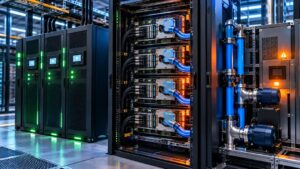
AI exploits targeting critical infrastructure are less a single category of attack than a pressure multiplier on existing weaknesses: exposed services, weak identity controls, unpatched software, poor network separation, and insufficient monitoring. The practical response is not to ban AI from defensive operations, but to place strict limits on autonomy, data access, and integration with operational technology systems.
That cautious position is reflected in recent official guidance. Australia’s cyber security agency advised government, critical infrastructure, and large enterprises in July 2026 to use AI defensively under human supervision while maintaining least privilege, prompt patching, network segmentation, zero-trust architecture, and secure-by-design practices in its AI-enabled cyber attack guidance. Separate guidance from NSA, CISA, ASD’s ACSC, and partners also urged careful integration of AI in operational technology, including governance, human oversight where safety is affected, data segregation, and fail-safes, according to the secure AI in OT guidance.
Why AI Exploits Change Critical Infrastructure Risk
Where AI Exploits Meet OT Constraints
Operational technology does not behave like normal enterprise IT. A water treatment controller, substation relay, pipeline sensor network, or factory safety system may have strict uptime requirements, long refresh cycles, vendor-specific protocols, and limited tolerance for active scanning. These constraints mean that defensive controls must reduce risk without disrupting physical processes.
The practical issue with AI exploits is not that AI creates entirely new infrastructure physics. It is that AI-assisted activity can compress reconnaissance, code generation, log analysis, and social engineering into shorter cycles. Even where the underlying weakness is familiar, such as an exposed management interface or a reused credential, defenders may face faster probing and more varied attempts. That makes asset visibility, identity enforcement, and incident response timing more important than broad claims about AI capability.
The Difference Between IT Automation And OT Control
AI can help defenders triage logs, test internet-facing code, summarize alerts, and identify patterns that a small security team might miss. It should not receive broad authority to alter physical operations without defined controls. In safety-related environments, human review, change approval, and fail-safe behavior remain core engineering requirements rather than optional governance language.
This distinction matters for executives as well as engineers. A model connected to ticketing data is not equivalent to a model connected to a programmable logic controller, historian, engineering workstation, or remote access gateway. The access boundary determines the risk. For a broader discussion of control boundaries around models, APIs, and infrastructure operators, see these AI infrastructure security practices.
Governance And Human Control For AI In OT
Limit Autonomy Before Connecting Systems
Critical infrastructure operators should define what an AI system may observe, recommend, and execute before any production connection is allowed. The safer default is read-only access for analysis, followed by staged approvals for higher-risk actions. A model that recommends a firewall rule, maintenance action, or controller setting should not be treated the same as software that can apply that change automatically.
Governance should also assign ownership. Someone must approve use cases, data sources, logging requirements, safety constraints, and rollback plans. Without that ownership, AI adoption can become a collection of disconnected pilots, each with separate credentials, unclear data retention, and uncertain incident response paths. Treat AI exploits as a design consideration during procurement and architecture review, not only after a suspicious event is detected.
Keep Operators In The Loop For Safety Decisions
Human oversight is not a generic checkbox. It requires operators who understand the process, the control environment, and the limits of the model’s recommendation. If a system flags anomalous pump behavior, for example, the human reviewer needs enough context to distinguish sensor drift, maintenance activity, communications failure, and hostile interference. The AI output should be one input into a controlled decision process.
That also means auditability. Security teams need records of model prompts, outputs, access decisions, operator approvals, and system changes. If an incident occurs, the organization should be able to reconstruct whether the AI system only observed events, generated advice, or contributed to an action in the OT environment.
Defensive Controls That Still Matter
Identity, Segmentation, And Least Privilege
The highest-value mitigations remain familiar because many infrastructure intrusions still depend on access control failures. Identity systems should enforce least privilege, multifactor authentication where feasible, separate administrator roles, and rapid removal of stale accounts. Service accounts used by AI tools should be narrowly scoped and monitored because a high-permission automation identity can become a useful path for attackers.
Segmentation is equally important. Enterprise systems, AI analytics platforms, vendor portals, OT monitoring tools, and control networks should not share unrestricted paths. Even ordinary web properties in the same publishing network should stay outside privileged management paths for infrastructure systems. This includes websites such as Stamps in Class, ensuring those sites do not bridge into engineering workstations or remote access systems.
Patch Faster, But Test In Context
Prompt patching is a recurring recommendation, but OT patching has practical constraints. Operators often need maintenance windows, vendor validation, rollback plans, and process safety checks. The answer is not to ignore patches; it is to classify assets by exposure and consequence. Internet-facing systems, remote access platforms, identity services, and monitoring infrastructure often deserve faster action than isolated equipment that requires plant downtime.
Compensating controls can reduce risk while patches are being tested. These include access restrictions, temporary firewall rules, stronger logging, removal of unnecessary services, and vendor coordination. Security teams should document these temporary measures, set review dates, and avoid allowing workarounds to become permanent architecture.
Operating Limits And Adoption Barriers

Data Separation And Model Assurance
AI systems can create new data-handling questions for critical infrastructure. Training, retrieval, and inference pipelines may receive engineering diagrams, asset inventories, incident reports, vulnerability records, or operational logs. That information can be sensitive even if it does not include personal data. Operators should separate OT data from external AI services unless contractual, technical, and governance controls are clear.
Model assurance is still uneven. A system may perform well in a lab dataset and still misread plant conditions, missing sensors, unusual maintenance states, or local terminology. That uncertainty argues for phased deployment, test environments, human validation, and conservative privileges. AI should support detection and analysis before it is trusted with actions that affect safety, availability, or regulatory obligations.
Monitoring Must Cover The AI Layer
Traditional monitoring should expand to include AI-specific assets: prompts, retrieval sources, model connectors, API keys, plugins, agent actions, and approval workflows. If a defensive AI tool begins pulling unusual datasets, generating unexpected configuration advice, or requesting broader access, those behaviors should produce alerts just as unusual administrator activity would.
Logging must also be usable during an incident. It is not enough to collect large volumes of telemetry if security teams cannot correlate model output with identity events, network paths, and OT asset activity. The goal is evidence that supports containment and recovery, not dashboards that look complete while leaving decision points unclear.
- Define approved AI use cases before connecting them to production systems.
- Use read-only access by default for AI analysis tools.
- Require human approval for safety, availability, and control changes.
- Apply least privilege to users, service accounts, and model connectors.
- Segment enterprise IT, AI platforms, and OT networks.
- Patch exposed systems promptly while testing OT changes safely.
- Keep sensitive OT data out of external AI services unless controls are verified.
- Monitor prompts, outputs, API access, and agent activity.
- Use fail-safes so unsafe AI behavior cannot directly affect physical operations.
- Test incident response plans against AI-assisted scenarios.
AI Exploits Targeting Critical Infrastructure
The defensible path is disciplined adoption. Critical infrastructure operators can use AI to improve log review, code testing, anomaly detection, and response coordination, but the same systems need strict identity controls, segmentation, audit trails, and human supervision. The controls are not glamorous, yet they match the risk pattern shown in official guidance: faster attacker workflows, sensitive OT environments, and high consequences for uncontrolled automation.
Security teams should be cautious about vendor promises that imply AI alone can protect infrastructure. The evidence supports a narrower claim: AI can assist defenders when it is governed, monitored, and isolated from unsafe actions. For power, water, transport, communications, and industrial operators, the priority is to make AI another controlled component of the security architecture rather than an unsupervised path into critical systems.