
I’ve followed cybersecurity trends for years, but nothing has shifted the landscape quite like what we’re seeing now with AI cyberattacks 2026. The conversation is no longer just about defending against hackers it’s about understanding how artificial intelligence has fundamentally changed the nature of cybercrime.
What stands out to me most is the speed. Attacks that once took weeks of planning can now be executed in hours or even minutes. AI doesn’t just assist attackers; it amplifies their capabilities, turning small-scale threats into large, coordinated operations.
This isn’t an incremental evolution. It’s a complete transformation of how cyberattacks are created, deployed, and refined.
Automation: The Engine Behind Modern Attacks
One of the defining features of AI cyberattacks 2026 is automation. In the past, launching a sophisticated attack required a deep understanding of coding, systems, and vulnerabilities. Today, AI tools can handle much of that complexity.
From what I’ve observed, attackers are now able to:
- Generate malicious scripts automatically
- Scan systems for weaknesses in real time
- Adapt strategies based on immediate feedback
The most concerning part is how quickly these systems learn. AI doesn’t just execute it analyzes outcomes and improves continuously. If an attack fails, the system can adjust and try again with refined tactics.
This creates a cycle where attacks become more efficient with every attempt, making traditional defenses increasingly difficult to maintain.
Lowering the Barrier to Entry
Perhaps the most disruptive aspect of AI cyberattacks 2026 is how they’ve lowered the barrier to entry. You no longer need to be an expert to launch a high-level attack.
I’ve seen reports indicating that individuals with minimal technical knowledge can now use AI-driven platforms to:
- Craft convincing phishing emails
- Deploy malware with minimal customization
- Execute social engineering campaigns at scale
This democratization of cybercrime is what makes the current moment so critical. It’s not just that attacks are more advanced it’s that more people are capable of carrying them out.
In practical terms, this means the threat landscape is expanding rapidly, with a larger pool of potential attackers than ever before.
The Rise of AI-Generated Phishing and Scams
Phishing has always been a major concern, but with AI, it has reached a new level of sophistication. The phishing attempts I’ve seen recently are nearly indistinguishable from legitimate communication.
AI can now:
- Mimic writing styles and tone
- Personalize messages using publicly available data
- Generate realistic voice and video deepfakes
What makes this particularly dangerous is the scale. Attackers can send thousands or even millions of highly convincing messages simultaneously.
This is where AI cyberattacks 2026 become especially alarming. It’s not just about quality or quantity—it’s about both at the same time.
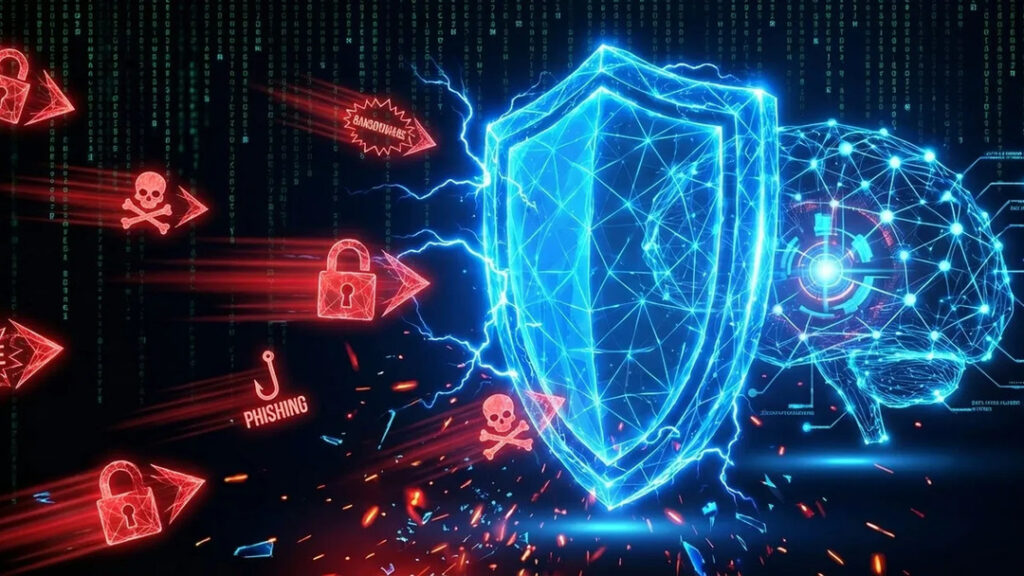
Malware That Evolves in Real Time
Another trend I find both fascinating and concerning is the emergence of adaptive malware. Traditional malware follows a fixed set of instructions, but AI-driven malware can evolve.
These systems are capable of:
- Changing their behavior to avoid detection
- Learning from security responses
- Modifying code dynamically
From my perspective, this represents a significant shift. Security tools are often designed to detect known patterns, but AI-powered threats can rewrite those patterns on the fly.
It’s a constant game of cat and mouse except now, the mouse is learning just as quickly as the cat.
The Scale Problem: Cybercrime Without Limits
One of the biggest takeaways from observing AI cyberattacks 2026 is the issue of scale. AI allows attackers to operate at a level that was previously impossible.
Instead of targeting a single organization, attackers can now:
- Launch simultaneous attacks across multiple industries
- Automate entire campaigns from start to finish
- Maintain operations with minimal human oversight
This scalability changes the economics of cybercrime. Attacks become cheaper to execute and potentially more profitable, creating strong incentives for continued growth.
In other words, AI doesn’t just make attacks better it makes them more sustainable as a business model.

The Defensive Side: A Race Against Time
It’s important to note that AI is not only used by attackers. Security professionals are also leveraging AI to detect and respond to threats more effectively.
However, from what I’ve seen, the balance is still shifting. Attackers often have the advantage of being proactive, while defenders are forced to react.
Organizations like the National Institute of Standards and Technology are actively working on frameworks and guidelines to address emerging risks.
These efforts are crucial, but they also highlight the complexity of the challenge. Defending against AI-driven threats requires not just better tools, but new strategies and mindsets.
What This Means for the Future
As I reflect on the current state of AI cyberattacks 2026, one thing becomes clear: we are entering a period where cybersecurity will be defined by adaptability.
Static defenses will no longer be enough. Systems must be capable of:
- Learning in real time
- Anticipating threats before they occur
- Responding dynamically to evolving attacks
This shift will likely lead to increased investment in AI-driven security solutions, as well as stricter regulations and standards.
But even with these advancements, the fundamental challenge remains: keeping pace with a rapidly evolving threat landscape.
A New Reality for Cybersecurity
What we’re witnessing with AI cyberattacks 2026 is not just a technological development it’s a turning point. Cybercrime is no longer limited by skill, resources, or time. It has become faster, smarter, and more accessible than ever before.
From my perspective, the most important takeaway is this: the rules have changed. Organizations and individuals alike must rethink how they approach security in a world where AI is both a tool and a threat.
The future of cybersecurity will not be defined by who has the strongest defenses, but by who can adapt the fastest.
And in this new era, adaptability isn’t just an advantage it’s a necessity.