


Remember that scene in Minority Report where Tom Cruise stops crimes before they happen? That’s what we’re doing with predictive maintenance. But instead of precogs, we use IoT sensors and machine learning.
Preventive maintenance follows a set schedule, like a clock. But predictive maintenance uses real-time data. It knows how equipment is doing right now.
Edge computing makes this possible by processing data locally. This means no waiting for the cloud. We get instant insights.
The change is huge. Facilities move from just fixing problems to being proactive. They work with precision.
Welcome to the future of taking care of industrial equipment. We don’t just fix things. We stop problems before they start.
Real-Time Failure Detection
Imagine your industrial equipment wearing a smartwatch that whispers health warnings before catastrophic breakdowns. That’s what real-time failure detection does in modern manufacturing. It’s like having a medical team constantly monitoring vital signs, but for machinery instead of patients.
Sensors work together to detect issues. Vibration analysis spots small changes in equipment motion. Temperature monitoring catches thermal anomalies before they become meltdowns. Acoustic sensors listen for irregularities.
Here’s what makes this approach revolutionary:
- Predictive intelligence: Systems learn normal operating patterns
- Subtle anomaly detection: Catches deviations long before red-line violations
- Proactive maintenance windows: Schedules repairs during planned downtime
- Continuous monitoring: 24/7 surveillance without human fatigue
BMW’s production lines are a great example. Thousands of robots work with sensors analyzing their performance. The system detected bearing wear in assembly robots weeks before failure. This gave maintenance teams time to schedule repairs without disrupting production.
Wind turbine operations also benefit greatly. AI algorithms predict component failures months in advance. This prevents costly downtime and eliminates the need for emergency repairs in challenging environments.
The beauty of smart plant maintenance is its preventative nature. It’s not about fixing broken equipment – it’s about preventing breakdowns. The technology gives machinery a voice to say “I’m feeling off today” before it screams “I’m breaking down right now!”
This approach transforms maintenance from reactive firefighting to strategic planning. Instead of scrambling during emergencies, teams can schedule interventions during natural production pauses. It’s like the industrial version of smart watches that detect atrial fibrillation before patients feel symptoms.
The data shows companies implementing these systems have less unplanned downtime. Maintenance costs drop while equipment lifespan increases. It’s a win-win scenario that makes operations managers smile.
Real-time monitoring represents the future of industrial maintenance. It’s not just about preventing failures – it’s about optimizing performance across entire production ecosystems. The technology continues evolving, but the core principle remains: listen to your equipment before it has to scream for attention.
Implementation Stories
The best proof of edge predictive maintenance comes from real places like barns and wind farms. It’s amazing stuff that even the toughest engineers can’t ignore.
Dairy farms are now using special sensors to check how cows digest food. It’s like a Fitbit for cows that helps find health issues early. This is real, happening in American farms today.
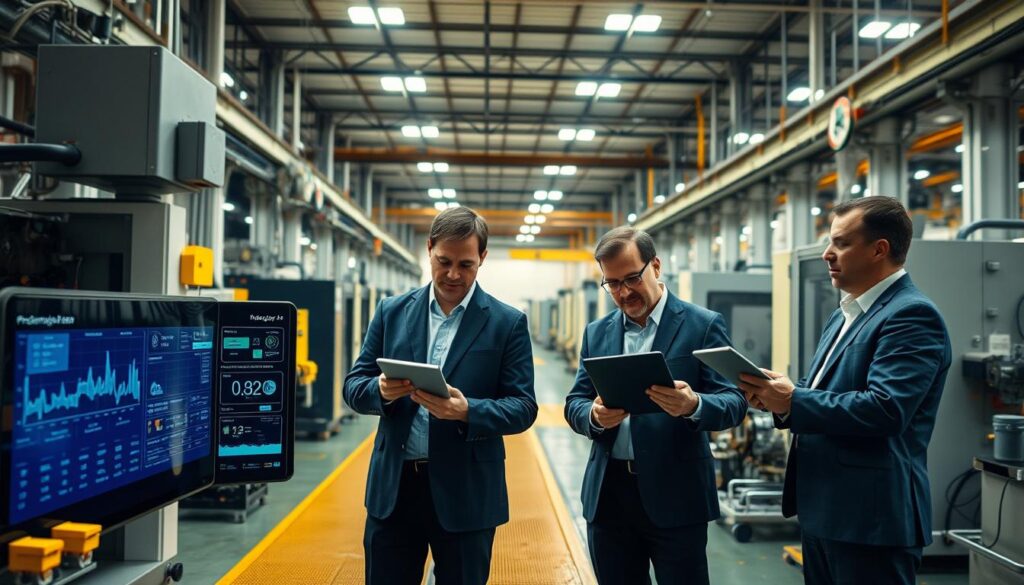
Siemens’ wind turbines are another example. They fix over 85% of problems remotely thanks to AI and ML. It’s like they can predict issues before they happen.
The numbers show how effective it is:
- Manufacturers see 70-85% less unplanned downtime
- Maintenance costs drop by 25-40% each year
- ROI shows up in 12-18 months
Oil pipeline monitoring is another area where advanced sensors play a key role. They catch tiny changes in pressure and flow. This stops big problems before they start.
The key to success? Starting small with pilot programs on key equipment. They didn’t try to do everything at once. They focused on the biggest problems first.
These stories are like an industrial revolution come true. They show how real companies are changing by fixing unexpected downtime issues.
What do all these success stories have in common? They all used edge predictive maintenance technology wisely. They didn’t just buy software; they changed their maintenance approach completely.
Cost-Saving Stats
Let’s look at the numbers – the kind that make CFOs do a double-take and maintenance managers smile. The financial benefits of smart plant maintenance are amazing.
Imagine cutting unplanned downtime by 70-85%. That’s not just saving hours – it’s saving whole production cycles. The average facility has 800+ hours of unexpected stoppages yearly. Each stoppage can cost between $50,000-$500,000. Do the math.
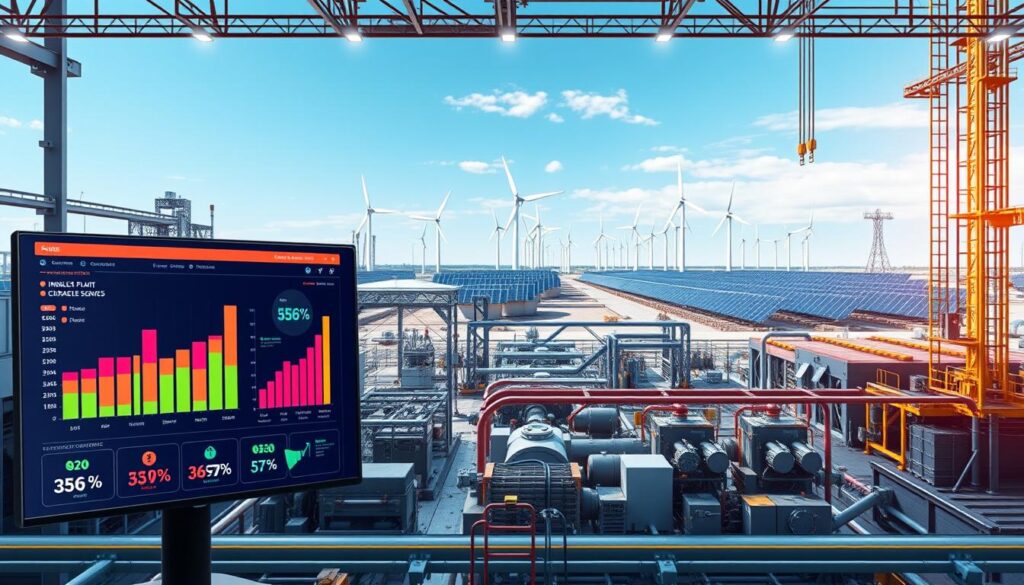
The maintenance cost reductions are impressive too. We’re talking 25-40% savings annually. For mid-sized operations, that’s $200,000-$800,000 back in the budget. Suddenly, those “nice-to-have” upgrades become “why-haven’t-we-done-this-yet” essentials.
Now for the pièce de résistance: ROI. These systems deliver 300-500% returns within 24 months. High-downtime environments often see payback in under 8 months. It’s like finding money in your old jeans – except it’s six figures and keeps multiplying.
| Metric | Traditional Maintenance | Smart Plant Maintenance | Improvement |
|---|---|---|---|
| Unplanned Downtime | 800+ hours/year | 120-240 hours/year | 70-85% reduction |
| Maintenance Costs | Full budget | 60-75% of budget | 25-40% savings |
| ROI Period | 5+ years | 8-24 months | 300-500% faster |
| Incident Cost | $50K-$500K/event | $7.5K-$75K/event | 85% cost avoidance |
Implementation costs range from $150,000 to $750,000 depending on facility size. But consider this: a single avoided incident often covers the entire investment. Those Monday morning disaster meetings become historical anecdotes rather than recurring nightmares.
The numbers speak for themselves. As we’ve detailed in our predictive maintenance cost analysis, the financial case is so strong it almost feels like cheating. Welcome to the future of industrial operations – where the only thing dropping faster than downtime is your blood pressure during budget reviews.
Future Roadmap
Forget flying cars. The real future is repair drones fixing problems before you smell smoke. Edge predictive maintenance turns factories into self-healing organisms. Systems can now detect issues in milliseconds, not minutes.
By 2030, facilities using these technologies will prevent 95% of failures. Digital twins offer 98% prediction accuracy. It’s not just maintenance; it’s industrial telepathy.
Autonomous systems can save over $500,000 a year per facility. AI handles 90% of routine decisions. Human technicians can focus on optimization, not oil changes. This future roadmap is like science fiction becoming a reality.
Smart plant maintenance goes beyond fixing machines. It prevents defects before production starts. Quantum computing improves prediction accuracy by 10x. 5G connectivity allows for real-time responses across the globe.
Companies using edge predictive maintenance today are not just solving problems. They’re building a competitive edge that will shape manufacturing for years. The maintenance revolution is not coming. It’s already here.


