


Remember when tracking shipments meant waiting for faxed delivery confirmations? Those days are as dead as dial-up internet. Today’s supply chains demand the precision of a chess grandmaster combined with the real-time awareness of Google Maps.
We’re now using IoT technologies like LoRaWAN, Zigbee, and GPS. These tools create a digital nervous system that knows where everything is, everywhere, all at once. It’s not just about location data anymore – it’s about condition monitoring, environmental factors, and predictive intelligence.
The beauty of edge for logistics is processing data where it’s born. No more waiting for cloud servers while your perishable goods approach expiration. This isn’t just technological advancement; it’s supply chain enlightenment.
Systems can now tell you not just where your shipment is, but whether it’s too hot, too cold, or about to become part of someone else’s inventory through theft. The real magic happens when you realize this edge computing capability separates market leaders from also-rans in today’s logistics landscape.
Cold Chain Monitoring
Cold chain monitoring is like having a personal guardian for your temperature-sensitive items. It’s not just about keeping things cool. It’s about keeping them perfect from start to finish. For things like medicines and food, even a small change in temperature can be a big deal.
Today’s logistics tracking IoT systems have changed how we protect these items. We no longer have to guess or worry. Smart sensors now give us real-time updates, making everyone feel more secure.
These sensors are not your average thermometers. They track temperature, humidity, and light. If things start to get too hot or cold, they send alerts right away.
Edge computing is the magic behind these systems. They make decisions on their own, without waiting for the cloud. This means they can act fast if something goes wrong.
Think about the impact of a bad shipment. A single spoiled vaccine can affect many people. Spoiled food can close restaurants. So, cold chain monitoring is key to keeping everyone safe and businesses running smoothly.
| Monitoring Method | Traditional Approach | IoT-Enhanced Solution | Impact on Product Integrity |
|---|---|---|---|
| Temperature Tracking | Manual checks every 4-6 hours | Continuous real-time monitoring | 99.9% reduction in spoilage |
| Alert System | Post-delivery reports | Instant mobile notifications | 85% faster response time |
| Data Analysis | Spreadsheet compilation | Automated analytics dashboard | Full audit trail compliance |
| Corrective Action | Human intervention required | Automated system adjustments | 24/7 protection coverage |
The use of AI and IoT technology has made monitoring more advanced. These systems can predict and prevent problems, keeping everything safe.
For those in logistics, this means moving from fixing problems to preventing them. The cold chain is tough, but with the right tech, it’s no longer a mystery.
Predictive Delivery Analytics
Remember when fortune tellers needed crystal balls? Today, logistics experts use data science. Predictive delivery analytics turns guesses into sure predictions, making plans more precise.
We’ve moved past just fixing problems as they happen. The real magic is in preventing issues before they start. Data on traffic, weather, and port congestion holds the answers.
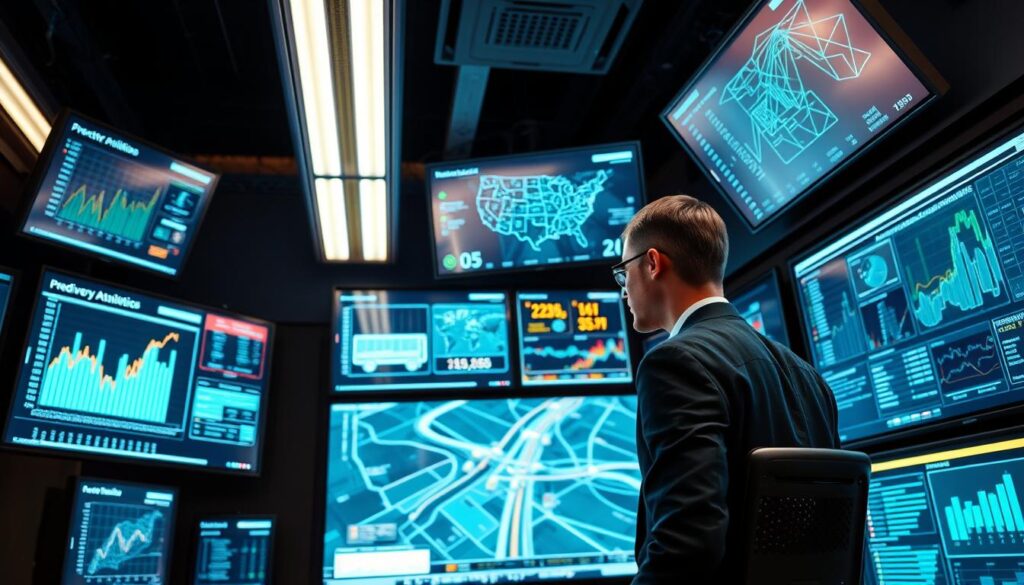
The big change? Edge computing processes data locally, cutting out cloud delays. This fast analysis lets us make decisions on the spot, like a chess master.
Our systems don’t just avoid delays. They also optimize routes in real-time and predict when maintenance is needed. Knowing this can make a big difference in profits.
Imagine knowing a truck will need maintenance in 47 days. Or that a route will be congested next Tuesday. It’s not magic – it’s math and logistics coming together at the edge.
IoT sensors and NB-IoT technology create a constant flow of data. This data feeds our predictive models, making a dynamic map of your supply chain’s future.
Our systems handle weather, traffic, and cargo conditions all at once. This means delivery estimates that reflect real conditions, not just ideal ones.
This approach to fleet management edge technology is the next step in logistics. We’re not just tracking vehicles – we’re predicting their entire journey before they leave the warehouse.
| Traditional Analytics | Predictive Edge Analytics | Impact on Delivery Performance |
|---|---|---|
| Historical data analysis | Real-time pattern recognition | 15-20% faster response time |
| Cloud-dependent processing | Local edge computation | 45% reduction in latency issues |
| Reactive problem-solving | Proactive issue prevention | 30% fewer delivery delays |
| Manual route optimization | AI-driven dynamic routing | 22% fuel cost reduction |
| Scheduled maintenance | Predictive maintenance alerts | 60% fewer breakdowns |
The numbers show the power of predictive analytics with edge computing. It’s the difference between hoping for the best and knowing what’s coming.
This technology doesn’t just predict the future – it helps shape it. Every delivery becomes more efficient, reliable, and profitable. The crystal ball has been upgraded to a data dashboard.
Integrating with Legacy Fleet
Ever tried teaching your grandfather to use TikTok? That’s what integrating edge computing with legacy fleet systems feels like. It’s possible, but it takes patience and the right tech translator. Most logistics companies have older trucks, not new AI-ready ones.
The magic happens when new tech meets old equipment. It’s not about replacing it, but making it better. Smart edge for logistics solutions can upgrade existing vehicles. They add sensors and extract data from old systems.
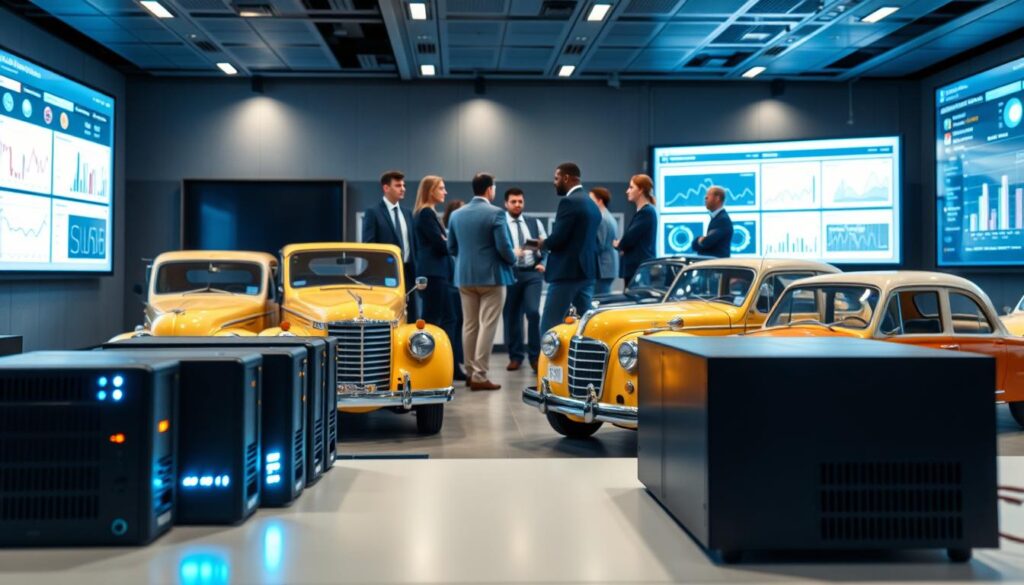
The challenge is making these systems talk without a tech mess. The answer is in smart interfaces and data translation. Companies like GAO Tek in New York City and Toronto are experts at this.
Here’s what successful integration looks like:
- Retrofit solutions that respect existing investments
- Progressive improvement over perfection
- Seamless communication between old and new systems
- Real-time data extraction from legacy equipment
The goal isn’t to replace your entire fleet. It’s about making current assets smarter, one edge device at a time. This way, logistics providers can depend on edge computers for tracking without spending a lot.
Combining edge analytics with existing IT needs smart strategies. The key is seeing that old systems have value. They just need a tech boost to join the digital age.
Success Metrics
Forget gut feelings and corporate buzzwords. In logistics, success is about numbers, not PowerPoint slides. Logistics tracking IoT solutions show real ROI, not just promises. It’s about making money, not just talking about it.
Fuel use goes down 15-20% with smarter routes. Maintenance costs fall 30-40% with predictive tech. On-time delivery rates hit 99%, making Amazon look less impressive.
Other benefits are like a CFO’s dream. Insurance costs drop with fewer accidents. Inventory costs go down because you know where your stuff is. Theft prevention is so good, you’ll wonder how things ever went missing.
Edge AI in logistics brings big wins:
- 20% less in conversion expenses
- 70% of savings from better labor productivity
- 10% more cargo without adding trucks
But the biggest surprise? Driver retention soars. Drivers like working with tech that works, not old systems.
The real magic of logistics tracking IoT isn’t just in the numbers. It’s about changing how we work. It’s about doing things better tomorrow, not just the way we’ve always done them. This change makes customers happier, operations greener, and finances more honest.
Case Study
Imagine a big pharmaceutical distributor facing cold chain chaos. They were losing millions due to temperature issues. Their old system was like a Tower of Babel, where nothing worked together.
Then, GAO Tek Inc. came with a new solution. They added IoT sensors to the fleet and warehouses. This created a smart system that could talk to itself.
The changes were amazing. Temperature control improved to 99.8%. Spoilage dropped by 45%. And delivery times became so good that customers stopped complaining.
The real magic was at the fleet management edge. It processed data locally, making adjustments fast. Predictive analytics caught problems early, and real-time rerouting avoided traffic and weather issues.
This case study shows how fleet management edge changes everything. It’s not just tech; it’s a way to stay ahead. Companies using this approach are not just keeping up. They’re leaving others behind.
The takeaway is clear: in the race for logistics leadership, the fleet management edge is key. It’s not just a part; it’s the whole thing.



